Clear Admit MBA Fair, Boston 2025
Details
- Date: Wednesday, May 14th
- Time: 5:00-8:00 PM
- Location: Cambridge, Massachusetts | MIT Sloan School of Management | Building: E62
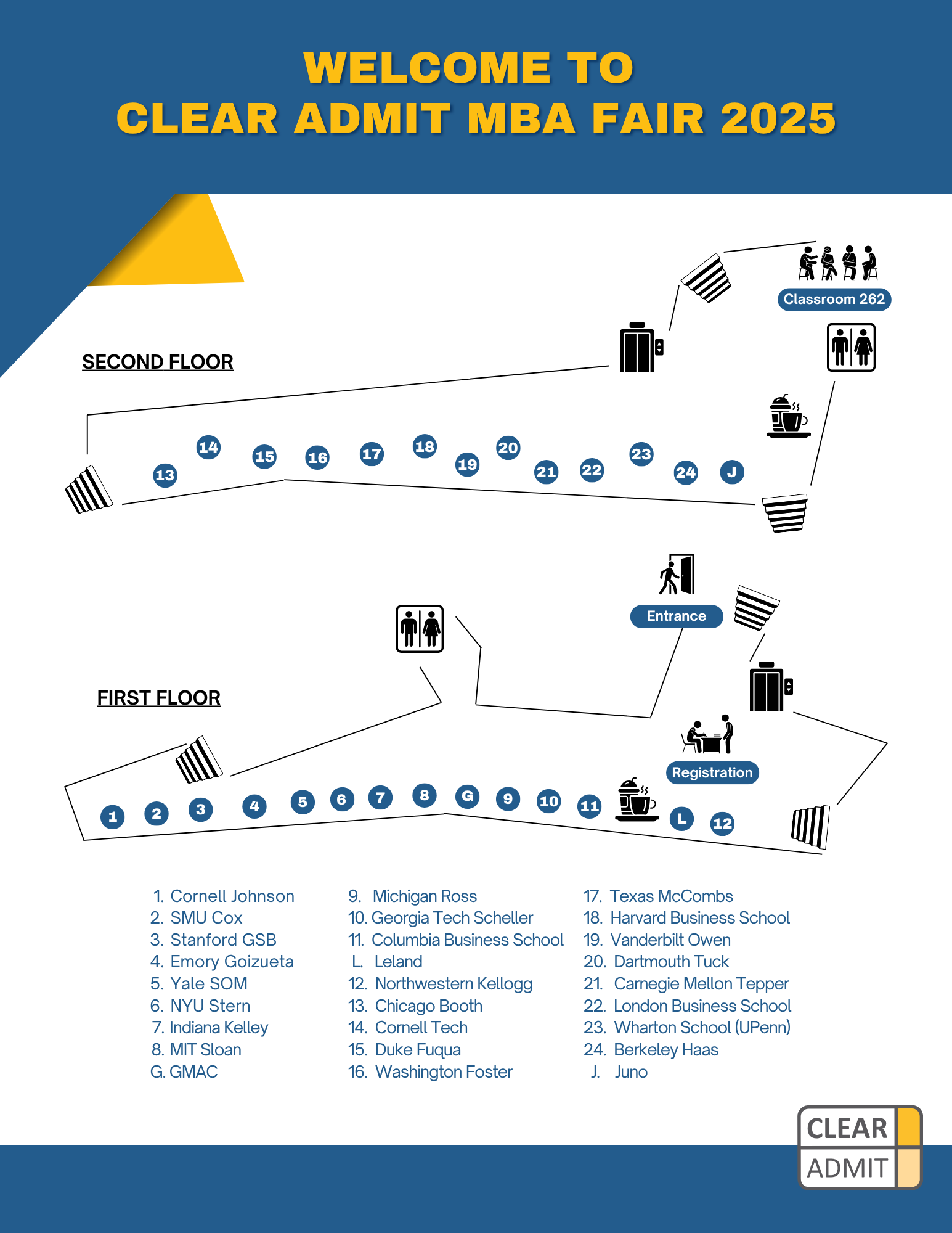
Venue Map
Agenda
05:20 – 05:45 – MBA Decoded: Who Goes, What You Learn, and Why It’s Worth It
Who goes to business school? What does one study during the program? What are some of the different teaching methods employed? When is the best time to pursue an MBA? Where should I go to business school? Why should I get an MBA?
Speakers
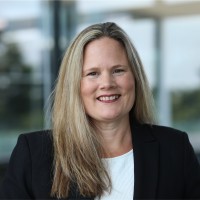
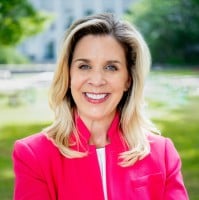


05:50 – 06:15 – Admissions Tips 1: What You’ve Done – Tests, Work & Activities
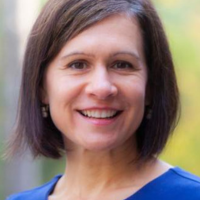
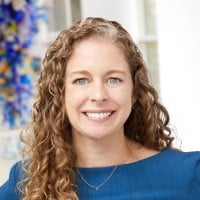
There are many components that go into a successful MBA application; this panel will focus on three of them. What is the role of standardized testing and past academic performance? How much work experience is needed, and what aspects are important? Why do admissions teams look at hobbies, volunteer work, and collegiate involvement?
Speakers


06:20 – 06:50 – From MBA to Bain: Breaking into Strategy Consulting
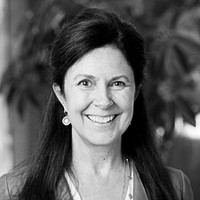
While business school opens many doors for post-MBA jobs, one of the most popular destinations is strategy consulting, and one of the most sought-after firms in that domain is Bain & Company. In this session, we’ll welcome Susan Caraviello, Vice President, Consultant Recruiting at Bain & Company. We’ll learn all about the recruiting process for consulting – from case interviews and internships to pre-MBA programming and full-time roles.
Speaker
06:55 – 07:20 – Admissions Tips 2: What You Say – Goals, Essays & Interviews
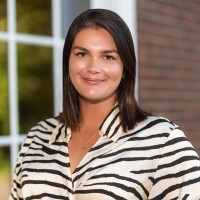
In this session, we’ll continue to explore tips for success in the admissions process. How should one define and articulate career goals? What’s the best way to begin the essay brainstorming process? Who should write my letters of recommendation? How can I prepare for an admissions interview?
Speakers:

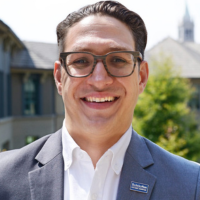
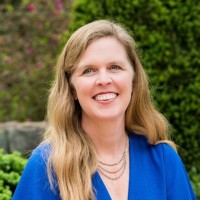
07:25 – 07:55 – The Real Cost of an MBA – And How to Afford It


Event Partners:

Juno is committed to helping our members access more affordable student loans, refinancing, high yield savings accounts, and beyond at no cost to them. Join Juno today and lock in the lowest interest rates!
Leland is the world’s largest MBA admissions platform, helping over 1,000 applicants get into top business schools each year–including hundreds to Harvard, Stanford, and Wharton. Choose from 200+ expert MBA coaches, including former admissions officers from HBS, GSB, Wharton, INSEAD, and more. Read transparent reviews, compare coaches, and find the right fit for your goals. Get a free strategy session and access exclusive Clear Admit discounts–talk with our team today!
The Graduate Management Admission Council is an international non-profit organization of business schools that provides products and services to academic institutions and prospective graduate management education students.
MBA Applywire
Currently working in consulting with a major FMCG/alcobev client, mainly across analytics, supply, and business problem-solving work. Over time, I’ve realized I enjoy understanding why problems exist within organizations and how teams, systems, and decisions can work better together, which is what’s pushing me towards strategy consulting and an MBA.
A lot of my interest in business also comes from seeing how everyday products and operations work behind the scenes. Outside work, I co-founded and ran a digital literacy initiative (1yr 2mo) during COVID where we helped elderly individuals and women from underserved communities learn basic digital tools to stay connected and manage daily activities during lockdown.
I’m currently preparing for the GMAT and exploring schools such as LBS, Fuqua, Ross, Tuck, and a few reach schools depending on how the score progresses.
Veteran. Ivy League undergrad. Planning to pivot into consulting or LDP.
I was in the top 5 of my class in mba from India and was a beta gamma sigma. This would be my second mba. I was also in the top 5 of my class in engineering. In my general management product management role I have worked with engineering team of 131 members building solutions for the insurance company (max New York life insurance). I want to shift from product management to investment banking or private equity.
I grew up inside a pharmaceutical manufacturing business. My family produces amino acids supplied to formulation companies that manufacture injectable IV solutions. From a young age, I understood that healthcare does not begin in a hospital. It begins in a reactor, in batch yield reports, in solvent recovery metrics, and in regulatory audits. I was proud of the role we played in India’s pharmaceutical ecosystem.
That pride turned reflective when my mother was hospitalized and administered IV drips produced by one of our customers. The compounds sustaining her recovery passed through supply chains like ours, and I knew exactly how they were made. I understood the solvent-heavy synthesis, the waste streams, the emissions. In that moment, I felt both gratitude and responsibility. We were contributing to lifesaving medicine — but through processes that are environmentally intensive and structurally dependent on imported intermediates. The system works, but it is fragile.
India stands at a strategic inflection point. It is the fastest-growing major economy in the world, home to the third-largest startup ecosystem, and supplies nearly 20% of global generic medicines. Yet structurally, we remain dependent. Roughly 70–75% of bulk drug and API inputs are imported, largely from China. We dominate formulation by volume but capture limited value upstream in high-margin API innovation. At the same time, traditional pharmaceutical synthesis can generate up to 100 kilograms of waste per kilogram of API produced, making it one of the most resource-intensive manufacturing sectors. Despite the national ambition of “Make in India,” our Gross Expenditure on Research and Development remains below 0.7% of GDP — far behind global innovation leaders.
India cannot aspire to healthcare sovereignty while relying on imported chemistry and outdated processes.
My long-term goal is to transform our family’s amino acid manufacturing base into a vertically integrated, green pharmaceutical platform that serves as proof-of-concept for sustainable API production at industrial scale in India. The transition would involve replacing conventional solvent-heavy synthesis with biocatalysis, flow chemistry, and fermentation-based processes; expanding the portfolio from amino acids into high-margin APIs; and building the operational, regulatory, and export credibility needed to compete globally. Over time, I aim to scale this model into a national green API manufacturing platform that reduces import dependence and repositions India within the pharmaceutical value chain.
If executed successfully, this platform could reduce API production costs by 30–40%, lower generic drug prices by 10–20% in cost-sensitive categories, and materially cut the environmental footprint of an industry that today generates significant chemical waste. More importantly, it would move India from being the world’s low-cost pharmacy to becoming a high-value, innovation-led, and environmentally responsible pharmaceutical hub — securing healthcare sovereignty for 1.4 billion citizens while strengthening India’s standing in global medicine.
To build toward this ambition, I will first deepen my expertise in global pharmaceutical supply chains and capital allocation by working in strategy and operations roles within a global pharma or healthcare-focused investment platform. This experience will allow me to understand industrial transformation at scale, navigate regulatory environments, and structure capital-intensive manufacturing transitions. Equipped with this exposure, I will return to scale and green-transition our manufacturing base, laying the foundation for India’s next-generation pharmaceutical infrastructure.
MBA LiveWire
WL in round 1, got accepted in May
No $, accepted R2 back in March

