


Kwamina Eyiah Arthur had led digital transformation initiatives across Ghana, Nigeria, and Kenya. This experience was not the culmination of his work — it was just the beginning. He wanted to build the systems behind digital ecosystems, and to be at that level globally, he needed exposure to broader technology and skillsets. In this Real Humans: Alumni, Kwamina shares how the MBA at Berkeley Haas provided the technological and leadership experience to become a product manager at Adobe.
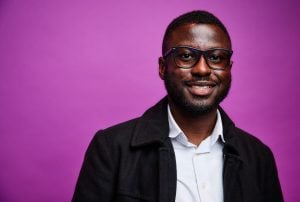
Kwamina Eyiah Arthur, Berkeley Haas MBA ’25, Product Manager at Adobe
Age: 32
Hometown: Cape Coast, Ghana
Undergraduate Institution and Major: Kwame Nkrumah University of Science and Technology (KNUST), Actuarial Science
Graduate Business School, Graduation Year: UC Berkeley Haas School of Business, MBA 25 (Graduate Certificate in Business Analytics)
Pre-MBA Work Experience: Head of Product Management, SecondSTAX (Fintech Infrastructure), 1 year; Product Manager, Vodafone Ghana (Telecommunications), 6 years
Post-MBA Work Experience: Product Manager, Adobe Lightroom, 8 months
Why did you choose to attend business school?
Before UC Berkeley Haas, I led digital transformation initiatives at Vodafone Ghana and later helped build cross-border capital markets infrastructure at SecondSTAX across Ghana, Nigeria, and Kenya. That experience deepened my interest in the systems behind digital ecosystems: how platforms, payments, and data infrastructure enable products to scale across markets.
I realized that to build at that level globally, I needed exposure to broader technology ecosystems where AI, capital, and platform strategy intersect. Business school felt like the right pause point. I wasn’t looking to switch careers as much as I was looking to increase my operating altitude.
Why UC Berkeley Haas? What factors figured most prominently into your decision of where to attend?
Three factors made UC Berkeley Haas the right fit.
First is the ecosystem. I intentionally chose Haas to be in the Bay Area, which is the center of gravity for AI-driven innovation and venture capital. I wanted to understand how global platforms are built and scaled from the inside.
Second, intellectual rigor. Through the Graduate Certificate in Business Analytics and coursework in AI strategy and digital transformation, I strengthened my ability to evaluate platform economics, data systems, and long-term defensibility, capabilities that proved critical in my transition into AI-focused product work.
Third, cultural alignment. The Defining Leadership Principle, “Beyond Yourself,” resonated with my upbringing in Ghana, where leadership is inseparable from responsibility. UC Berkeley Haas felt like a place where ambition and humility could coexist.
What about your MBA experience prepared you for your current career? How do you feel that your MBA has been an asset when it comes to navigating new challenges, such as AI?
My MBA trained me to operate in ambiguity. AI product work requires constant trade-offs: automation versus control, speed versus trust, innovation versus responsibility. I am equipped with structured ways to evaluate those tensions rather than react to them.
Equally important was being immersed in the Bay Area ecosystem while these debates were unfolding in real time. Engaging with operators, attending discussions on AI infrastructure, and observing how companies think about platform defensibility expanded my perspective beyond the classroom. It shifted my thinking from isolated features to durable systems.
Just as impactful were the mentors and peers I gained at Haas. Professors, alumni, and classmates challenged my assumptions and sharpened my judgment. Those relationships have become an ongoing sounding board as I navigate my career.
What was your internship during business school? How did that inform your post-MBA career choice?
I interned as a product manager on Adobe’s Lightroom team, where I drove research synthesis and market validation for an AI-assisted workflow feature. I partnered closely with the User Research team, ML engineers, and designers to define the problem, evaluate user needs, and shape the product direction.
The feature has since shipped, and I returned full time to lead its continued evolution. The experience confirmed that I wanted to build AI-powered systems at the intersection of creativity and scale.
Why did you choose your current company? What factors figured most prominently into your decision of where to work?
Returning to Adobe was an intentional decision.
First, continuity of ownership. I had the opportunity to take over and evolve the AI-assisted workflow feature I helped validate during my internship. Stepping into post-launch ownership allowed me to operate at meaningful scale within a global product ecosystem.
Second, platform leverage. Adobe’s products shape how millions create and communicate. I was drawn to building durable systems within a mature creative platform rather than isolated features.
Third, culture. Throughout my experience, I consistently saw strong product rigor paired with deep user empathy. The balance between innovation and responsibility aligned with how I want to practice product leadership.
Advice to current MBA students:
–One thing you would absolutely do again as part of the job search?
I would be intentional about both my network and my narrative.
I leaned heavily on mentors, alumni, and peers throughout the process for mock interviews, honest feedback on positioning, and trade-offs. Those conversations sharpened my thinking and helped me see blind spots.
At the same time, I stayed disciplined about pursuing roles that genuinely aligned with my interests in product systems. Rather than applying broadly, I focused deeply. That clarity allowed me to tailor my resume and stories around a coherent arc instead of reacting to whatever opportunity appeared.
–One thing you would change or do differently as part of the job search?
I would have spent more time engaging with the venture and startup ecosystem around Haas.
I stayed focused on product management, which served my recruiting well. But in hindsight, deeper exposure to venture capital and early-stage founders would have sharpened my understanding of how capital allocation and product strategy intersect.
The MBA is one of the few times you have unusually direct access to operators and investors. Even if you don’t pivot, that perspective strengthens how you evaluate markets and long-term product bets.
–Were there any surprises regarding your current employer’s recruiting process?
I was pleasantly surprised by how structured and seamless the process was. Each stage felt intentional, with clear expectations and thoughtful feedback. Compared to some other processes I experienced, the level of coordination signaled a strong internal culture.
I was also struck by the emphasis on user empathy. The interviews tested whether I could genuinely advocate for the photographer behind the screen. Structured thinking mattered, but translating technical AI capabilities into human value was the real bar.
–What piece of advice do you wish you had been given during your MBA?
Be intentional about what you say yes to. Business school expands your options dramatically, and it is easy to feel like you must do everything. I once read a reflection comparing the MBA to Gaudí’s devotion to the Sagrada Família, the idea that true depth requires focus.
You do not need to say yes to every opportunity to get full value from the experience. Real growth comes from committing deeply to the few areas and relationships that genuinely align with who you want to become.