

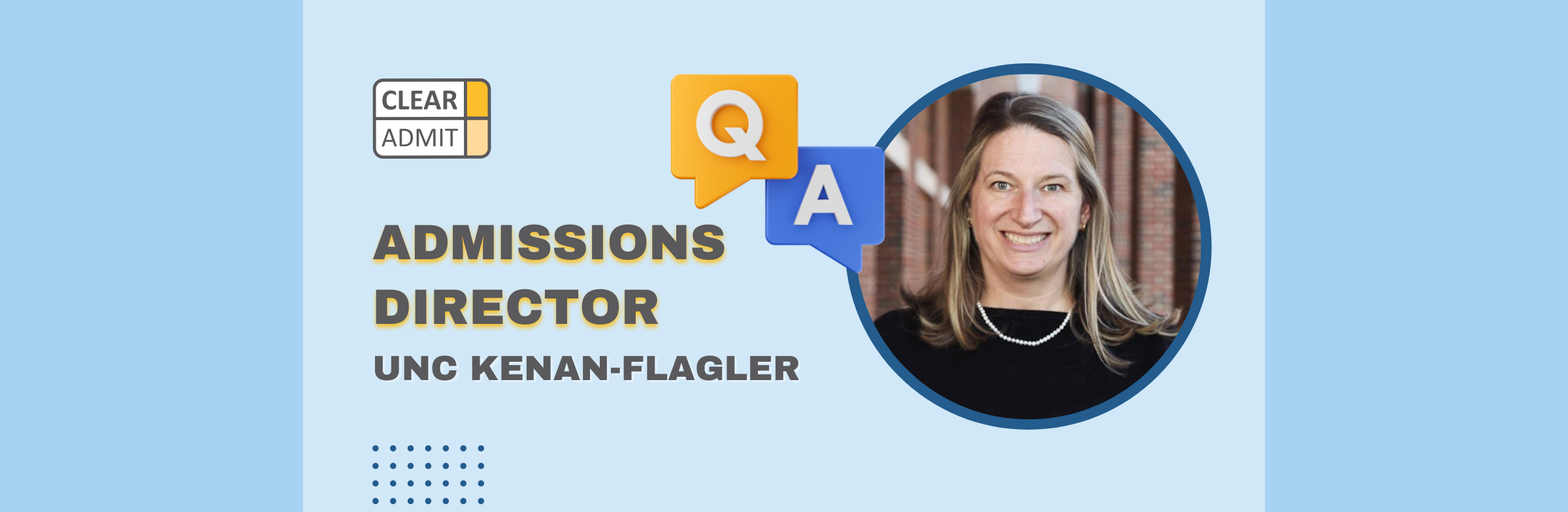
We welcome back Katy Radoll, Director of MBA Admissions at UNC’s Kenan-Flagler Business School, for this edition of our Admissions Director Q&A.
With roots in the Pacific Northwest, Katy has been part of the UNC Kenan-Flagler team as Director of MBA Admissions for the past two years. During her tenure, she has helped bring admissions back on the road to connect with candidates in their own communities, strengthened collaboration and shared purpose across the admissions team, and deepened relationships throughout the MBA admissions landscape. Her approach centers on ensuring candidates feel known as individuals, not just applicants.
Prior to this role, she led Associate Recruiting at McKinsey Atlanta. Her tenure at MIT Sloan included helping establish the Asia School of Business in collaboration with MIT Sloan (ASB) and supporting the launch of its flagship MBA program, with time spent working across both Boston and Kuala Lumpur. Katy joined MIT in 2011 with the launch of the Executive MBA (EMBA), where she managed the EMBA Student Life and Learning team and later served as Senior Associate Director of Admissions.
With a BS in Recreation Management: Tourism from Arizona State University and an MA in Intercultural Relations from Lesley University, Katy’s passion for travel remains unabated. When not shaping future leaders, she enjoys globetrotting in search of the tastiest local cuisine and cheering on the Boston Red Sox.
In our interview with Katy, we dig into Kenan-Flagler’s admissions process, the recently opened Steven D. Bell Hall, and what makes their program and community unique.

Clear Admit: What is one aspect of your MBA program that you wish applicants knew more about?
Katy Radoll: Our location. When people think about top MBA programs, they often focus on schools in major cities, but UNC Kenan-Flagler sits in the heart of one of the most dynamic regions in the U.S. Chapel Hill offers an incredible quality of life and a close-knit, university-centered community, while the Research Triangle gives students access to more than 7,000 companies across industries like healthcare, technology, life sciences, consulting, and finance. And as someone who spends a lot of time on the road, I appreciate that our airport keeps adding direct flights to key business hubs. It really is the best of both worlds—a connected, growing region with the charm and community of a college town.
CA: Walk us through the life of an application in your office from an operational standpoint. What happens between the time an applicant clicks “submit” and the time the committee offers a final decision?
KR: Once an application is submitted, our team first reviews it for completeness. One important tip: Your application isn’t considered complete until every component has been received, including your letter of recommendation.
From there, applications are reviewed by members of the admissions team who assess both academic readiness and the professional and personal attributes that contribute to a successful MBA experience. Interview invitations are extended to candidates we’d like to learn more about and are a positive sign that your application is moving forward in the process.
After interviews are completed, applications return to the admissions committee for discussion and final decisions. While there is a lot happening behind the scenes, every application receives thoughtful, individual consideration and multiple perspectives along the way.
And importantly, no one is admitted—or denied—based on a single data point. We look across the full application to understand each candidate and what they might contribute to our community.
CA: How does your team approach the essay portion of the application specifically? What are you looking for as you read an essay? Are there common mistakes applicants should try to avoid? What is one key thing candidates should keep in mind as they sit down to write?
KR: The best essays help us understand the person behind the resume. We already know where you’ve worked and what you’ve accomplished. The essay is your opportunity to tell us why those experiences matter and what has shaped you along the way.
One of the most common mistakes I see is not fully answering the question being asked. We design our essay prompts with purpose, so make sure you’re addressing the prompt directly while helping us get to know you.
My advice: Be yourself. A genuine story in your own voice is far more compelling than trying to write what you think an admissions committee wants to hear.
CA: Could you tell us about your interview process? Approximately what percentage of applicants are invited to interview, who typically conducts interviews, and what should candidates expect in terms of interview style and format — including whether interviews are conducted virtually, in person, or if you offer both options?
KR: Interviews are by invitation and conducted exclusively by members of our admissions team. We offer both virtual and in-person interview options throughout the admissions cycle.
Our interviews are conversational, and candidates should know that the interviewer will have reviewed your resume rather than the full application. Given our limited time together, we often jump right into questions. The goal isn’t to have candidates retell what they’ve already shared in the application—it’s to learn something new. We’re looking to better understand your experiences, decision-making, self-awareness, and what you’ll bring to your cohort and our community.
CA: If your admissions process includes any video-based components, such as video essays or recorded interview responses, what advice would you offer applicants preparing for this part of the process?
KR: The video interview is timed and includes two short prompts. One asks you to introduce yourself—and we recommend not using your job title as your main focus for that response. The second comes from a randomized bank of behavioral questions, so you won’t know the prompt in advance, though they’re similar to what you’d see in a live interview.
Don’t over-rehearse. This isn’t about production quality; it’s about getting to know you. Answer the question directly and let your personality come through.
CA: Is there anything in particular international students should keep in mind during the admissions process?
KR: Start early. International applicants are navigating additional logistics and unknowns, including testing, visa timelines, and relocation planning. Beyond that, I encourage candidates to think about how they will contribute to and benefit from our collaborative community. Some of our richest classroom discussions come from students bringing perspectives from around the world.
CA: Conversations about MBA value often center on jobs, salaries, and ROI. What are some of the other ways students benefit from the MBA experience that may be harder to quantify upfront?
The relationships our students make at UNC Kenan-Flagler are significant to their experiences and provide lifelong ROI. Ask our alumni what they value most years after graduation, and many won’t start with their first post-MBA job. They’ll talk about the classmates who became lifelong friends, trusted advisors, business partners, and members of their personal support network. Those relationships often end up being one of the most enduring parts of the MBA experience.
The transformation: What people don’t always anticipate is the confidence that comes with earning their MBAs. Students leave with new ways of thinking, a shared language, and tools to approach problem solving and critical thinking more effectively. And often, it’s friends and family who notice first—the shift in how they show up, communicate, and tackle challenges.
CA: Are there any trends in the applicant pool, admissions process, or MBA experience that you are particularly focused on right now?
KR: AI is certainly top of mind, but it’s quickly becoming part of the everyday conversation rather than something separate. We’re focused on helping students use it thoughtfully, strategically, and effectively across the curriculum, while continuing to emphasize the human skills that matter most—leadership, judgment, communication, and ethical decision-making.
We’re also seeing a broader range of backgrounds in the applicant pool. “Non-traditional” feels less like an exception now and more like the norm, which adds wonderful energy to the classroom. What hasn’t changed is why students pursue the MBA in the first place—growth, stretch, and often a meaningful career pivot.
CA: Is there anything else you’d like to highlight about your MBA program or admissions process?
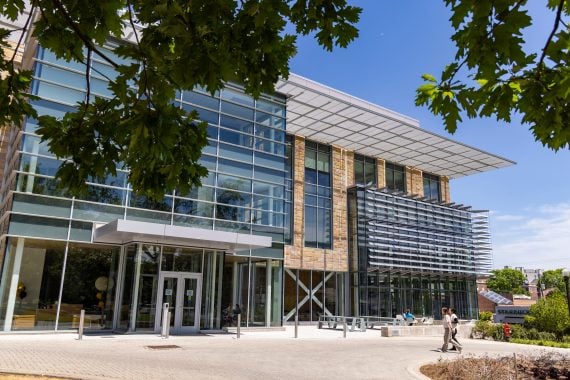
KR: This is an especially exciting time to be part of UNC Kenan-Flagler. We recently opened Steven D. Bell Hall, a transformative new space designed to bring people together. With open-air terraces, outdoor teaching spaces, abundant natural light, and a strong commitment to sustainability, it reflects the way we want our students to learn, connect, and thrive. But what makes this place special isn’t the building—it’s the people. We have a community that is ambitious, supportive, and genuinely invested in each other’s success. That’s the Carolina Way.