

In this Fridays from the Frontline, we catch up with Pepe Alonso about his efforts to launch AI workshops for his fellow Berkeley Haas MBA students. Read about his motivation, impact and more below.
Running AI Workshops at Berkeley Haas
 By Pepe Alonso, MS in AI, and Berkeley Haas MBA ’27
Hometown: Montevideo, Uruguay
Undergraduate Institution & Major: Computer Science, Universidad ORT Uruguay
Pre-MBA Work Experience: Software Engineer, Engineering Manager, Head of Product and Engineering for 8 years in the Software Agencies and Startups
Why Haas?
I wanted to be in the Bay Area at such a pivotal time for the tech industry. San Francisco, where the new Silicon Valley is developing, was my top priority. By being so entrenched in the AI ecosystem of San Francisco, Berkeley Haas has a unique advantage. Tech has had many waves in past decades, but as a software engineer I saw my job change and become threatened by AI. AI is not just a wave, but a tsunami, which you ride or sink.
AI as Part of the MBA Experience
While doing my MBA, I wrapped up my Master of Science in AI by publishing a paper about regressions in coding agents. I wanted AI to be at the core of my MBA experience as I wanted to be as specialized in this new skill as possible. The market clearly has a big demand for AI native workers so I’ve approached every course I’ve taken and every assignment by trying to bring it to another level by using AI. From agentic operator simulations in my operations class to pitching live demos to clients instead of slide decks in my Haas@Work course, AI was a core component.
AI Workshops
Many full-time positions and internships require MBA students to be technically versed in AI, even though MBA programs haven’t adapted the entire curriculum to meet these new demands. Industry is leaning more toward hiring managers who have technical and practical skills in AI, which I’ve learned in both my bachelor’s and masters’ degree programs. In the past, there have been efforts to bring coding classes to MBA programs, but they require a ton of time and hard work, which is usually more suited to a dual degree. But now, with AI, learning the basics is easier than ever and I believed I could teach the core lessons from my entire bachelor’s, master’s, and work experience in this class.
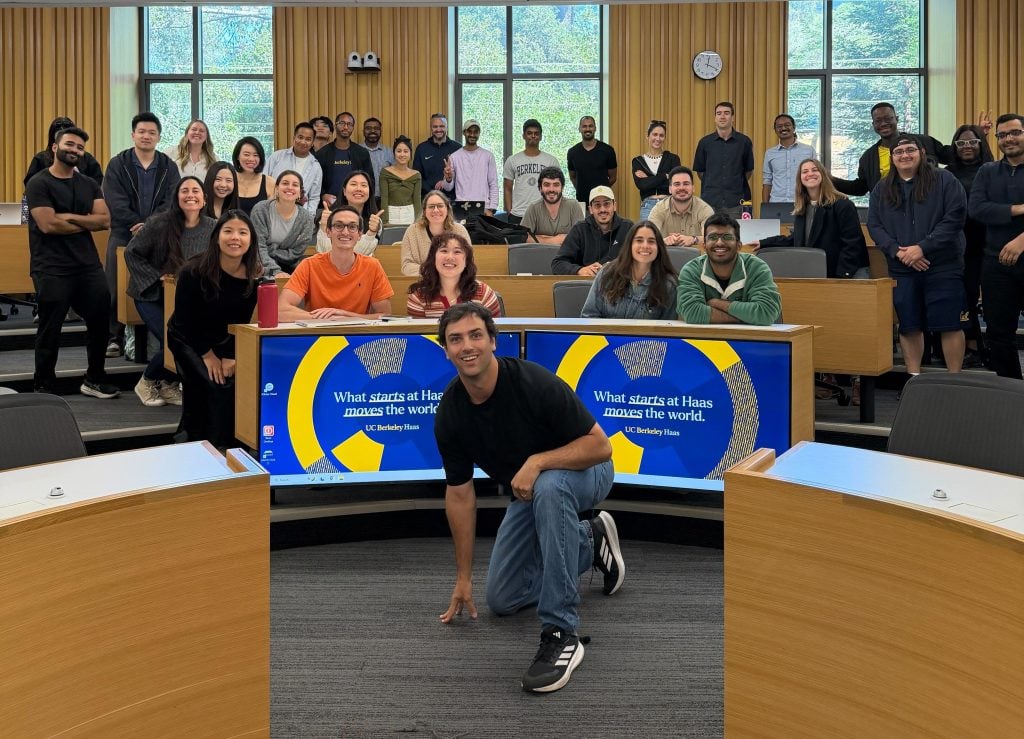
I proposed this class to the program office and they were very supportive. I stepped in to teach this as a student-led initiative rather than a for-credit course. I was a lecturer at my alma mater for advanced computer science courses so I knew I could take it on. It is very important to understand the fundamentals and best practices of this new technology, or it could lead to catastrophic outcomes for any company using it. I believe that MBAs are prepared to lead strategies in companies, strategies which require a deep understanding of the technology to be successful.
What’s involved: The workshop was made up of four classes covering my undergrad experience in software engineering from code basics to deployment best practices; my masters in AI, from machine learning basics to the attention mechanism in LLMs; my recent work experience with AI in production; and the future, focusing on multi-agent orchestration systems. I used an average of 80 slides per class, with an optional assignment to practice.
Favorite part: My favorite part has been seeing what students started building. From side projects they loved to building vibe-coded solutions for their interviews to helping them land dream jobs/internships.
What surprised me: I had a hypothesis that I could cover the content of my entire bachelor’s and master’s programs in just one course, but I knew it was overly ambitious and it would be tough. But, I was very surprised to see how easy it was for students to grasp the content and start applying it in their own lives.
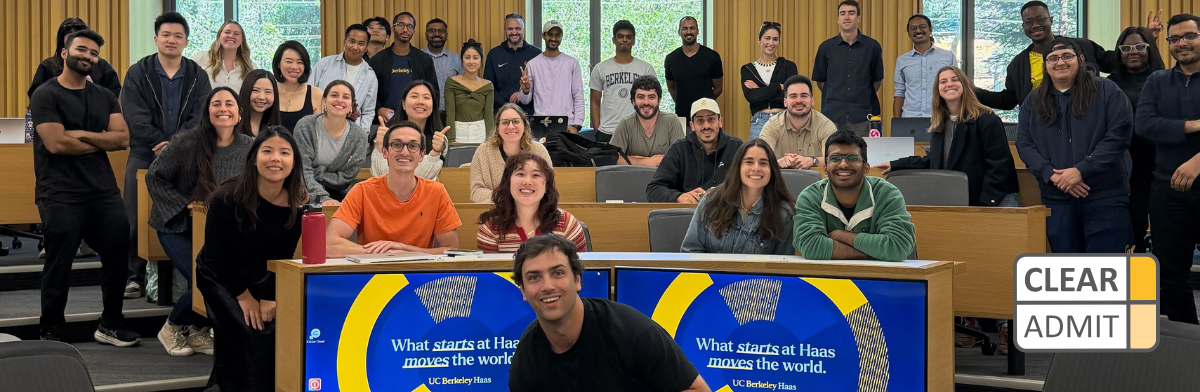
Signs of success: At first I thought I might attract around 15 students. The course ended up being 80 students per week, broken down into sessions to fit schedules. We now have a WhatsApp group with over 200 students and I’ve created video recordings. I also started posting the content publicly on LinkedIn and students from other MBA programs started reaching out to request more content. So clearly I struck a chord that resonated beyond our program.
Next step: The course will now be held as an elective that I will be teaching in the fall called “Fundamentals of Agentic AI.”
Advice
Don’t be afraid to take technical classes outside of the business school if they align with the skills you need and your future career plan. In this new AI era, many jobs will change and there’s a lot of uncertainty. Time has proven most (if not every) prediction wrong around how work is going to change with AI, from which jobs it would impact first to how fast everything will change. However, if you foresee that AI will play a big role in your day-to-day work, take the time to truly understand the fundamentals behind it and unravel the mysticism and hype. The biggest mindset shift you have to embrace is: “You can outsource your thinking, but you cannot outsource your understanding.”