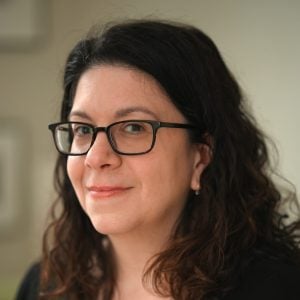


Looking ahead to the next admissions season of 2025-2026, we are excited to kick off our Admissions Director Q&A series today. In this edition, Stephanie Kluth, the Director of Admissions for Degree Programs at ESMT Berlin, is back to shed light on the MBA program.
Stephanie holds over 20 years of experience in higher education and academic administration. Since joining ESMT in 2005, she has contributed to the development and internationalization of the school’s MBA and Master’s programs. Prior to joining ESMT Berlin, she worked at the Aspen Institute Berlin and the Jewish Museum Berlin.
Read our Q&A with her below for insights on the MBA program at ESMT, the admissions process, and life on campus in Berlin.

Clear Admit: What is the one aspect of your program that you wish applicants knew more about?
Stephanie Kluth: One aspect of ESMT’s Full-time MBA that I wish more applicants knew about is the program’s flexibility, especially during the summer term. It is not a one-size-fits-all approach. Candidates can truly tailor this part of the experience to their goals. Whether they want to gain industry experience through an internship, deepen their impact through the sustainability in practice project, or accelerate their German skills, the options are diverse and meaningful. They can also dive into entrepreneurship through our partnership with VALI Berlin (ESMT’s entrepreneurship hub) and tap into Berlin’s thriving startup scene. This flexibility allows students to shape their MBA journey in a way that is both personal and professionally strategic.
CA: Walk us through the life of an application in your office from an operational standpoint. What happens between the time an applicant clicks “submit” and the time the committee offers a final decision?
SK: Once you submit your application, our admissions team takes a close look at your documents and essays. If your profile is a good fit, we will invite you to a one-on-one interview with an admissions manager. After that, we will share our recommendation with the Admissions Committee, which makes the final decision. The whole process usually takes less than two weeks, so you can expect to hear from us quickly.
CA: How does your team approach the essay portion of the application specifically? What are you looking for as you read an essay? Are there common mistakes that applicants should try to avoid? What is one key thing they should keep in mind as they sit down to write?
SK: The essay is your opportunity to introduce yourself as an individual and to highlight what makes you unique beyond your test scores and professional background. Before you begin writing, take some time to reflect: What are your genuine strengths and weaknesses? What do you hope to achieve through an MBA? Where do you see yourself after graduation? Clear, thoughtful answers will help you present a compelling narrative of who you are, where you are headed, and why an MBA is essential to your goals. We value authenticity, so we encourage you to avoid buzzwords or clichés. We want to hear your story, in your voice.
CA: Could you tell us about your interview process? Approximately how many applicants do you interview? Who conducts the interview and what is the nature of the interview? Will your admissions interviews be in-person or virtual for the 2025-2026 admissions season?
SK: Our admissions team typically conducts the interviews, and it is the candidate’s chance to show us why they would be a great fit for the program. We are not just looking at qualifications; we want to get to know the applicant as a person. Basically, we are looking for someone we could see sitting next to us in the classroom and work with in group projects.
During the interview, it is important that applicants can clearly explain their goals, priorities, strengths, and areas for growth as well as how they will contribute to the ESMT community. We want candidates to be themselves, but to come prepared. We expect thoughtful, well-structured answers, and the same level of professionalism a candidate would bring to a job interview. It also helps if applicants have done their research and understand what makes ESMT the right place for them.
Most interviews take place virtually, making it easy and flexible for candidates to join from wherever they are. Just bring your enthusiasm, your motivation, and a clear sense of where you are headed and we are looking forward to getting to know you.
CA: Is there anything in particular international students should keep in mind during the admissions process?
SK: You do not need to speak German to join the program. It is taught entirely in English. That said, if you are planning to build your career in Germany afterward, being fluent or at least motivated to learn German will go a long way. It will make job hunting smoother, open up more opportunities, and help you enjoy day-to-day life here. To support international students, ESMT offers German language courses as part of the program to help you get started.
Also, if you are a non-EU applicant, make sure to check the student visa requirements early. Having your documents and finances in order in advance will save you a lot of stress later.
And here is some good news: after graduation, you will be eligible for an 18-month post-study work visa, giving you time to find a job and kick-start your career in Germany or the EU.
CA: What is your favorite spot on campus?
SK: It is hard to choose just one. There are several that stand out for different reasons. One is the historic garden, a peaceful green retreat right in the heart of Berlin and a great place to take a break between classes. Another is the so-called “spy-proof” corridor outside the former Chancellor’s office. It is one of those unique features that is a nod to the building’s past. (For those who do not know, ESMT’s campus was once the headquarters of the East German government and has since been carefully transformed into a modern learning environment, equipped with state-of-the-art technology.) And finally, there is Auditorium 2, with its incredible view of Berlin’s museum island and the Humboldt Forum – a daily reminder of how uniquely located and deeply connected ESMT is to the city’s history and future.
CA: Is there anything else you’d like to highlight about your MBA program or admissions process?
SK: We are proud to have a female-majority cohort; something still rare among MBA programs worldwide. Even more, over 95% of our students are international, with more than 20 nationalities represented in a single class. This diversity is not just something we talk about; it is central to how we learn and lead at ESMT. The classroom becomes a space for global perspectives, inclusive leadership, and learning from each other’s experiences. It is one of the things that makes the ESMT Full-time MBA both challenging and deeply rewarding.