


Emerald Deku, WashU Olin MBA ’23, wants you to know that “the MBA is the perfect playground for bold experimentation.” In this Real Humans: Alumni, Emerald walks us through said playground, digging into the standout strengths of her MBA experience that prepared her for an internship and full-time role at Google. Her grounded enthusiasm is contagious and sheds light on why the WashU Olin MBA is a sound launchpad for whatever your plans may be.

Emerald Deku, Washington Olin MBA ’23, Strategic Financial Analyst at Google
Age: 33
Hometown: Tokokoe, Volta Region of Ghana
Undergraduate Institution and Major: University of Ghana, BSc Business Administration
Pre-MBA Work Experience: Retail Banking Accounts Manager, Guaranty Trust Bank, Ghana, 6.5 years, Banking & Financial Services
Post-MBA Work Experience: Strategic Financial Analyst, Google, [1 year, 9 months], Tech
Why did you choose to attend business school?
I chose to pursue business school as a strategic next step to accelerate my career and broaden my impact across industries. While I had built a strong foundation in marketing during my time at Guaranty Trust Bank, I recognized the need to expand my skill set beyond marketing—particularly in finance and strategic decision-making.
I pursued an MSc in Development Finance in Ghana, which equipped me with a solid theoretical understanding of corporate finance, financial risk management, etc. However, I wanted more—I wanted hands-on learning, real-world application, and the opportunity to develop as a global leader.
An MBA offered exactly that: the chance to strengthen my ability to make data-driven decisions, gain international exposure, and enhance my leadership and strategic thinking skills through experiential learning. Ultimately, business school was a critical investment in becoming a well-rounded, impact-driven professional capable of thriving in complex, high-stakes environments.
Why Washington Olin? What factors figured most prominently into your decision of where to attend?
I chose Olin because it offered exactly what I was looking for in an MBA program: a blend of global exposure, hands-on learning, and a truly diverse community.
First, Olin’s strong emphasis on experiential learning and innovation stood out to me. The Center for Experiential Learning (CEL) provides students the opportunity to lead real-world consulting projects, working with businesses to solve complex challenges. I knew I wanted an MBA experience that extended beyond the classroom, and Olin’s commitment to applied learning made it the ideal fit.
Second, the Global Immersion program was a major factor in my decision. Traveling to countries like Spain, France, Chile, and Singapore, students explore how culture and business intersect across markets. I wanted my MBA to be a truly global experience, and this program aligned perfectly with my career aspirations in international business and strategy.
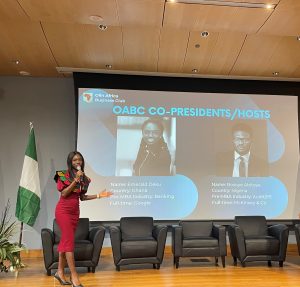
Additionally, Olin’s commitment to diversity and inclusion was evident in its vibrant African community. I was intentional about joining a school where I could find and contribute to a strong African network. Becoming Co-President of the Olin Africa Business Club allowed me to not only lead that community but also organize one of the most successful African Forums in the school’s history—an experience that deeply enriched my time at Olin.
Overall, Olin offered the right mix of academic rigor, real-world exposure, global perspective, and inclusive culture—making it the perfect fit for my MBA journey.
What about your MBA experience prepared you for your current career at Google?
My MBA equipped me with a strong analytical mindset and the ability to leverage data in making strategic financial decisions. The blend of finance courses, real-world consulting projects, and numerous case studies prepared me to navigate complex business challenges effectively. Additionally, the diverse and collaborative environment at Olin honed my leadership and problem-solving skills, making me well-prepared for my current role at Google which is a multi diverse company.
What was your internship during business school? How did that inform your post-MBA career choice of Google?
During business school, I interned at Google as an MBA Ads Finance Intern. My internship involved leading an innovative finance project where I built a streamlined financial investment model and presented investment recommendations to senior finance leaders. It was incredibly rewarding to see how my insights directly influenced key decision-making.
Beyond the project, I had the chance to engage with the broader team—organizing and participating in bonding activities with senior leads and colleagues. The culture at Google was collaborative, supportive, and inspiring. By the end of the internship, I was confident that I wanted to pivot my career into tech—and specifically, to continue growing my career at Google. The experience solidified my desire to work in a space where I could drive impact through data-driven finance and be part of a team that truly values innovation and people.
Why did you choose your current company? What factors figured most prominently into your decision of where to work?
I chose to work at Google because it offers the ideal environment for both personal and professional growth. The company’s culture of innovation, its emphasis on data-driven decision-making, and the opportunity to work on high-impact, global projects made it a natural fit for me.
One of the most compelling aspects of Google is the freedom to identify challenges and take ownership of solutions—even if that means launching completely new, cross-functional projects. That level of autonomy and trust in employees is rare, and it truly empowers you to make a meaningful impact.
Another major factor in my decision was the culture of continuous learning. I’m a strong advocate for self-improvement, and during my internship, I realized how limitless the learning opportunities at Google are—whether it’s building technical skills like SQL and Python, exploring how AI is transforming finance, developing leadership capabilities, or participating in peer-led trainings.
All of these factors combined made it clear to me that Google was where I wanted to build my career—and where I knew I would thrive.
 Advice to current MBA students:
–One thing you would absolutely do again as part of the job search?
One thing I would absolutely do again in the job search process is leverage my network early and intentionally. Engaging with colleagues, alumni, faculty, and industry professionals provided invaluable insights that helped me refine my career goals and identify the right opportunities.
I was strategic about networking—reaching out to individuals on LinkedIn in roles I was curious about, particularly in finance, marketing, and customer success within the tech space. Through coffee chats, I gained a clearer understanding of their day-to-day responsibilities, their company cultures, and broader career advice.
In addition, I worked closely with my school’s career coaches and collaborated with peers for mock interview sessions, which helped me strengthen my storytelling and interview skills. This holistic approach not only gave me clarity and confidence, but also contributed to my post-MBA success—I graduated with three job offers.
–One thing you would change or do differently as part of the job search?
One thing I would do differently in my job search is take full advantage of pre-MBA recruiting opportunities. There are so many early access events—info sessions, coffee chats, and even interviews—that I wish I had engaged with more proactively before starting the MBA.
My advice to incoming MBAs is to start early. Sign up for pre-MBA programs and platforms like JumpStart Advisory Group, Forté Foundation, MLT MBA Prep, LinkedIn, and Indeed, which often host industry-specific events and connect you with recruiters months before classes begin.
Also, build or join early peer communities—group chats or forums where classmates can openly share opportunities, prep tips, and best practices. Having that kind of support system early on can make a huge difference in navigating recruiting and feeling more prepared and confident going into the MBA.
–Were there any surprises regarding your current employer’s recruiting process?
Yes, I was pleasantly surprised by how smooth, friendly, and efficient the recruiting process at Google was. My entire internship interview took place in a single day, and the experience was genuinely enjoyable. The interviewers were warm, patient, and approachable. There were moments when I needed a bit of time to gather my thoughts, and they were incredibly understanding—which allowed me to stay composed and be my authentic self throughout the process.
What stood out even more was the recruiter’s positivity and encouragement. When I received the offer, they celebrated the moment with me, which made the experience feel personal and special. Overall, the process was so positive and human-centered that accepting the offer felt like a natural next step.
–What piece of advice do you wish you had been given during your MBA?
Experiment boldly! I wish someone had told me that the MBA is the perfect playground for bold experimentation. It’s one of the few times in life where you can test-drive ideas—whether it’s launching a startup, building an app, exploring a creative business like fashion, or pivoting into a whole new industry—without the pressure of having it all figured out. For someone like me who thrives at the intersection of strategy, creativity, and innovation, I now realize I could’ve leaned into that freedom even earlier. The MBA is more than a launchpad—it’s a lab.