


We welcome back J.R. McGrath, Executive Director of Masters Admissions at the Carnegie Mellon Tepper School of Business, for this installment of our Admissions Director Q&A series.
J.R. has been at the Tepper School for more than five years and accepted the role of Executive Director in October 2022. He has previously served in leadership roles at SMU Cox, TCU, and Syracuse. In addition to his professional responsibilities, J.R. and his wife have a young daughter that keeps them busy. J.R. also enjoys running, golf, and anything to do with Pittsburgh sports teams.
Learn more about Tepper’s MBA and read McGrath’s insights into the admissions process, what to expect in the interview, his favorite campus features and more in our Q&A here.

Clear Admit: What is the one aspect of your program that you wish applicants knew more about?
J.R. McGrath: Carnegie Mellon and the Tepper School are known for being rigorous and quantitative. While we are proud of this aspect of our school and program, we are more than innovative problem solvers. We have a robust leadership development component to our program. Our research has shown that career success is also strongly tied to people skills in business, such as emotional intelligence, communication, and leading diverse groups of people. I invite you to explore our Accelerate Leadership Center and how it can help you develop into the leader you aspire to be. It’s the combination of using a data-informed approach to problem-solving and a human-driven approach to leadership that will transform you into the innovative and aspirational leader you strive to be. Our program can help all candidates develop these skills, not just those that come from a quantitative background.
CA: Walk us through the life of an application in your office from an operational standpoint. What happens between the time an applicant clicks “submit” and the time the committee offers a final decision?
JM: We know the time and effort put into submitting an application and we want to provide that same effort back. Our team really enjoys reading about the values, accomplishments, and passions of our candidates. We genuinely want to get to know our candidates well. We block our calendars after an application deadline so we can review each application to determine who we invite for an interview. Before each interview, our admissions team members will fully read the application to get to know the candidate and be ready to have a great conversation about them as a person as well as their background, work experience, and professional goals. The team member will add notes about their conversation and the file moves to the admissions committee for discussion. The admissions committee will discuss each candidate that has an interview for a final decision. We are really trying to find the candidates that are the best fit for the Tepper School and know we can be a great partner to help them reach their full potential.
CA: How does your team approach the essay portion of the application specifically? What are you looking for as you read an essay? Are there common mistakes that applicants should try to avoid? What is one key thing they should keep in mind as they sit down to write?
JM: Let’s start with what they should keep in mind. The best way to approach writing your essay is personal reflection. What is most important to you and your professional development and goals? Once you know that, you can read the essay question, and you will have more clarity on what you want to write. My favorite part of the application are the essay questions. It offers more insight into who the candidate is than any other part of the application. Our essay questions are broad because it gives the candidate an opportunity to really control their narrative on a topic which we think is important to our program and community.
We are looking to understand the candidate better. Each candidate is unique and we are looking for their thoughts on the question, not what they think we want to hear. The best essays typically give a straightforward answer to the question and then provide context to that response. For example, if you respond to the career goals essay with a specific goal, such as strategy consulting at MBB firms, we hope you are able to articulate why that is the right fit for you. The context or why to each response is the most important aspect. As we all know, things change in life and if we can understand “the why” behind your response, then we can make a more confident decision if the Tepper School MBA is the right fit for you.
The common mistakes to avoid are not trying to recycle your responses to other programs. We know most candidates are applying to multiple programs, and it is a lot of work to complete applications. My advice is you can recycle the points you want to highlight about yourself. For example, write out some bullet points about yourself and your goals. Use those to answer each question, rather than taking a previous response and just trying to edit it to fit a new question. Also, please allow time to proofread your essay as well as a trusted friend or colleague. They will likely catch the things you miss since you are so close to all of the essays you are trying to write.
CA: Could you tell us about your interview process? Approximately how many applicants do you interview? Who conducts the interview and what is the nature of the interview? Will your admissions interviews be in-person or virtual for the 2025-2026 admissions season?
JM: At the Tepper School, we believe the interview is the most important component of the admissions process. Our admissions team members conduct the interview because we want the person who conducts the interview to have the opportunity to present the candidate to the Admissions Committee. Before each interview, we read the full application to provide us with the best opportunity to make the most of interaction with the candidate. Our interviews are 45 minutes, and this lets us explore what is most important to you as a professional as well as a person.
Our interviews will be offered both virtually and in person. We want our candidates to be able to make the choice of which format is best for them. Our interviews are behavioral in nature. We will first explore your background, goals, and how you will make decisions on what is best for you. Then we will explore some topics we feel are important for our program and community, which include teamwork, leadership, and examples from your professional experience, highlighting your success and learning. Lastly, we want you to ask us questions. Finding the right fit is a two-way street. Please think about what is most important to you and ask us about it!
CA: If your application features an impromptu video interview/video essay, how does it differ from the main interview? What should applicants know about this step in the process?
JM: The Tepper School does have a video essay question, but it is not impromptu. It is focused on career goals. We outline the question on our website under the application section with some helpful tips as well as in the application. This is such an important aspect of an applicant’s application that we do not want to surprise anyone. We are looking for well-thought-out responses so we can make informed decisions. A student’s career outcome is the main factor in their satisfaction with the program and the investment they made with their time and money. We keep this core to our overall admissions focus and decision-making. One pro tip to consider is a video essay is not to test your reading on camera skills. It is there to get to know you and the content of your answer. So, frame your response and talk to us.
CA: Is there anything in particular international students should keep in mind during the admissions process?
JM: First, you are valued, and we want to have a global cohort for our programs. While there are varying headlines across many of the news agencies, please reach out to admissions staff, current students, and recent alumni as they will have the best source of information as to what it is like in our programs as well as in the U.S. employment landscape.
Second, applying early in the cycle is definitely best. Applying in Rounds 1 or 2, will provide the best chance at admission, obtaining a competitive scholarship package, and plenty of time to navigate the I-20 and visa process.
Third, our teams are well-versed in many international schools and companies, but we are not the experts you are in your own countries. Please provide context where appropriate to showcase your story. Some examples are the scale of your company (if not an international brand), what is the normal rate of promotion at your company or industry, and how your undergraduate grades translate to competitiveness at your university. It is your story to tell and help us understand it, so we can see what you see.
CA: What is your favorite spot on campus?
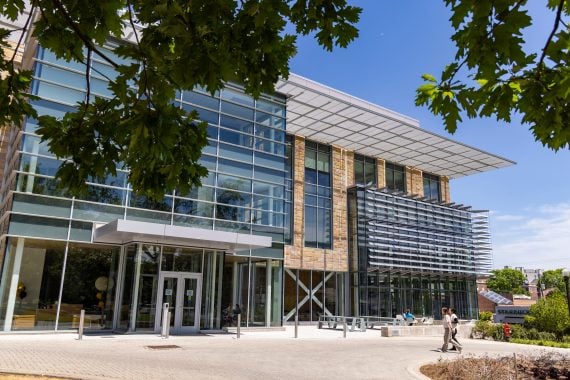
JM: To be honest, I do not make it outside of the Tepper Building very often. However, I really do not need to. Our building is amazing and has all that you need – a five-story glass wall atrium to bring in incredible light, a dining hall, a gym, and an amazing ice cream shop. It is a great place to be your home away from home.
CA: Is there anything else you’d like to highlight about your MBA program or admissions process?
Lastly, we want to get to know our candidates well. There is this myth about top MBA programs that you must be perfect to get it. That is simply not true. Many great candidates have imposter syndrome and think they may not be good enough to be admitted. If you believe you are the right fit for an MBA program, then you likely are. You know yourself better than anyone else. I urge you to reach out and explore MBA programs. Hopefully the Tepper School is on your list. We would love to meet you and explore if the Tepper School MBA is the right program for you.
However, if students are looking to explore more outside of the Tepper School, the Carnegie Museum of Natural History and Phipps Conservatory and Botanical Gardens sit adjacent to Carnegie Mellon University. While technically they aren’t “on-campus,” we are spoiled with them being right next door and are great places to escape to. All students/faculty/staff have free access, so they really feel like an extension of our campus.
And just as a bucket list item for incoming students, everyone should attend at least one show at Purnell Center of the Arts. Carnegie Mellon University has one of the best drama schools in the world and the shows performed there are incredible.