

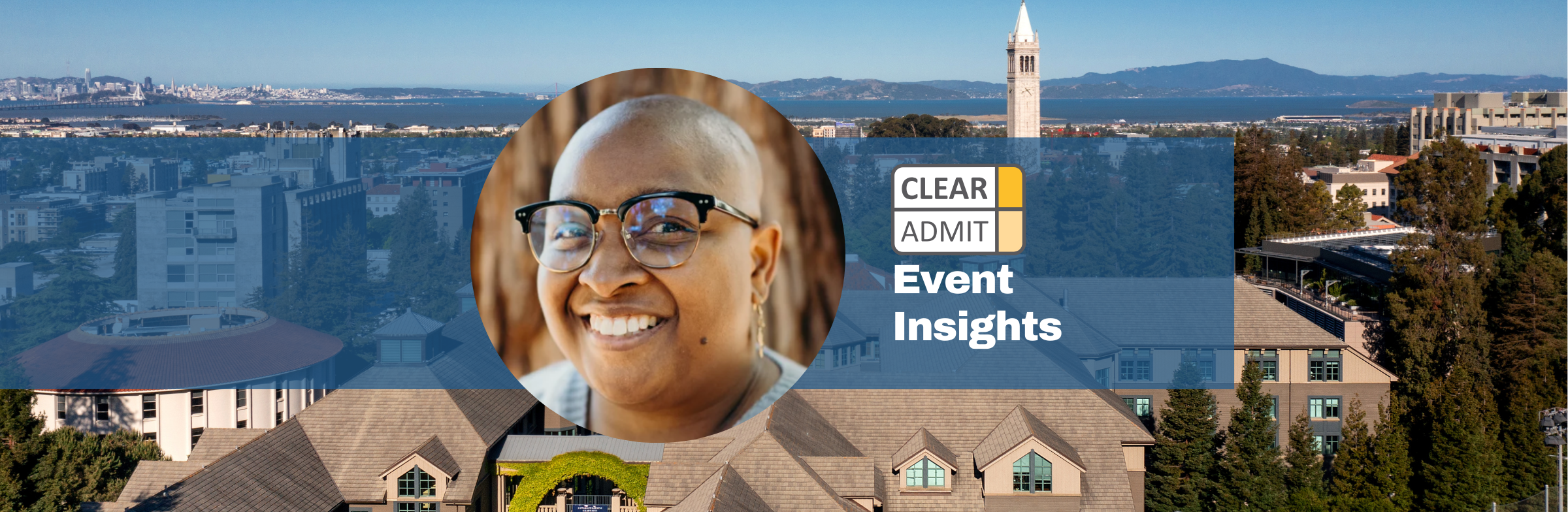
During a recent Clear Admit webinar on deferred MBA admissions, representatives from several leading business schools shared insights into their programs and application processes. Representing Berkeley Haas, Verse Gabrielle (shey/sheir/shem), Senior Associate Director, Accelerated Access, discussed why candidates might consider applying through the school’s deferred pathway and offered practical advice on how applicants can present themselves effectively during the admissions process. Sheir comments highlighted how deferred programs are designed to evaluate potential, encourage exploration, and give candidates the freedom to shape their early careers with confidence.

Why Consider a Deferred MBA?
According to Gabrielle, one of the biggest advantages of a deferred MBA is the ability to gain clarity early in one’s career journey. By securing admission while still in school, students can avoid the challenge of juggling a demanding full-time job with the MBA application process later.
As shey explained, “A deferred MBA program can really provide clarity early on for a candidate. It can allow candidates to secure a spot in a top program while they’re still in this academic mindset.”
Gabrielle noted that the transition from university to the workforce often brings new responsibilities that make preparing applications significantly more difficult. Applying during the final year of undergraduate or graduate studies allows candidates to capitalize on the academic momentum they already have.
Beyond convenience, shey emphasized the freedom that deferred admission creates for early career exploration. Knowing that an MBA seat is reserved can encourage candidates to pursue unconventional opportunities or explore different industries and geographies.
“It allows you to take risks. It allows you to be a little bit more creative and innovative when it comes to your career… knowing that you kind of have an MBA in your back pocket when the timing is right.”
When It May Make Sense to Wait
While Gabrielle highlighted several advantages of deferred admission, shey also acknowledged that it may not be the right path for everyone. Candidates who are unsure about their career direction might benefit from gaining additional professional experience before applying.
Spending several years in the workforce can help applicants develop a clearer sense of their goals and leadership trajectory. As Gabrielle explained, “A traditional MBA path can be a fit for candidates who want full-time work experience before applying… it can give you a little bit more sense of that deepening of your leadership experience.”
In other words, candidates who feel uncertain about their post-MBA aspirations may find it easier to articulate their goals after spending time in industry.
How Berkeley Haas Evaluates Deferred MBA Candidates
Gabrielle also emphasized that Berkeley Haas approaches deferred applicants differently from traditional MBA candidates. Because these applicants are typically earlier in their careers, the admissions team focuses less on polished professional accomplishments and more on indicators of future potential.
“In deferred enrollment… we’re evaluating these candidates based on potential. We don’t know the full polished outcome,” shey explained. “We’re really focused on how you think… how you use your time… and the choices that you’re making right now.”
The school takes a holistic, context-driven approach to reviewing applications. Admissions officers look for alignment across different elements of the application—including the resume, essays, and recommendations—to understand how candidates reflect on their experiences and present their stories.
Gabrielle underscored that authenticity is essential. “There is no true ‘right’ candidate. It truly is about authenticity. It’s about your reflection, it’s about your intentionality and how you present your story.”
An Important Detail About the Interview Process
Gabrielle also shared a lesser-known aspect of Berkeley Haas’s admissions process: interviewers typically only review the applicant’s resume before the conversation. This makes the resume especially important for framing the candidate’s experiences.
“The interviewers only have access to your resume,” shey explained, advising candidates to approach it thoughtfully. “Your resume should be treated like another essay.”
Rather than listing every responsibility, Gabrielle encouraged applicants to emphasize the impact they made and the lessons they learned. Highlighting outcomes and leadership experiences can help interviewers better understand a candidate’s contributions and growth.
The “Alive” Essay: A Window Into the Candidate
One of Gabrielle’s favorite elements of the Berkeley Haas application is the school’s distinctive “Alive” essay, which asks candidates to describe what makes them feel energized or fulfilled.
“This essay really tells us a lot about how an applicant is wired,” shey said, noting that it reveals what motivates someone when there is no external reward.
Through this prompt, the admissions committee gains insight into applicants’ values, curiosity, and creativity. It also offers a glimpse of how they might engage with the Haas community.
“What makes someone feel alive can also connect us to how they collaborate, how they support others, how they take initiative,” Gabrielle explained.
Importantly, the topic does not have to be career-related. Applicants have written about activities ranging from music and cooking to creative hobbies, demonstrating the diversity of passions that candidates bring to the Haas community.
Advice for Applicants
Gabrielle’s overarching advice was simple: be authentic and don’t overthink the process. In a competitive admissions environment where thousands of applications are reviewed, genuine storytelling can make an applicant memorable.
“Please use your voice,” shey urged. “Choose something that really energizes you… even if it’s unconventional.”
Key Takeaways from Berkeley Haas
From Gabrielle’s perspective, several themes stand out for candidates considering deferred MBA programs:
-
Deferred admission offers early clarity and reduces the stress of applying later while working full-time.
-
It enables risk-taking in early career choices, allowing candidates to explore industries and roles before business school.
-
Admissions committees evaluate potential rather than polished experience, focusing on how candidates think and make decisions.
-
Authenticity matters, particularly in essays and interviews that highlight personal values and motivations.
Ultimately, Gabrielle emphasized that deferred programs are about betting on future leaders. By applying early, candidates have the opportunity to demonstrate not just what they have accomplished so far, but who they may become.