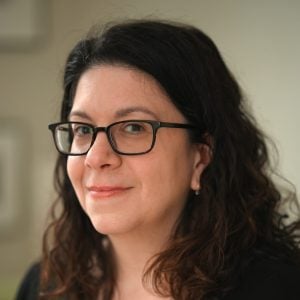



“Have a plan but expect life to edit it,” advises Sarah Mrabet, a graduate of the Indiana Kelley MBA Class of 2025. While working as an engineer in oil & gas and tech, she wanted to move “beyond execution” and engage with problems from a strategic, enterprise-wide perspective. Kelley’s affordability and scholarship support were a practical advantage; coupled with an extensive network of successful alumni and engagement with AI tools in classes, Mrabet developed the skills she needed to identify where to win and how to win for organizations. Read how she navigated a career-switch to consulting at BCG in this Real Humans: Alumni.

Sarah Mrabet, Indiana Kelley MBA ’25, Consultant at BCG
Age: 31
Hometown: Casablanca
Undergraduate Institution and Major: École Mohammadia d’ingénieurs (EMI), Masters in Industrial Engineering
Graduate Business School, Graduation Year and Concentration: Kelley,’ 25 MBA, Double major in Strategy & Finance
Pre-MBA Work Experience: Engagement Delivery Consultant, Salesforce (~2 years, tech consulting); Marketing Business Analyst, Shell Morocco (<1 year, oil & gas marketing); Construction Project Manager, Shell Morocco (~4 years, oil & gas engineering)
Post-MBA Work Experience: Consultant, BCG (current, ~7 months, strategy consulting)
Why did you choose to attend business school?
I am one of the career-switcher MBA pursuers. I graduated in 2017 as an engineer and have had my fair share of experience in both oil & gas and tech, working in technical delivery and implementation roles. Those experiences taught me a lot, but over time I became increasingly drawn to the bigger picture. I wanted to move beyond “execution” and engage with problems from a strategic, enterprise-wide perspective. I wanted to move closer to strategic topics to help organizations solve complex problems and identify where to win and how to win.
The MBA felt like the natural bridge to transition into strategy and more decision-oriented work across both companies and public sector initiatives.
Why Indiana Kelley? What factors figured most prominently into your decision of where to attend?
Indiana Kelley was not my first choice initially, but it became the most practical option for me. The affordability and scholarship support played a major role. To this day, I do not regret pursuing this journey without the burden of student loans.
“No student loan” was truly a make-or-break criterion for me. I needed a school that could offer strong outcomes while still delivering a compelling ROI compared to higher-tuition Top 20 programs.
I also spent significant time researching alumni on LinkedIn, and while placement is never guaranteed, I came across multiple Kelley success stories in my target industries (particularly consulting). Seeing professionals who had successfully made similar pivots gave me confidence and, honestly, hope that my goals were achievable through Kelley.
The internship and job search process were tough and came with their share of hardship. Graduating debt-free provided financial flexibility that, over time, eased the mental strain often associated with major career transitions.
What about your MBA experience prepared you for your current career? How do you feel that your MBA has been an asset when it comes to navigating new challenges, such as AI?
My finance major definitely helped me become more comfortable with concepts I had not previously worked with in my career. However, what helped me the most was the structured thinking framework we developed through consulting trainings, academies, and case competitions.
That experience trained me to break down ambiguous problems quickly and build clear, executive-ready storylines. It significantly accelerated my ability to produce decks and analyses at a level comparable to more tenured consultants.
Another important aspect was the early exposure to AI tools during the program. In many classes, we were encouraged to use AI for research and productivity. That mindset shift was extremely valuable. Today, consulting looks very different than it used to. AI isn’t just a tool anymore; it’s more like a teammate and thought partner you use to research faster, think smarter, and get work done more efficiently.
What was your internship during business school? How did that inform your post-MBA career choice?
My internship at ETS (Educational Testing Service) was a great opportunity that broadened my perspective. I had always been interested in social impact, and at ETS I saw firsthand how education initiatives can drive meaningful change in communities and public systems, which strengthened my interest in pursuing an impact-driven career in the public sector consulting.
I also got hands-on experience with ETS’s expansion in the Middle East, a rapidly growing hub for education and public sector innovation, which reinforced my conviction that this region would be strategically important for my next chapter.
Why did you choose your current company? What factors figured most prominently into your decision of where to work?
I had consulting and specifically MBB, in mind even before starting my MBA, and I stayed committed to that goal throughout the program.
Given my strong interest in the Middle East, BCG stood out through my networking conversations as a firm deeply involved in large-scale transformations across the region and a clear market leader locally. Each MBB firm has a distinct culture, but BCG’s culture and environment resonated most strongly with me and aligned with how I like to work and grow.
Advice to current MBA students:
–One thing you would absolutely do again as part of the job search?
I would absolutely double down on case prep for consulting. It was genuinely enjoyable, like solving structured puzzles, and proved critical not only to succeeding in the recruiting process but also for sharpening my business acumen and problem-solving skills.
–One thing you would change or do differently as part of the job search?
I would have internalized earlier that everyone operates on their own recruiting timeline. I would have stayed focused on my own journey and path, and made sure to get the mental support I needed early, because the job search is ALSO psychological.
–Were there any surprises regarding your current employer’s recruiting process?
Not particularly! Consulting firms tend to have a well-structured and transparent recruiting process. The only variable is the post-interview waiting period, which can range from a week to several months.
–What piece of advice do you wish you had been given during your MBA?
Some factors will always be outside of your control.
The job market can shift, timelines differ. Have a clear goal, but build flexibility into your plans early by preparing a fallback option. In other words: “Have a plan, but expect life to edit it.”