

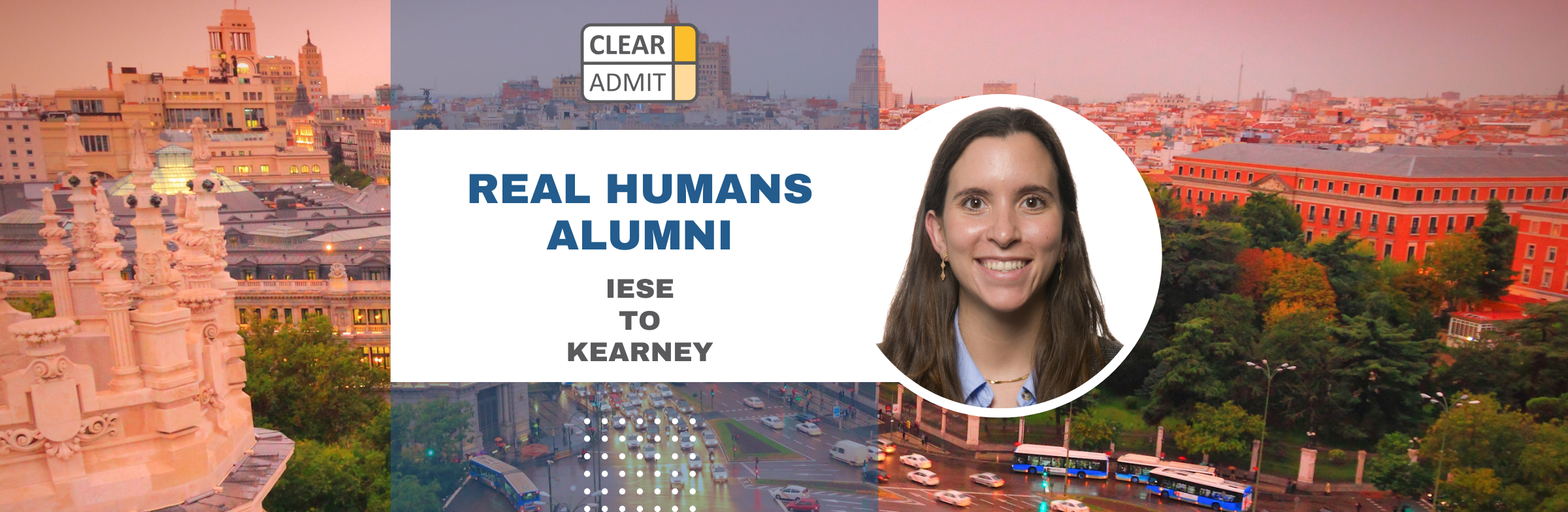
Mercedes Sevilla Monrós wanted to pursue an MBA to gain a broader, more strategic perspective. She chose IESE after experiencing the genuine, human quality the school displayed during the admissions process. “At IESE, the most important value of a company is the person,” she explains. In this Real Humans: Alumni, Sevilla Monrós tells the story of her transformative journey through the MBA program and to a career at Kearney.
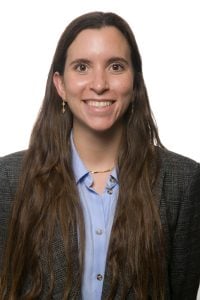
Mercedes Sevilla Monrós, IESE MBA ’25, Associate at Kearney
Age: 29
Hometown: Valencia, Spain
Undergraduate Institution and Major: Industrial Engineering with Major in Logistics and Production, in the Polythecnic University of Valencia, and Master’s in Finance in CEF
Pre-MBA Work Experience: Deloitte Consulting, Business Consultant, 3.5 years + Amazon, Supply Chain Analyst, 2 years
Post-MBA Work Experience: Kearney, Associate, 9 months
Why did you choose to attend business school?
I chose to attend business school because I felt I had a gap in my overall understanding of how businesses operate at a global and strategic level. I had studied Industrial Engineering and later completed a Master’s in Finance, which gave me strong technical and analytical foundations. However, I realized that to truly understand a company end-to-end — beyond operations and numbers — I needed a broader, more strategic perspective.
I also felt that taking two years to pause, reflect, and intentionally decide the direction of my career was necessary. At Deloitte and Amazon, you are often moving very fast. The MBA gave me the opportunity to step back, reassess my long-term goals, and invest in myself in a structured way.
Why IESE? What factors figured most prominently into your decision of where to attend?
IESE stood out to me because of the human quality I experienced throughout the entire admissions process. From the very first interaction, I felt that the school genuinely cared about people — not just about performance or career outcomes.
I also had close friends and family members who had attended IESE and absolutely loved their experience. They consistently highlighted that at IESE, the most important value of a company is the person. That resonated deeply with me because it aligns with my own values and the way I understand leadership and business.
The case method was another strong factor. I was attracted to the idea of learning through discussion, debate, and real-life situations. It pushes you not only to analyze but also to take a position and defend it — something that closely mirrors real business decision-making.
What about your MBA experience prepared you for your current career? How do you feel that your MBA has been an asset when it comes to navigating new challenges, such as AI?
IESE prepared me extremely well, both academically and personally.
Academically, the first year is very demanding. The intensity forces you to develop discipline, structured thinking, and the ability to synthesize large amounts of information quickly — all skills that are essential in consulting. The case method also trains you to deal with ambiguity and incomplete data, which is exactly what happens in real client situations.
Beyond academics, IESE significantly strengthened my soft skills. You learn how to communicate clearly, influence without authority, listen actively, and work effectively in diverse teams. Given that the MBA is highly international and entirely in English, it also builds confidence in operating in global environments.
In the second year, having more flexibility allowed me to explore industries and topics I was particularly interested in, while also dedicating time to personal and professional development. This balance helped me transition into my current role with greater clarity and confidence.
When I started my MBA in 2023, AI was nothing comparable to now in business and education. What I appreciated most is that IESE chose not to treat AI as a threat, but as a tool to enhance learning. In some classes, we even worked on cases using AI, which showed us both its immense potential and its limitations. While AI can significantly enhance analysis and efficiency, the experience reinforced that human judgment, critical thinking, and ethical decision-making remain essential in the business environment
What was your internship during business school? How did that inform your post-MBA career choice?
During my MBA, I had the opportunity to do two internships: first in strategic consulting at Kearney, and later in venture capital at Big Sur Ventures. Being able to experience both industries firsthand was incredibly valuable and quite unique.
The consulting internship allowed me to work on high-impact strategic problems, collaborate closely with teams, and experience the fast-paced, structured approach to solving complex business challenges. I enjoyed the intensity, the teamwork, and the exposure to senior stakeholders.
At Big Sur Ventures, I was exposed to a completely different perspective — evaluating startups, understanding founder dynamics, analyzing business models at early stages, and thinking about long-term value creation from an investor’s lens. It was a much more entrepreneurial and forward-looking environment.
Having the chance to test both paths was decisive. Instead of making a theoretical decision, I could compare them based on real experience.
Ultimately, consulting felt like the right post-MBA step for me because of the structured problem-solving, the steep learning curve, and the breadth of industries and challenges.
It was also a unique experience because both internships allowed me to put into practice everything I had learned during the first year of the MBA — from financial analysis and strategy to communication and stakeholder management. It made me realize how much I had grown in just one year.
Why did you choose your current company? What factors figured most prominently into your decision of where to work?
I chose Kearney because of its strong focus on operations and transformation, which connects well with my background in engineering and supply chain, while still offering broad strategic exposure.
Equally important was the culture. Throughout the recruiting process, I consistently felt a collaborative and down-to-earth environment. The people I met were ambitious but approachable, and I could see myself learning from them and growing alongside them.
The combination of high-impact work, strong team culture, and opportunities for long-term development were the main factors in my decision.
 Advice to current MBA students:
–One thing you would absolutely do again as part of the job search?
I would focus very early on securing a strong internship, as it is ultimately the first and most important step toward landing a full-time post-MBA role. I would prioritize understanding the recruiting timelines, preparing properly, and being intentional about that first opportunity. The internship is not just a summer experience — it often defines your post-MBA trajectory — so I would center my energy on that from the beginning.
–One thing you would change or do differently as part of the job search?
I would probably start reflecting even earlier on what I truly wanted long term, rather than focusing initially on what seemed like the “natural” next step based on my background. The MBA is a unique opportunity to explore, and I would encourage future students to take more time upfront for that self-reflection.
–Were there any surprises regarding your current employer’s recruiting process?
I was positively surprised by how much emphasis was placed on cultural fit and personal alignment, not just technical performance. The process was rigorous, but I appreciated that they were also evaluating whether we would enjoy working together long term.
–What piece of advice do you wish you had been given during your MBA?
I wish someone had told me to learn even more from second-year students. They already went through the internship process, recruiting challenges, and academic adjustments. Their perspective is incredibly valuable because they have fresh experience — including mistakes they are willing to share.
Taking the initiative to ask for advice, learn from their experiences, and understand what they would have done differently can significantly shorten your own learning curve.