


After beginning his career in public accounting, Mike You became increasingly drawn to the broader strategic questions behind corporate decisions and developed a strong interest in investment banking. Looking for a business school that enabled a successful career pivot while also providing a community for his family led him to Duke Fuqua for his MBA. In this installment of Real Humans: Alumni, we learn about Mike’s journey to a new career at J.P. Morgan.
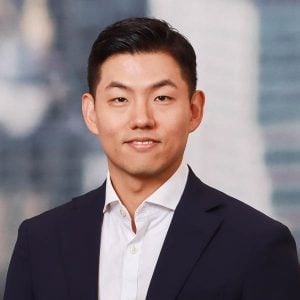
Mike You, Duke Fuqua MBA ’23, Investment Banking Associate at J.P. Morgan
Age: 34
Hometown: Seoul, Korea
Undergraduate Institution and Major: Indiana University, Accounting and Finance
Pre-MBA Work Experience: Senior Associate, KPMG, 5 years, Public Accounting
Post-MBA Work Experience: Investment Banking Associate, J.P. Morgan, 3 years, Finance
Why did you choose to attend business school?
It felt natural to begin my career in public accounting after studying accounting and finance as an undergraduate. KPMG was almost an extension of college — a place where I built a strong technical foundation and learned how to work effectively with clients.
Over time, however, I became increasingly drawn to the broader strategic questions behind corporate decisions and developed a strong interest in investment banking. I saw business school as the best platform to open doors to the industry, while also broadening how I think and lead — sharpening my judgment and becoming a more effective communicator in an environment shaped by diverse perspectives.
Why Duke Fuqua? What factors figured most prominently into your decision of where to attend?
Fuqua stood out to me because it felt balanced and grounded. I was pursuing a career pivot, but I was also looking for a community where my family could feel at home.
During the application process, I spoke with a Fuqua alumnus in investment banking who had a background similar to mine. He walked me through his recruiting experience in detail, and I was struck by how supportive the Fuqua community was throughout the process. That combination mattered to me. I wanted an environment that would push me professionally while also providing the structure and support to succeed.
On a personal level, I was married before starting business school, so choosing a place that felt sustainable for both career and family was important. Fuqua’s inclusive culture made that decision much clearer.
What about your MBA experience prepared you for your current career? How do you feel that your MBA has been an asset when it comes to navigating new challenges, such as AI?
Fuqua prepared me for investment banking both quantitatively and qualitatively. I took finance and advanced accounting courses that built the technical foundation I rely on today, and the interactive classroom environment — led by professors with deep industry experience — helped me connect theory to practice. I often followed up after class to deepen my understanding, and professors were generous with their time.
Fuqua also shaped how I approach challenges. Instead of viewing them as purely disruptive, I focus on what I can control and how to turn situations into opportunities — a mindset that has been invaluable in fast-paced environments.
What was your internship during business school? How did that inform your post-MBA career choice?
I interned at J.P. Morgan as an MBA Associate, and the experience reconfirmed my interest in investment banking. It gave me a clear picture of the demands and expectations of the role, and by the end of the summer, I felt confident that investment banking was the right path for me.
Why did you choose your current company? What factors figured most prominently into your decision of where to work?
After my internship at J.P. Morgan, I genuinely wanted to return. The team was supportive, and the overall system — from formal training to day-to-day execution — felt well built and intentional. There was a clear structure in how associates are developed, and I appreciated that investment in people.
At the same time, the standards were high, and people took real pride in their work. I felt I could start on a solid footing, continue learning, and steadily raise my own bar. It struck the right balance between support and performance, which made coming back an easy decision.
 Advice to current MBA students:
–One thing you would absolutely do again as part of the job search?
Set a clear goal early. I entered business school with a defined objective of breaking into investment banking. That clarity allowed me to focus my networking, coursework, and preparation strategically. Having a clear direction significantly reduces uncertainty during recruiting.
–One thing you would change or do differently as part of the job search?
I was very focused on outcomes during recruiting. In hindsight, I wish I had appreciated the process more — the conversations, the learning, and the opportunity to reflect on what I actually wanted.
Looking back, I admired classmates who were able to genuinely enjoy the process and stay energized throughout. I’ve since realized that having that perspective makes the experience not only less stressful, but also more meaningful.
–Were there any surprises regarding your current employer’s recruiting process?
I was pleasantly surprised by how thoughtful and structured the process was. The expectations were clear, and communication was consistent throughout. Given the size of the firm, I expected it to feel more impersonal, but the interactions felt surprisingly personal and intentional.
–What piece of advice do you wish you had been given during your MBA?
I wish someone had emphasized how powerful it is to be selective. There are endless opportunities during an MBA, and it’s easy to overcommit. Being more intentional about what to say no to would have helped me focus more deeply on what mattered most.