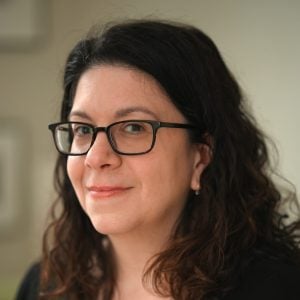


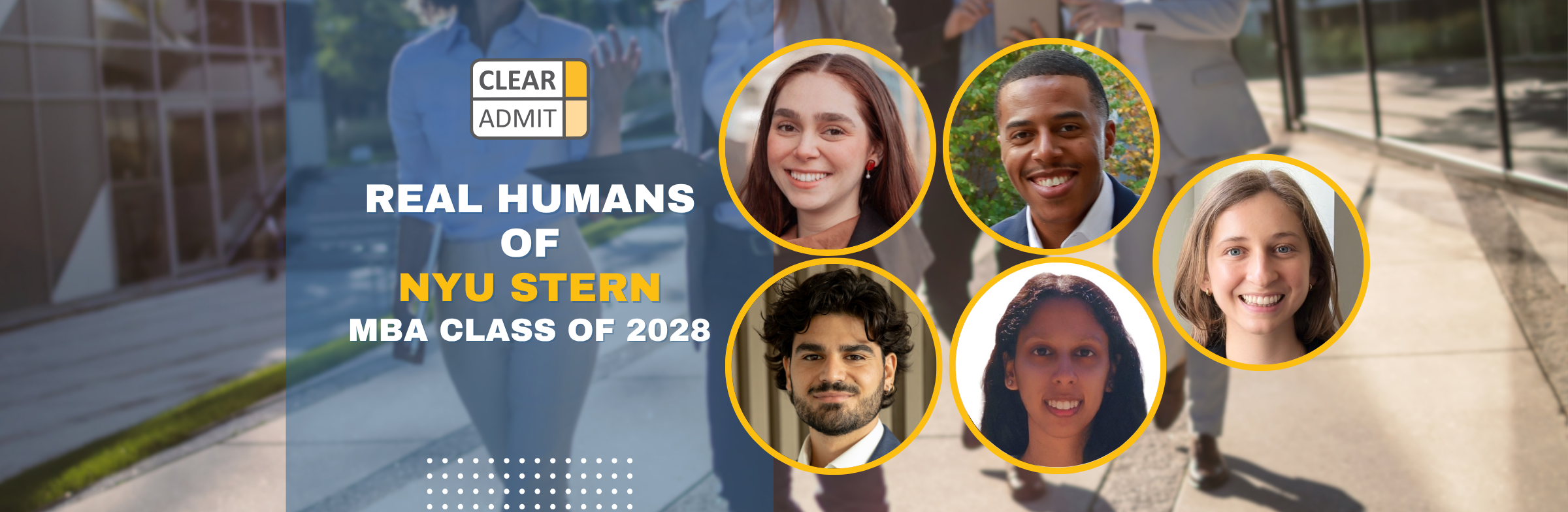

Tehran Stokes, NYU Stern MBA Class of 2028
Age: 35
Hometown: Chicago, IL
Undergraduate Institution and Major: DePaul University, Honors Bachelor of Arts in Economics, summa cum laude
Pre-MBA Work Experience: Before Stern, I spent most of my professional career in wealth management at Bank of America Merrill Lynch. I began in the Financial Advisor Development Program in Chicago before moving to Houston, where I progressed through roles as a Financial Solutions Advisor, Wealth Management Client Associate, and ultimately Relationship Manager on an ultra-high-net-worth wealth management team. I also spent a year working in residential real estate.
Earlier in my journey, I purchased, operated, and eventually sold my family’s restaurant in Chicago. That experience became foundational to my interest in business, economics, and finance.
Why did you decide to attend business school? Why now?
My interest in business became personal long before I began working in finance. One of the most formative experiences of my life was purchasing, operating, and eventually selling my family’s restaurant in Chicago. Running a small business gave me an early appreciation for what ownership entails, especially the responsibility of making decisions when the consequences affect not only you but also your family, employees, and customers.
That experience sparked a deeper interest in economics, finance, and how businesses create value. I eventually built my career in wealth management, where I worked with entrepreneurs, executives, and families making increasingly complex decisions about capital. As my responsibilities grew, I became increasingly interested in the businesses behind that wealth. I wanted to understand how companies allocate capital, evaluate strategic opportunities, finance growth, and make the decisions that can fundamentally change their trajectories.
Business school represents the next step in that progression. I came to Stern with enough professional experience to understand where my interests lie, but also with the humility to recognize how much more I have to learn. I want to deepen my capabilities in finance, accounting, valuation, strategy, and leadership and transition into a role where I can advise companies and their leaders through some of their most consequential strategic and financial decisions.
Why did you choose NYU Stern? What factors figured most prominently into your decision of where to attend?
Three things stood out to me about Stern: the strength of its finance ecosystem, New York City, and the culture of the school.
I wanted to attend a program where finance was deeply embedded in both the academic and professional experience. Stern’s curriculum, faculty, alumni network, and proximity to the financial community made it particularly compelling for the transition I am pursuing.
New York was equally important. There are few places where finance, technology, entrepreneurship, media, and global business intersect at this scale. At Stern, the companies and industries we discuss in class are often only a subway ride away. I wanted an MBA experience where the boundary between studying business and experiencing it firsthand could become remarkably thin.
Finally, I was drawn to Stern’s cultural emphasis on IQ + EQ. Ambition matters to me, but so do character, self-awareness, and how people treat one another. I wanted to be surrounded by exceptionally capable people who would challenge me intellectually without sacrificing the sense of community that makes an MBA experience meaningful.
What do you think is your most valuable or differentiating contribution to the Class of 2028?
I think my most valuable contribution will be the combination of perspective, curiosity, and a genuine desire to help other people grow.
My path to Stern has been anything but linear. I’ve been responsible for a family business, worked in real estate, and built a career in wealth management. Those experiences have allowed me to see business from very different vantage points, from confronting the everyday realities of operating a small business to helping advise families managing significant wealth. They have also taught me that there is rarely only one path to where you want to go.
I’ve also learned that knowledge becomes more valuable when you share it. Mentorship is important to me, and I enjoy helping other people develop. I hope to be the classmate who spends an extra hour helping someone understand a concept, prepare for an interview, think through a career decision, or simply see a problem from another perspective.
To me, being part of a great MBA community is not just about what you gain from it. It is about what you contribute to it and whether you leave it stronger than you found it.
Tell us a fun fact about yourself that didn’t get included on your application:
I’m a huge anime fan.
As unexpected as it might sound, anime played an important role in my development. When I was young, those stories introduced me to characters wrestling with adversity, responsibility, friendship, sacrifice, discipline, and what it meant to keep going when things became difficult.
Looking back, I think some of my earliest ideas about leadership, empathy, heroism, and grit came from the characters I watched. I still love anime today. I just never expected that something I watched for entertainment as a kid would ultimately influence how I think about the person I want to be.
Post-MBA career interests:
I’m fascinated by how technology is reshaping companies, industries, and infrastructure. I want to pursue a role that will help me develop the financial and strategic judgment to help businesses identify opportunities, navigate change, and grow. Longer term, I want to build a career working on complex problems alongside people and organizations shaping the future.
Advice for Current Prospective Applicants:
–What is one thing you would absolutely do again as part of your application process?
Spend meaningful time understanding why I wanted an MBA before becoming overly focused on where I wanted an MBA.
Once I became clearer about what I wanted from business school, evaluating programs became much easier. Instead of focusing primarily on rankings, I could ask more useful questions: Does this school’s culture fit me? Will its curriculum help close my skill gaps? Does its location support my goals? Can I genuinely see myself contributing to this community?
That clarity also made the application process more authentic. I stopped trying to reverse-engineer what I thought a school wanted to hear and focused instead on finding the school where my goals, values, and aspirations genuinely fit.
–What is one thing you would change or do differently?
I would have trusted my own story earlier.
It’s very easy during the MBA application process to compare yourself with candidates who attended different universities, worked at different companies, or followed more traditional paths.
I spent more time than I should have wondering how my background compared with someone else’s.
Eventually, I realized that the objective wasn’t to construct the “perfect” MBA profile. It was to explain honestly what I had done, what those experiences had taught me, where I wanted to go next, and why business school was important to getting there.
Our experiences don’t need to look alike to be valuable. The parts of your story that seem unconventional may be the very things that have shaped you most.
–What is one part you would have skipped if you could, and what helped you get through it?
The overthinking.
There is an enormous amount of information available to MBA applicants, including rankings, forums, employment reports, admissions consultants, podcasts, Reddit threads, and advice from current students and alumni. Much of it can be useful, but at some point additional information stops creating clarity and starts creating anxiety.
What helped me was narrowing my attention to what I could actually control: building the strongest application I could, speaking with people who genuinely understood the programs I was considering, and thinking carefully about the kind of environment in which I would thrive.
At some point, you have to stop trying to optimize every variable and trust the work you’ve done.
 What is your initial impression of the NYU Stern students/culture/community?
The generosity has stood out to me.
Stern students are ambitious, and you feel that almost immediately, but I’ve been equally impressed by how people still are so willing to help one another. Whether someone is sharing recruiting advice, explaining a technical concept, making an introduction, or simply inviting someone into a social circle, I’ve already seen that individual ambition and community don’t have to be mutually exclusive.
I’ve also been struck by the range of experiences represented in the class. I can have conversations with classmates who previously worked in finance, technology, consulting, the military, nonprofits, entertainment, or industries I know almost nothing about. For someone who genuinely enjoys learning, that’s an exciting environment to be in.
The professors have been equally impressive. They are extraordinarily smart and capable, not only within their specific fields, but often across multiple disciplines. That combination of intellectual breadth, deep expertise, and genuine enthusiasm for teaching creates an environment that makes you want to ask better questions, challenge your assumptions, and learn as much as you possibly can.
What student organizations have you joined/are you hoping to join and why?
I’m particularly interested in the Graduate Finance Association and Stern’s broader finance and technology communities because they offer programming and access to people who can help me close the gap between what I know today and what I hope to understand.
I also don’t want my involvement at Stern to revolve entirely around recruiting. Mentorship and service have been important parts of my life, and I want to find opportunities to support classmates and engage with the broader community.
Over time, I especially hope to help students coming behind us navigate their own transitions. I’ve benefited tremendously from people who were willing to share their time, knowledge, and experience with me. I believe that as we progress, we have a responsibility to do the same for others.
What is one thing you have learned about NYU Stern that has surprised you?
How quickly New York becomes part of the educational experience.
I understood intellectually that attending Stern meant going to business school in New York City, but I underestimated how much the city itself would become an extension of the classroom. The proximity to companies, alumni, industry events, speakers, and professionals creates opportunities for conversations and experiences that would be difficult to replicate elsewhere.
I’ve also realized that the education New York provides extends far beyond business. Its museums, art galleries, architecture, neighborhoods, cuisine, and extraordinary diversity of people and cultures provide a different kind of classroom. The city constantly gives you opportunities to encounter unfamiliar ideas, experience another culture, develop a new appreciation for art or history, or simply become more curious about the world around you.
That has expanded my idea of what an MBA education can be. Stern is allowing me to develop professionally and intellectually, while New York is simultaneously pushing me to become more culturally curious and engaged with the world. It makes the MBA feel less like two years removed from life and more like two years immersed in it.
What is one thing you are most excited about in your first year?
Learning at an intensity that would be difficult to recreate anywhere else.
What excites me most about Stern is knowing that almost every day I will encounter something I don’t fully understand yet: a new industry, a difficult finance concept, a classmate’s perspective, a professor’s framework, or a company I’ve never studied before. I came to Stern with clear professional goals, but I don’t want those goals to narrow my MBA experience. I want to leave my first year understanding finance more deeply, thinking more rigorously, asking better questions, and having my assumptions challenged by people who see the world differently than I do.
Most of all, I want to leave the year changed by what I’ve learned and by the people I’ve learned from. And somewhere along the way, I hope to become as valuable a resource to my classmates as I know they will be to me.