


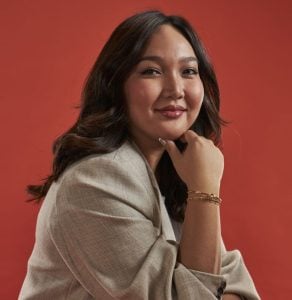
Stephanie Anne Kubota, Esade MBA Class of 2028
Age: 34
Hometown: Manila, Philippines
Undergraduate Institution and Major: Boston University, Communications
Pre-MBA Work Experience: CEO of a B2B corporate venture in eCommerce and loyalty SaaS; 4 years as CEO and 10 years of total professional experience.
Why did you make the decision to attend business school? Why now?
I had spent the better part of a decade building my career in technology and corporate ventures, including four years leading a B2B SaaS business as CEO. It was an incredibly formative experience: I had the opportunity to build teams, make difficult strategic decisions, manage a P&L, and experience firsthand what it means to be accountable for a business and the people behind it.
At the same time, I realized that much of what I knew about leadership and business had been learned through experience, largely within one market and ecosystem. I wanted to challenge the assumptions I had accumulated along the way and learn alongside people who had built their careers in completely different industries, countries, and cultures.
The timing also felt right. I had reached a natural point where stepping away for an MBA would not be an interruption to my career, but an opportunity to deliberately shape its next chapter. I wanted the space to learn, broaden my perspective, and think more expansively about where and how I want to create impact over the next decade.
Why did you choose Esade? What factors figured most prominently into your decision of where to attend?
Esade was actually the only business school I applied to.
I had a fairly specific idea of what I wanted from an MBA, and Esade was where the different pieces came together. Its strength in entrepreneurship resonated with my experience building and scaling a business, while its international cohort offered the opportunity to learn alongside people with perspectives very different from my own.
Barcelona was also genuinely part of the decision. I wanted the experience to extend beyond the classroom—to learn a new language, navigate a new culture, and build a life somewhere unfamiliar.
What ultimately gave me the confidence to apply only to Esade was how personal the admissions process felt. I never felt reduced to a résumé, title, or test score; there was genuine curiosity about how I thought and who I would be within the community.
I wasn’t looking to collect MBA offers. I was looking for one experience compelling enough to leave my existing life for, and Esade was it.
What do you think is your most valuable or differentiating contribution to the Class of 2028?
I think my most differentiating contribution comes from having spent much of my life and career operating between different worlds.
Personally, I grew up Japanese-Filipino in Asia, but with a largely Western education through international school and university in the United States. Professionally, I spent much of my career building a corporate venture that operated with the speed and ambiguity of a startup, while being governed by one of the Philippines’ largest conglomerates. Both experiences taught me to understand different perspectives and, often, find a way to work between them.
I also come into the MBA with ten years of professional experience and four years leading a business. That gives me practical experiences I can contribute to the classroom, including the messier realities behind some of the frameworks we discuss. But I’m equally excited to widen my own horizons: exploring how people from different cultures, industries, and backgrounds approach similar problems, and giving myself the space to both learn and unlearn.
Post-MBA career interests:
I’m particularly interested in joining a scale-up in a strategy, growth, or innovation role. Having experienced what it takes to build a business and establish traction, I now want to learn what comes next: scaling a proven business through market expansion, new products, innovation, and investment for accelerated growth.
I also want to move from B2B into B2C, ideally in consumer-facing sectors such as retail, wellness, hospitality, or consumer technology, where I can better understand how businesses build brands, engage customers, and scale across markets.
Geographically, I hope to continue my career in Europe, ideally in a role with broader EMEA exposure. I’m keeping some flexibility around the exact opportunity, as part of my MBA goal is to explore industries, markets, and ways of operating that I haven’t encountered before.
Advice for Current Prospective Applicants:
–What is one thing you would absolutely do again as part of your application process?
I would absolutely spend time reflecting on my own story before trying to figure out what an admissions committee might want to hear.
With ten years of work experience, there were many accomplishments and experiences I could have highlighted. The most useful part of the process was stepping back and asking which ones actually explained who I was, how I had grown, and why an MBA made sense for me at this particular point in my career. It helped me build an application that felt coherent and, more importantly, genuinely mine.
That reflection also made my interview much easier. Rather than memorizing polished answers to potential questions, I understood the story behind my application well enough to have a much more natural conversation.
–What is one thing you would change or do differently?
I would start preparing for the standardized test much earlier. If you know an MBA might be in your future, get the test out of the way early, GMAT and GRE scores are valid for five years anyway.
If you’re still in university or a recent graduate, take it while studying is still fresh in your brain. Relearning standardized-test math after years in the workplace is not particularly fun! I’d also leave enough time for a retake, so it doesn’t feel like a crisis if your first score isn’t what you hoped for.
–What is one part you would have skipped if you could—and what helped you get through it?
Definitely the standardized test!
What helped me was reminding myself that the application is holistic. I initially approached the test as though there were a magic minimum score I had to reach before the rest of my application would even matter. Eventually, I realized it was just one part of a much bigger picture: alongside my experience, essays, recommendations, motivations, and interview.
That helped me focus on doing my best on the test without letting one number define the strength of my entire application.
 What is your initial impression of the Esade students/culture/community?
The diversity is even more striking in person than it appears on paper. In a single day, I can have conversations with classmates from Latin America, Europe, Africa, Asia, and North America, all approaching the same question from completely different perspectives.
I’ve particularly appreciated the intimacy of a smaller cohort. There’s space to get to know classmates, professors, and faculty beyond surface-level interactions. I’ve also been pleasantly surprised by how collaborative the culture is; people are accomplished but there isn’t a constant need to prove it. That combination of diversity, intimacy, and genuine curiosity has been my favorite part so far.
I’ve also been struck by how often the answer in class is, “It depends.” After years of leading a business and making decisions quickly, Esade is encouraging me to sit with ambiguity a little longer. Rather than immediately deciding what I would do, I’m learning to explore why several answers might be valid depending on the context. It’s exercising a part of my brain I haven’t had the luxury of using as often in recent years.
What student organizations have you joined/are you hoping to join and why?
I’m planning to join the Tech and Entrepreneurship clubs, as well as the Asia Club and Women in Business & Allies.
Tech and Entrepreneurship are both close to my background. For Entrepreneurship, I’m interested in the VP of Skills Training role, where I can share some of my experience in pitching, fundraising, due diligence, and negotiations. I’d also like to join the Tech Club’s hackathons and hopefully see some collaboration between the two clubs.
I’m excited about Asia Club as a way to celebrate different holidays and traditions, learn more about other Asian cultures, and, of course, eat good food. I think it’ll also be interesting to see where our cultures overlap and where they’re completely different.
For Women in Business & Allies, I’m curious to hear about the experiences of women from different countries and industries, find common ground across those experiences, and help build a strong support system and community around the interests we share.