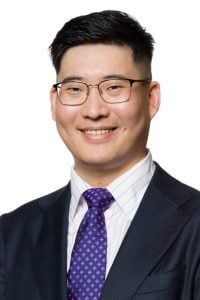
Huan Qin, IESE MBA Class of 2028
Age: 33
Hometown: Xianyang, Shaanxi, China
Undergraduate Institution and Major: Tianjin University (China) Chemical Engineering
PhD Institution and Major: Tufts University (US) Chemical Engineering
Pre-MBA Work Experience: Product Quality Engineer, Tech, Apple, 4 years
Why did you make the decision to attend business school? Why now?
Over my career, I have developed three core advantages that can position me well for a Product Manager role: technical expertise, operational experience, and entrepreneurial grit. My technical foundation was built during my PhD, where my research combined experimentation with rigorous data analytics. I was particularly drawn to the theoretical and statistical aspects of research, which trained me to interpret complex data and challenge assumptions. This strength translated naturally into my early role as a data scientist at CGG, where I applied analytics to real business problems and learned to communicate technical insights to clients such as Exxon and Chevron. I later brought this analytical rigor to Intel’s technology development division, using data to inform how cutting-edge processes could be deployed to build better semiconductor products.
My operational experience was shaped deeply at Apple, where I learned how to scale advanced technology into global products. As a Product Quality Engineer at Apple, my role is to ensure that the cutting-edge hardware innovations we develop meet the uncompromising standards of our global customer base. This experience has been my first true immersion into the product lifecycle—working cross-functionally with Design, Operations, and Supply Chain teams to ensure reliability at a scale of millions of units. Through this experience, I developed the operational judgment required to make product decisions in complex, globally distributed systems. In parallel, building my own startup allowed me to develop entrepreneurial grit by testing product-market fit, operating under tight resource constraints, and taking full ownership of outcomes under uncertainty.
While these experiences have prepared me to execute and deliver at scale, my time at Apple has also clarified the gap I need to bridge: leading the next generation of hardware products requires mastery of the business dimensions of product management—strategy, finance, and end-to-end decision-making. An IESE MBA will allow me to systematize this knowledge and move from execution-oriented judgment to true ownership of product direction.
Why did you choose IESE? What factors figured most prominently into your decision of where to attend?
My career has been defined by the pursuit of technical excellence—first through the rigors of a PhD and now within Apple’s high-stakes Product Quality environment. However, my professional goal is to transcend the technical specialist silo and become a leader who can navigate the complex intersections of global business. IESE’s General Management focus and its unwavering commitment to the Case Method are the primary reasons it is my top choice. I want to be in a classroom where my way of thinking and decision-making is challenged by 70 different cultural and professional perspectives, forcing me to refine my communication skills and my logic into leadership.
My understanding of this community was solidified during a recent coffee chat with several alumni and Admission director Dongmei in Shanghai. Ran Ge described how IESE’s rigors—specifically the intense first-year Study Group—mimic the high-pressure environment of the real business world, but with a focus on collaborative problem-solving rather than individual output. They shared how the Case Method taught them to listen as much as they speak—a lesson that is vital for my transition into Technical Product Management. Seeing how Guan Wang applied IESE’s values to lead with empathy in a senior role at Sanofi convinced me that IESE is not just a school, but a transformative community. Besides, everyone from IESE is so enthusiastic and willing to help whenever I reached out to them after the event. I believe this community is the right community I should be part of.
Finally, the IESE community offers a unique bridge to my goals in the tech world. I am eager to contribute to the IESE Tech Club, leveraging my experience to lead discussions on scaling hardware for sustainability. I am also drawn to Barcelona’s vibrant 22@ innovation district, which provide the perfect ecosystem to stress-test my entrepreneurial ambitions.
What do you think is your most valuable or differentiating contribution to the Class of 2028?
Most PhD researchers are trained to look deep into a microscope; my career has taught me to look across the table. What makes me unique is the intersection of my technical rigor as a material scientist and my role as the “organizational glue” at Apple.
I am a Technical Translator who can bridge the gap between scientific possibility and commercial reality. In a world of increasing specialization, I have cultivated the rare ability to translate complex deep-tech concepts into shared business goals, enabling diverse teams to move in unison toward a single launch deadline. While my peers focused exclusively on publications, I simultaneously built a startup to commercialize our findings. This experience became my first real exposure to ambiguity – learning how to frame technical insight as a product with global business impact, pitch to investors, and align scientific innovation with market needs.
My connective role was forged during my PhD when I worked with researchers from different countries and academic traditions, and it fully matured at Apple. As a Product Quality Engineer, I occupy a high-pressure nexus between Engineering, Design and Global Supply Managers. I possess no direct authority over these teams, yet I am responsible for the product’s reliability. My uniqueness lies in my Diplomatic Influence—using empathy and evidence to resolve conflicts between a designer’s aesthetic vision and a manufacturer’s physical constraints. I am the person who walks into a heated cross-functional meeting and refocuses the group on our shared commitment to the user, effectively acting as the lubricant that keeps Apple’s complex New Product Introduction machine running smoothly. I believe that this personality can contribute to building a great study group environment at IESE.
Tell us a fun fact about yourself that didn’t get included on your application:
I am a big fan of doing sports. In my free time, I enjoyed doing sports to release pressure and refresh myself. Among all kinds of sports, skiing is my favorite sports.
Skiing satisfies my drive for technical mastery and calculated risk-taking. I enjoy the problem-solving aspect of navigating complex terrain and variable snow conditions. It requires a balance of intense focus and physical adaptability. After skiing at the majority of mountains in the US, I am eager to participate in the IESE slope club where I hope to build deeper bonds with my peers while exploring the mountains in Andorra.
Post-MBA career interests:
My short-term goal is to leverage an MBA to transition into a Product Manager role at a global technology leader such as Google, Amazon, or Tesla, ideally within their European headquarters. My long-term goal is to found and lead an AI hardware company that makes hardware capable of supporting AI models in a way that benefits users worldwide. While AI models have grown unprecedentedly powerful since ChatGPT, there remains a significant gap between these models and their hardware deployment. Following my short-term goal as a Product Manager in Big Tech, where I will master the art of managing complex roadmaps and cross-functional global teams, I intend to find the real pain point of end users and build a diverse team to work on AI hardware people truly needs in this AI era.
Advice for Current Prospective Applicants:
–What is one thing you would absolutely do again as part of your application process?
Reach out to the IESE community early. The coffee chat in Shanghai with alumni and Admissions Director Dongmei was the turning point for me. Hearing Ran Ge describe how the first-year Study Group simulates real business pressure through collaboration, and how the Case Method taught her to listen as much as speak, made IESE feel concrete rather than abstract. Seeing how Guan Wang carries IESE’s values into a senior role at Sanofi gave me a picture of who I could become. Everyone I contacted afterward was generous with their time, and that responsiveness is what convinced me this was the community I wanted to join. I would do it again in a heartbeat.
–What is one thing you would change or do differently?
I would start my self-reflection much earlier. My experience spans a PhD, technology development at Intel, quality engineering at Apple, and my own startup. Connecting these into a coherent narrative took lots of efforts and many drafts. If I did it again, I would begin by writing down the common thread, which is translating between technical possibility and commercial reality, before drafting any essay. It would have saved time and made each answer sharper from the start. If I did earlier, I may be able to discuss with IESE alumni to gain more insights.
–What is one part you would have skipped if you could—and what helped you get through it?
The standardized test preparation. Studying for it while working full-time at Apple was draining, and it felt far from the problem-solving I enjoy. As a perfectionist, I struggled to accept my GMAT score and took it several times. I believed that the score is just a small portion in your application. As long as the score is acceptable, moving forward with essays and self-exploration is the right direction for your MBA application.
What is your initial impression of the IESE students/culture/community?
Warm, collaborative, and genuinely international. Even before arriving, I noticed that students and alumni respond quickly, share candidly, and seem to want each other to succeed. After I got admitted and accepted the offer, I reached out to several second year students to share their experience and everyone is so kind and ready to answer all questions I had. I’m also struck by the diversity of the class. Having 70 nationalities in one room means my assumptions will be challenged daily, which is exactly what I want from an MBA. People here are ambitious but down-to-earth, and that balance is rare.
What student organizations have you joined/are you hoping to join and why?
IESE Tech Club: I want to contribute my experience in hardware and scaling products, and lead discussions on building sustainable hardware at scale. I also want to learn from classmates working in software, AI, and venture.
Ski/Slope Club: Skiing is my favorite sport. It rewards technical mastery and risk-taking, and I’m excited to explore the mountains in Andorra with classmates and build bonds beyond the classroom.
Startup and Entrepreneurship club: Given my startup background and long-term goal of founding an AI hardware company, I want to pressure-test ideas with peers and tap into Barcelona’s 22@ innovation ecosystem.
What is one thing you have learned about IESE that has surprised you?
How much the Study Group shapes the experience. I understood the Case Method conceptually, but I was surprised to learn that the first-year Study Group is designed to be a small, high-trust team where you learn to prepare, debate, and decide together. It isn’t just a study aid, it’s a leadership lab. I was also pleasantly surprised by how personally involved alumni are. They didn’t just share advice, they followed up and stayed in touch.
What is one thing you are most excited about in your first year?
Treks. We will have an opportunity of 3-day trip in November to visit different locations and varieties of companies depending on your own interest, consulting, tech, etc. Recently I learned there’re so many interesting locations organized by student clubs. I believe that I can learn a lot during my visit to the companies.