

As part of his Global Master’s in Management studies at London Business School, Henrik Rettedal Skjaeveland, GMiM ’27, signed up for a Global Experience in the tech hub of Austin, Texas–and there he found a glimpse of the future, a dedicated community, and pure inspiration. Read on for more about his experience in this Fridays from the Frontline.
Austin Global Experience – Breakthrough Technology
 By Henrik Rettedal Skjaeveland, LBS GMiM ’26
Hometown: Stavanger, Norway
Undergraduate institution & major: The Norwegian School of Economics (NHH), Business Administration and Economics
Pre-MiM Work Experience: ~2 years as a strategy consultant at Implement Consulting Group, Oslo
When I signed up for London Business School’s Global Experience course in Austin, I was looking for inspiration. The theme for the week was breakthrough technology, and Austin has built a reputation as one of the most exciting tech hubs in the United States. I wanted to see what that actually looks like up close.
What I didn’t expect was that the most interesting part of the week wouldn’t be the technology itself, but the system that has been built around it.
Austin is full of impressive companies. But, the strongest impressions from the week were about how the ecosystem behind those companies is being built — deliberately, by the university, investors, incubators, public institutions, and the people who chose to move there and stay.

A hub that has been built, not stumbled into
One of the most useful insights from the week came early on. Austin is not just a tech hub. It is a hub that has been built, piece by piece, by people who decided they wanted one.
Through faculty sessions, company visits, and conversations with founders and investors, a clearer picture came together. The university, the venture community, public partnerships, and the city’s growing density of talent and capital are not separate stories. They are pieces of the same project.
Some of it is decades old. Some of it is barely five years old. Either way, the growth is visible.
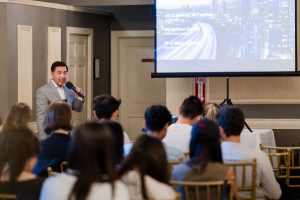
Inside the breakthrough engine
One of the standout visits of the week was VISIE, a 3D computer vision company building optical scanners for robotic surgery. Their technology lets surgical robots see a patient’s anatomy in real time, continuously, instead of relying on registration points and a pre-operative scan.
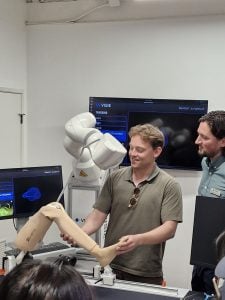
During the visit, they let me try it. I held a model of a patient’s knee in my hand and moved it through the positions you would see in a real procedure, while their scanner tracked it and moved with it autonomously.
This is the kind of technology that sounds futuristic on a slide and feels inevitable the moment you see it work. You could picture it as a standard tool in operating theatres around the world within a few years.
A university rethinking its role
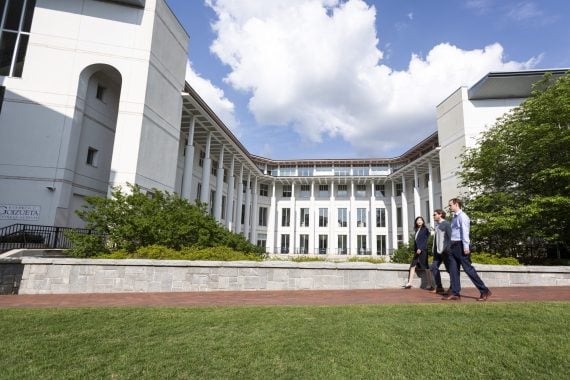
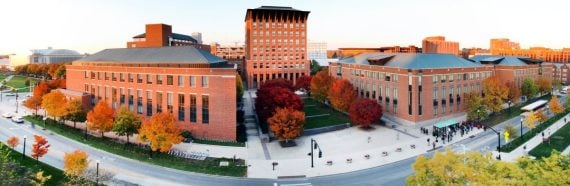
The most surprising part of the week was the University of Texas at Austin.
From my experience, universities care about research, and publication is the metric. The path from research to company is rarely the priority.
UT Austin is trying to do the opposite. It is building an entire commercialisation engine, and the mindset has shifted from “publish first, see what happens” to “secure the patent, build the team, and design the path to a company before we publish.”
The system is still maturing — they are clear-eyed about that themselves. But given how they have organised it, the support they offer researchers, and how seriously they take the commercialisation pathway, they are already doing a lot of things right. That change struck me as really important. A university that learns to commercialise alongside its research will produce a different kind of graduate, and a different kind of regional economy. Austin is further down that road than most places I have seen.
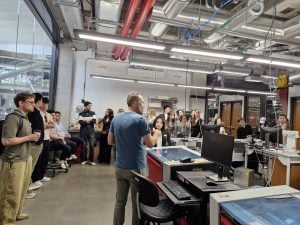
A course designed for critique
One thing I appreciated about the GE was that we were not there to admire Austin. We were asked to explore it critically.
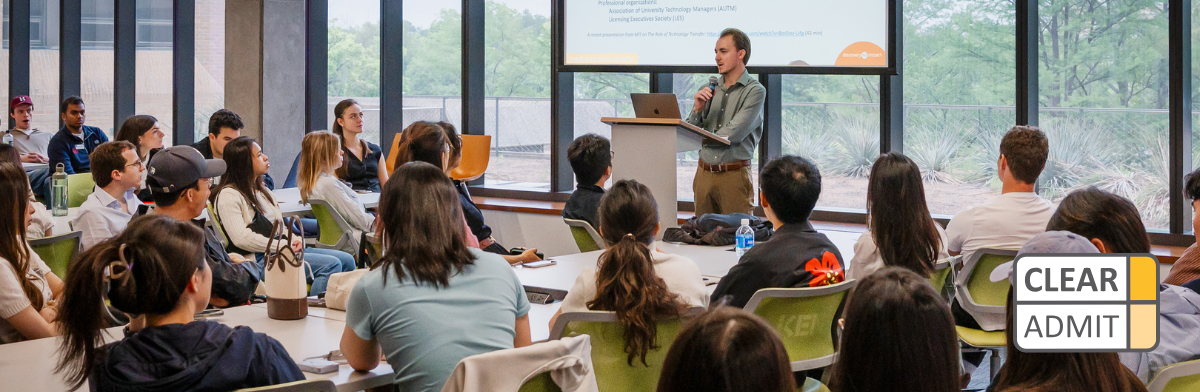
Across the week, we met people from different corners of the ecosystem — founders, venture investors, angels, university researchers, public officials, and corporate operators. They did not always share the same perspective. Some pointed to Austin’s success and momentum. Others were candid about where the city still falls short.
Hearing about all views in the same week made the experience much more useful than a one-sided tour would have been.
A city that can’t slow down
You feel Austin’s growth before anyone explains it to you. The skyline is full of cranes, the highways are full of cars (and self-driving cars), and the airport — already one of the fastest-growing in the country — is in the middle of a major expansion just to keep up.
Austin sits near the top of every relevant list: venture funding deployed, jobs created, population growth. The city is struggling, in a healthy way, to scale fast enough for everyone trying to live and build there.
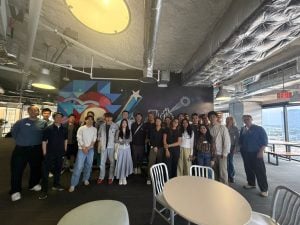
That growth has costs, and we heard about them too. Housing, traffic, inequality, and infrastructure that lags the population. But, the underlying signal is clear. Austin is one of the few American cities where the question is not how to attract more activity, but how to keep up with what is already arriving.
What I’m taking home
I came to Austin hoping for inspiration, and the inspiration ended up being less about the technology and more about the conditions that make it possible.
What I am taking with me is the building blocks that make Austin work – because I believe they are somewhat transferable. A university that takes commercialisation seriously. Public capital that backs early science where the private market will not. A culture that supports founders through several attempts, not just the first one. A community that puts builders in the same rooms, repeatedly, until something happens.
Those are choices, not coincidences, and watching Austin make them in real time is the part of the trip I will carry with me into my second year at Fudan, into my career, and hopefully back to Stavanger one day.
Why LBS, and a note for applicants
A week like this is the reason I chose LBS in the first place. Two things tipped the decision when I was picking a Master’s programme. The first was the LBS–Fudan dual degree — I wanted real exposure to both Europe and Asia, and the Global Masters in Management programme lets me spend Year 2 in Shanghai earning a Master of International Business at Fudan alongside my LBS MSc. For someone aiming at a career that bridges Europe and Asia, that combination is hard to find.
The second was the cohort and the faculty. LBS is genuinely international, and the faculty are academics whose names you recognise from the readings, not just the syllabus. I was looking for a more global perspective, and I believe LBS delivers that.
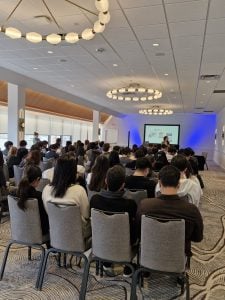
On this course, that calibre of faculty showed in how the week was led. Casidhe Troyer, Assistant Professor of Strategy and Entrepreneurship, who ran the programme, structured each interaction so that the different perspectives in Austin emerged. We met the bears and the bulls. We met breakthrough tech founders and more “classic” founders. We met angels, VCs, and mentors, all with different experiences and opinions about what the ecosystem actually is. At the end of each day packed with panels, interviews, and pitches, she revisited the frameworks from the readings and showed how the people we had just met fit into them. It turned a week of conversations into a much sharper way of analysing how an ecosystem like Austin actually works.
If you are weighing a one- or two-year degree here, my one piece of advice is to engage with the community properly. LBS’s diversity is genuinely unusual, so use it. Spend real time with people from countries you would not otherwise interact with. Stay close to your own crowd as well, but make sure you do both.
The Global Experience is one of the best opportunities the programme gives you to do exactly that. A week of intense, shared problem-solving with people who will see the same things you do, but interpret them differently. That is where most of the actual learning happens.