


Join Warren Ndlovu on his ride through recruiting in this Real Humans: Alumni. With a niche interest in climate tech, Warren had to get creative to secure his “Plan A” dream job. All the while, the Wharton School of the University of Pennsylvania provided the right foundation for his goals and more. Read on for his story.
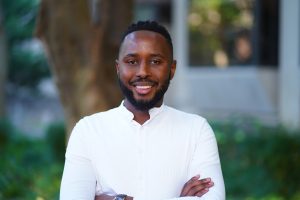
Warren Ndlovu, The Wharton School MBA ’24, Chief of Staff at Aepnus Technology
Age: 33
Hometown: Bulawayo/Johannesburg
Undergraduate Institution and Major: University of Cape Town, Economics & Finance
Graduate Business School, Graduation Year and Concentration: Wharton, 2024, Entrepreneurial Management, and Operations Management
Pre-MBA Work Experience: Chief of Staff, Econet Wireless Limited (now Cassava Technologies), 1 year and 5 months; Consultant, McKinsey & Co, 2 years, Consulting; Derivatives sales and structuring analyst, Barclays Africa Group Limited, 2 years, Banking
Post-MBA Work Experience: Chief of Staff, Aepnus Technology, 10 months, Advanced manufacturing
Why did you choose to attend business school?
I wanted to make a pivot into climate tech and felt the U.S. was the best place for this given the country’s leading role in innovation. I felt that going to business school would allow me to build a network and learn more about climate tech to prepare myself for a role in the sector. Lastly, I wasn’t sure what role I wanted to take in the sector and business school seemed like the perfect environment to explore my interests.
Why Wharton? What factors figured most prominently into your decision of where to attend?
I felt Wharton was the best match for me based on my career goals and “vibes.” I came into business school with the intention of pivoting into climate tech, but I wasn’t sure what role I wanted to take up within the sector. I was leaning most strongly towards climate tech VC, so I found Wharton’s reputation for developing the world’s best finance professionals appealing. I was also considering joining a startup and I was interested in the resources that Wharton provided for people interested in exploring entrepreneurship. Over and above the career related reasons, I wanted a school that matched my social energy, and no other school came close (for me) to matching Wharton in that regard. I liked the mix of high energy, intellectual conversation, and vibrant food scene in Philly.
What about your MBA experience prepared you for your current career?
Nothing is handed to you if you’re doing an unstructured recruiting process. My MBA (and recruiting experience) helped me learn to leverage my network and other non-conventional ways of gathering data and learning.
First off, I learnt the hard way that early-stage startups don’t advertise jobs in the same way that established companies do. Similarly, I learnt that applying directly for roles at early-stage startups wasn’t a very fruitful strategy (5 interviews out of 120 applications). I had to leverage my network to make real headway in the process. This is very similar to my experience on the job. You don’t have the same resources as big companies do, which allow you to pay for the information you need or hire more people to do the job. Leveraging my network has been invaluable for figuring out prioritization and for information gathering.
Secondly, there were no classes or clubs that directly covered the information/sectors that I was interested in, so I had to get creative. I spent the majority of my time at Wharton piecing together learnings from different activities and using them to build my knowledge base in the niche areas that I was interested in. For example, when I was considering a business idea: I used knowledge from a lifecycle assessment class I took to size the market for consumer waste recycling/repurposing, I used my capstone project (I did a dual major) to build a business plan for the company, and I worked on an independent study with a professor to explore a two-sided market model. This approach is very useful in my current role where there is no centralized source of information, so I need to piece together information from various, non-conventional sources to develop insights.
What was your internship during business school? How did that inform your post-MBA career choice?
I took a growth MBA internship at Scanifly – a series A startup using drones to automate the building solar survey and design process. I spent the summer helping them develop a growth strategy for penetrating a new international market. The internship leveraged the skills that I had gained as a management consultant while giving me exposure to an entirely new industry. It helped to solidify my decision to venture into climate tech in an operating role as opposed to an investing role. As much as I enjoyed the work that I did, it also helped me to realize that I was more interested in roles within hardware startups in hard-to-abate sectors.
Why did you choose your current company? What factors figured most prominently into your decision of where to work?
I was excited about the company’s mission and culture. I am interested in circularity across various realms, and I was intrigued by the problem that Aepnus is solving. I wasn’t aware of it prior to going through the interview process, which excited me even more because I love learning about new fields. I was able to meet the whole team during the recruiting process, and they all seemed great and dedicated. The CEO also seemed like he would be great to work with which is perhaps the most important factor in the Chief of Staff experience. In all, having the opportunity to meet the whole team and hearing the consistency with which everyone described the company’s culture was very appealing to me.
 Advice to current MBA students:
–One thing you would absolutely do again as part of the job search?
As I mentioned above, my network came through for me in the job search process. I would 100% leverage my connections again rather than blindly applying. I initially applied directly for 120 roles, got 5 interviews, and received no job offers. It seems counterintuitive to apply for fewer jobs to improve your chances, but getting warm intros gave hiring managers more confidence in my suitability as a candidate and it allowed me to focus much more on each cover letter and interview since I was applying in a more focused way. In the end, I applied for 10 roles, got 8 interviews and received 2 offers.
–One thing you would change or do differently as part of the job search?
Our careers service always advised us to have a plan A, B, C, D, etc. I heard, but didn’t listen, and the lack of a backup plan led to a lot of anxiety during the recruiting process. I eventually added a couple of new tactics to my overall strategy after I had already started the process. While I ended up in a role that was essentially my plan A, I credit part of that success to the reduced anxiety that came with having a backup plan for my backup plan.
–Were there any surprises regarding your current employer’s recruiting process?
We’re a seed stage startup and they flew me in from Philly to the Bay Area for my final interview, which included a case study presentation to an advisor, an investor, and the 2 founders. This was a lot more formal than I had expected. I was also surprised by the willingness to pay for my flights and hotel during the process.
–What piece of advice do you wish you had been given during your MBA?
I actually received this advice multiple times, but never listened: Spend less time worrying about your major and spend more time enjoying the experience and taking classes that seem interesting, your major will eventually work itself out. As an international student, my major had implications for my immigration status, so I felt uncomfortable leaving it to chance. In the end I was almost able to add marketing as a third major while still being able to complete the majors I wanted/needed. However, I missed out on classes that I would likely have found more interesting in my pursuit to piece together my major.