


In this edition of Real Humans: Alumni, we take a non-traditional journey to the Harvard Business School MBA with Felipe Lenz, a prodigy who entered college at just 16 years old. Felipe was leading an engineering team at Amazon when he decided he wanted to move beyond engineering and eventually into operations. Read his story below for insights on how HBS taught him the skills he would require.
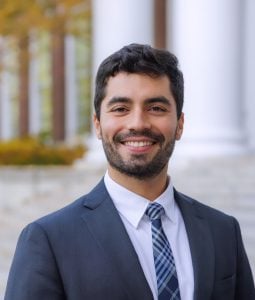
Felipe Lenz, HBS MBA ’25, Senior Product Manager at Amazon
Age: 32
Hometown: Brasília, Brazil
Undergraduate Institution and Major: Florida Atlantic University, Electrical Engineering
Pre-MBA Work Experience: Amazon, Sr. Technical Program Manager (Amazon Leo Satellites) and Sr. Electrical Engineer (Amazon Leo Satellites), 3 years; Meta, Electrical Engineer (Augmented Reality), <1 year; SpaceX, Electrical Engineer (Starlink Satellites), 2 years
Post-MBA Work Experience: Amazon, Sr. Product Manager – Technical (Home Innovation), <1 year
Why did you choose to attend business school?
My path to HBS was unconventional. I started college at 16 in Brazil, studied at the University of Brasília for 2.5 years, then moved to Florida to be near my aunt and uncle. I graduated from FAU before going straight into a PhD at the University of Florida. During my third year as a PhD student, I interned at SpaceX, right as they were developing their first Starlink satellites. Fast forward a few years, and I was leading a small engineering team at Amazon when I realized I wanted to step back and explore beyond engineering after years working in the field.
Why HBS? What factors figured most prominently into your decision of where to attend?
I took the GRE in January 2020, but COVID hit and attending business school over Zoom didn’t make sense. In July 2022, I was having brunch with my best friend, who had heard me talk about business school for years, and he told me to just do it. We joked that I needed a sign from the universe, and right then, a woman in a Harvard sweatshirt walked by with a huge golden retriever. I texted my manager for a recommendation letter that same day and submitted my application two weeks later. I only applied to HBS. My husband went to a liberal arts college and I always admired how he approached problems, so I wanted the most liberal arts MBA possible. HBS delivered. I took classes in government, negotiation, entertainment and sports, and the space economy. The flexibility of the EC year let me explore areas an engineer would never normally touch.
What about your MBA experience prepared you for your current career? How do you feel that your MBA has been an asset when it comes to navigating new challenges, such as AI?
I’m so happy I did my MBA as GenAI was exploding. HBS embraced it fully, which helped me learn to use it as a tool versus relying on it to do my work without thinking. There is a temptation to have AI do it all, but without taking the time to digest its output and pressure test it, you cannot be successful in the HBS case study discussion. Today, I’m a power user of GenAI at work, getting things done in an afternoon that would have taken weeks before, and I credit that to the early exposure during business school.
What was your internship during business school? How did that inform your post-MBA career choice?
I interned at McKinsey in Boston, staffed on an R&D acceleration project for a global life sciences company. It was a great summer, but it clarified something for me. In business school, we often talked about how there are three types of roles: operator, investor, and advisor. I realized I wanted to be back in the building as an operator instead of being a consultant.
Why did you choose your current company? What factors figured most prominently into your decision of where to work?
I worked at Amazon before HBS and it’s a great fit. The company is pragmatic and values clarity and scrappiness. Having grown up professionally at SpaceX, that builder culture translates well. I get to work on AI products with a high-performing team and leadership that support my growth.
 Advice to current MBA students:
–One thing you would absolutely do again as part of the job search?
Case prep for consulting interviews. Even if you don’t want consulting, join the consulting club and learn how to do a case interview. It teaches you to think on your feet, structure problems logically, and sharpen your mental math. It was also fun!
–One thing you would change or do differently as part of the job search?
I would have been broader with internship search. I had focused on finding a role in Boston, because I’m married and wanted to stay in town with my family. Looking back, I’d advise to be more open geographically for the summer, because it’s only three months!
–Were there any surprises regarding your current employer’s recruiting process?
I used to believe going to HBS meant you could land any job. Definitely not the case. Your pre-MBA work experience is the key differentiator in getting interviews, so networking, which I didn’t do enough of, matters if you are trying to do a career pivot.
–What piece of advice do you wish you had been given during your MBA?
Learn how to use AI, not to replace your thought process, but to structure it. Learn how to pushback, ask for more information, work with it to build strong arguments. Most importantly, build real solutions to your own problems. My mental model now is: if I’m doing something manually twice, automate it with AI. There is no excuse for today’s MBAs to leave school without being super nimble with LLMs.