


Samuel Stein, Founder of Cold Cycle Coffee, always loved making things. But to learn the language of business – finance, marketing, and accounting – he would need to pursue an MBA. Texas McCombs granted Stein the tool to work with banks, venture capitalists, and lenders and enabled him to make his ideas a reality. In this Real Humans: Alumni, Stein shares his story of entrepreneurship, risk, and success.
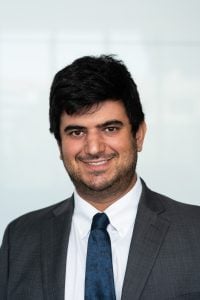
Samuel Stein, Texas McCombs MBA ’25, Founder at Cold Cycle Coffee
Age: 35
Hometown: Austin, TX
Undergraduate Institution and Major: Rice University, Mechanical Engineering
Pre-MBA Work Experience: Engineer, Samsung (chips), iKey (industrial Keyboards), Ryan (Production Sales Tax Consultant), Daily Thermetrics (industrial thermometers), 10 years, Production
Post-MBA Work Experience: Founder, Cold Cycle Coffee, 2 years, Coffee Machine Production
Why did you choose to attend business school?
I have always love making things, but I didn’t feel like my efforts were matching my career expectations. I applied to business school so that I could learn why business decisions were being made and how to best take control of my career.
Why Texas McCombs? What factors figured most prominently into your decision of where to attend?
As an Austinite, I have always had a high regard to the University of Texas, and its fantastic reputation. As I was researching schools, I started to understand why: McComb’s attention to students, alumni support, and connection with the booming city of Austin. Each of these factors as well as the rigorous coursework helped me chose the university to hone my business skills.
What about your MBA experience prepared you for your current career? How do you feel that your MBA has been an asset when it comes to navigating new challenges, such as AI?
McComb’s took my understanding of making products and gave me the tools to speak the languages of business. Finance, Marketing, and Accounting helped me unlock the languages and decisions of banks, venture capitalists, and lenders by teaching me how to understand the price of a dollar, who is buying the product, and how to account for each dollar spend. This has helped me understand any data or interpretation that comes my way. This is especially important in the age of AI hallucinations where people speak confidently, occasionally with misrepresented data.
They also showed me through practicums and real-world experience how to ask a group of people about their problems. This has been a massive help because it pushes me to go to where the problem is and address it directly with my market.
What was your internship during business school? How did that inform your post-MBA career choice?
For my internship, I worked with a company called Advanced Ionics (AI) in marketing. Advanced Ionics is a company that makes a co-generation method to lower the energy used to make hydrogen by utilizing waste heat. This is a deep-tech company that was production led, and I got to see from the marketing side how business decisions were made for the team.
I took the information learned from this internship and used it to inform how I set up my own business. Understanding that technology isn’t useful without a market, and machines will not get built without the proper allocation of money helped me uncover blind spots in my skillset that I worked to round out with a strong team.
Why did you choose your current company? What factors figured most prominently into your decision of where to work?
Starting my own company felt like the best move out of MBA because it helped me cement all the lessons from the MBA with real data. Understanding the cash flow of fundraising, developing the market of businesses that sell cold coffee, and managing a production schedule with real time and money budgets maximized my career growth.
Plus, the present value of the risk of this decision outweighed any jobs the market could offer!
 Advice to current MBA students:
–One thing you would absolutely do again as part of the job search?
As an entrepreneur, working with other entrepreneurs, both ahead of me in terms of their business and behind, helped massively. Understanding how the market is working for people and what their struggles were helped me avoid pitfalls and explaining them to others helped give me a bigger picture of the problems.
–One thing you would change or do differently as part of the job search?
For my company, I wished I had started earlier on team building. I had taken the first year and a half to try launching the business on the side without help, but as soon as I let enthusiastic co-founders into the team, the progress sky rocketed.
–Were there any surprises regarding your current employer’s recruiting process?
The biggest surprise in starting your own company, is when you remember where you were the month before. Growing rapidly, I have been dreaming 2-3 months in advanced and disappointed that I am not there yet. Looking 2-3 months backwards more often reminds me I am making the progress that I have been working for.
– What piece of advice do you wish you had been given during your MBA?
Due to misplaced understanding of the business role of my previous career, I misunderstood the roadmap to excel in previous roles. I wish that I had someone advocating for my previous career had pushed me to take classes that would grow my old skill set at the same time I was developing all the new tools of MBA.