


We are back with Betsy Ryan, MS, Senior Associate Director of Admissions for MBA & MS Programs at University of Minnesota’s Carlson School of Management, to talk about the MBA program in this edition of our Admissions Director Q&A.
Betsy has been a member of the Carlson School of Management MBA & MS team since 2016. Before holding her current role, she worked closely with CSOM MBA students as an academic advisor. She holds an MS degree in Counseling and has 15 years of experience in higher education, with a particular focus on adult and graduate student services.
Our conversation with Betsy covers the admissions process, how to best prepare for your interview and video essay, and the key advantages of the Carlson MBA. Read on for her insights.

Clear Admit: What is one aspect of your MBA program that you wish applicants knew more about?
Betsy Ryan: One aspect of our Full-Time and Management Science MBA experience I wish applicants knew more about is just how integrated the experience is: academically, professionally, and personally. Many candidates know Minnesota Carlson for its strong career outcomes, its location in the Twin Cities, and its reputation for experiential learning in our Enterprise program, but I do not think applicants always realize how intentionally those pieces fit together.
At Minnesota Carlson, MBA students are not just taking classes in isolation. They are gaining deep business fundamentals, applying those skills in real, hands-on client projects, building relationships with faculty and cohortmates, working closely with career coaches, and engaging with a business community that is right outside our doors. The Twin Cities region is home to a remarkable mix of Fortune 500 companies, healthcare organizations, consumer brands, financial institutions, startups, nonprofits, and many mission-driven employers. That creates a really rich environment for MBA students who want to explore, test, and refine their career goals.
I would also highlight the Management Science MBA for applicants who are thinking carefully about analytics, technology, finance, consulting, or other quantitatively oriented career paths. It is a STEM-designated option built on the same core MBA foundation, so students are still developing as broad business leaders while also deepening their ability to use data and analytical thinking in decision-making. That combination feels especially relevant right now, as employers increasingly expect leaders to be comfortable working across business strategy, technology, and data.
At the same time, Minnesota Carlson is not a place where students are expected to have everything figured out on day one. Some students arrive with a very specific career goal. Others know they want growth, change, or more purpose in their work, but they are still shaping the details. Both kinds of students can thrive here. What matters most is that they are ready to be engaged, reflective, and open to the process.
CA: Walk us through the life of an application in your office from an operational standpoint. What happens between the time an applicant clicks “submit” and the time the committee offers a final decision?
BR: We start by ensuring the application is fully complete and ready for the admission committee’s review. That includes confirming required materials such as transcripts from all relevant institutions, a current resume, personal statements, two recommendations, a short video essay, and test scores or waiver approval.
If something is missing, that can delay the process, so I always encourage applicants to monitor their applicant checklist closely after submission. We have to ensure that all committee members are able to fully and fairly access all facets of the candidate’s profile.
After an initial review, selected candidates are invited to interview. The interview is an important part of the process because it allows us to better understand the person behind the application. The interview allows us to understand how candidates think about their goals, communicate their experiences, reflect on their strengths and growth areas, and professionally present themselves.
From there, the application moves into a holistic review by the professional admission committee. We are looking at the full picture of the candidate: academic preparation, professional experience, leadership potential, career goals, communication skills, quantitative readiness, alignment with the program expectations and outcomes, as well as the unique perspective they may bring to the Minnesota Carlson community.
No single component tells the whole story or drives a final decision for the admission committee (who, by the way, are all real Carlson community members). A transcript helps us understand academic history, but it does not tell us everything about resilience or growth. A resume shows progression and impact, but the essays often help us understand the candidate’s motivation and values. Recommendations add insight into how someone works with others, leads through ambiguity, or contributes to a team.
CA: How does your team approach the essay portion of the application specifically? What are you looking for as you read an essay? Are there common mistakes applicants should try to avoid? What is one key thing candidates should keep in mind as they sit down to write?
BR: The admissions committee approaches the essay, or personal statement, as one of the most human parts of the application. It is the applicant’s opportunity to help us understand not only what they have done, but why it matters, what they have learned, and where they hope to go next.
When I read these statements, I am looking for clarity, self-awareness, and authenticity. I want to understand the candidate’s motivation for pursuing an MBA, why this is the right time, and how Minnesota Carlson fits into that larger plan. The strongest essays are usually not the ones that try to sound overly polished or impressive. Applicants can stand out by being specific, grounded, and honest in their storytelling.
A common mistake is submitting content that could apply to any business school. Applicants sometimes spend a lot of time describing the value of an MBA in general, but not enough time explaining what an MBA means for themselves, why they wish to study at Minnesota Carlson, and why the timing is right.
I would also encourage applicants to keep in mind how much they should rely on AI tools in the writing process. AI can be useful for brainstorming, organizing thoughts, or checking clarity, but it should not replace the applicant’s own voice. Most of our admissions committee members have read thousands of applications, and it is noticeable when an essay starts to sound generic or closely mirrors language from a school’s website.
CA: Could you tell us about your interview process? Approximately what percentage of applicants are invited to interview, who typically conducts interviews, and what should candidates expect in terms of interview style and format?
BR: Interviews are required for admission to the Full-Time MBA and Management Science MBA programs and are offered by invitation only after an initial application review. Each year, we invite a meaningful portion of our applicant pool to interview, though the exact percentage can vary by round and applicant pool.
The interview itself is conversational, and questions are mostly behavioral in nature. Candidates should be prepared to talk about their professional experience, leadership examples, teamwork, career goals, interest in Minnesota Carlson, and how they hope to contribute to the MBA community. Interviews are conducted virtually or in person by a team of trained admissions staff and graduate assistants.
One of the best ways to prepare is to practice a few “STAR” stories from work, school, volunteer roles, or other meaningful experiences. STAR stands for Situation, Task, Action, and Result. This framework helps candidates give clear, specific examples without losing the thread of the story. We encourage applicants to think about examples that show leadership, collaboration, problem-solving, resilience, communication, and growth.
At the same time, candidates should not feel like they need to memorize scripted answers. The strongest interviews feel prepared but still natural. We want to understand how applicants reflect on their experiences, what they have learned, and how they might engage as part of the Carlson MBA community.
Our interviewers also enjoy answering questions about life at Minnesota Carlson, so candidates should come prepared with a few thoughtful questions of their own to demonstrate their interest and understanding of what we offer.
CA: If your admissions process includes any video-based components, such as video essays or recorded interview responses, what advice would you offer applicants preparing for this part of the process?
BR: We do require a brief video essay as part of the application. My advice is to focus on communicating as clearly and naturally as possible. The purpose of the video essay is to get a better sense of the applicant’s communication style, professional presence, and ability to organize their thoughts in the moment.
When sitting down to complete the video essay, applicants should choose a quiet space, test their technology ahead of time, and take a moment to breathe, reflect, and gather themselves before recording. I would avoid crafting a lengthy script or reading directly from notes. While that approach may help deliver polished content, it can also make the response feel less natural and less confident. We are not looking for perfection; we are looking for authenticity, clarity, and thoughtful communication.
CA: Is there anything in particular international students should keep in mind during the admissions process?
BR: From a practical standpoint, international applicants should pay close attention to transcript requirements, English language or credential documentation if applicable, test score timing, and application deadlines. Because visa processes and relocation planning can take additional time, I strongly encourage international applicants to apply earlier in the cycle whenever possible.
From a personal standpoint, international students should know that they are an important part of the Minnesota Carlson MBA community. They bring global experience, multilingual skills, cross-cultural perspective, and professional knowledge that enrich the classroom for everyone. Our school’s leadership, faculty, and staff are committed to keeping international students’ needs front of mind and supporting a positive, welcoming learning environment.
CA: Conversations about MBA value often center on jobs, salaries, and ROI. What are some of the other ways students benefit from the MBA experience that may be harder to quantify upfront?
BR: Carlson School of Management leadership and faculty know that post-MBA jobs, salaries, and ROI matter. Applicants are right to ask those questions, and we want students to make informed decisions on whether our program is aligned with their goals. But some of the most meaningful benefits of a Minnesota Carlson MBA are harder to measure during the application process.
One of those benefits is simply the leveling-up in personal confidence and ability to address challenges head-on. Students often leave the MBA with a stronger sense of how they contribute, how they lead, and how they can successfully navigate ambiguity.
For Carlson students, this confidence comes from working on their Enterprise teams, presenting to executives, leading through clubs or case competitions, traveling with the Carlson Global Institute, working hard during their internships, gracefully receiving supportive feedback from peers, faculty, and career coaching staff — all of which lead to exponential growth as a professional.
In a shifting and challenging economy, I think that this confidence and agility are among the most valuable outcomes that are extremely hard to quantify. However, it’s real and carries graduates beyond their first post-MBA role. They are building the judgment, relationships, and skills to keep evolving throughout their careers in the long run.
CA: Are there any trends in the applicant pool, admissions process, or MBA experience that you are particularly focused on right now?
BR: A few trends are especially top of mind right now. The first is AI and the broader need for data fluency. MBA Applicants are very aware that AI is changing the workplace, but many are still trying to understand what that means for their own careers. That is one reason the Management Science MBA is so relevant. It allows students to pair a strong general management foundation with deeper quantitative and analytical preparation. Not all managers need to be data scientists, but all managers should have a high level of comfort translating analysis into action. Students in the Full-Time MBA also get exposure to these essentials in the MBA core curriculum and can add additional electives in business analytics, AI, and related areas as it makes sense for their career trajectory.
Another recent trend is that MBA applicants want an experience that feels highly personalized rather than broadly designed. Rankings and career outcomes remain important, of course, but more candidates are looking for a program that values their contributions as individuals and gives them meaningful choice in shaping the experience. I believe this is something Minnesota Carlson’s MBA does exceptionally well.
Students have a strong foundation through the core curriculum, but they also have significant flexibility to customize the degree around their goals. They can build depth through specializations, choose electives across areas such as finance, marketing, strategy, business analytics, entrepreneurship, medical industry leadership, and supply chain, and pursue global learning through short-term study abroad or semester exchange. They also experience learning in a variety of formats: traditional courses, experiential projects, Enterprise work, intensive modules, global coursework, and applied learning opportunities with real organizations.
That variety matters because today’s MBA students are not all pursuing the same path. Some are pivoting into consulting, finance, technology, healthcare, or analytics. Others are looking to grow within their current industry, move into leadership, or explore a more entrepreneurial direction. A customizable curriculum allows students to be intentional about where they want breadth, where they want depth, and where they want to stretch.
At the same time, personalization at Carlson goes beyond course selection. We are a highly collaborative, socially engaged community, and our size allows students to be known fully as individuals while still having access to the resources of a major public research university and a dynamic business market. Our MBA students have a personal academic advisor, a personal career coach, and faculty who know them by name. Alumni often mention the deep connections and friendships they built in this close-knit MBA community.
CA: Is there anything else you’d like to highlight about your MBA program or admissions process?
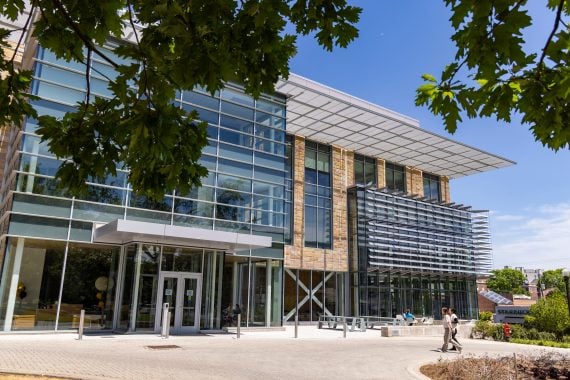
BR: One thing I am especially excited about for new students is to benefit from the transformation of our building through the Connecting Carlson project that is set to be completed very soon. The project is modernizing some of the school’s most important student-centered spaces, including the central atrium, auditorium, experiential learning spaces, and student study and collaboration spaces.
So much of the value of an MBA happens in the spaces between classes: the team meetings, the conversations before and after events, the coaching appointments, the employer interactions, the student organization gatherings, and the moments when students learn from one another. Connecting Carlson is designed to better support that kind of connection.
I am also excited about the enhanced spaces for experiential learning with Minnesota Carlson’s Enterprise programs and the Carlson Analytics Lab. These are places where students can apply what they are learning, work through real business challenges for clients, and build confidence translating ideas into action. Experiential learning has always been a defining part of the Carlson MBA experience, and the updated spaces will make that work even more visible!