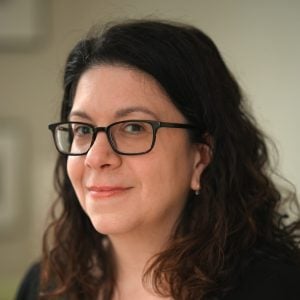
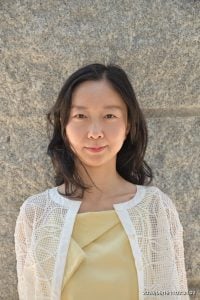
Cindy (Qing) Wu, Carnegie Mellon Tepper MBA Class of 2028
Age: 35
Hometown: Shanxi, China
Undergraduate Institution and Major: Taiyuan University of Technology, Bachelor’s in Architecture
Graduate Institution and Major: The University of Tokyo, Master’s in Socio-Cultural Environmental Studies
Pre-MBA Work Experience: Obayashi Corporation, Tokyo, Japan, Concrete Construction Optimization Project Owner, Business Innovation (Oct 2024-Present). Selected as one of five proposals from over 50 submissions, and led the development of an application to predict concrete volumes, reducing waste and improving on-site efficiency. Visualized the concrete construction production process and examined operational flow in supply chain management, covering contract agreements and job processes across all positions.
Operation Specialist, Smart-Work Promotion (April 2024-Present). Conducted digital transformation research at 30 large construction sites to improve operational efficiency; standardized ICT tool usage and introduced them on-site as a test case. Developed customized training materials for on-site process improvement; implemented them across 30 sites to ensure managers understand key points and timing. Eliminated repetitive manual creation of communications within the team, centralizing in a digital format. Chosen as a task force member to source lightweight aggregate concrete from China.
Coordinator in Production Planning & Talent Development (April 2024-Aug 2025). Prepared materials for executive meetings involving feedback on construction site performance. Developed and delivered new-hire training programs, alleviating on-site labor shortages. Organized leadership workshops for young supervisors to enhance team management capabilities.
Assistant-Junior Site Manager, High-Rise Residential Project (Apr 2022- Nov 2023). Assumed responsibilities of section chief, clarifying tasks and coordinating subcontractor workflows, ensuring on-time project completion that exceeded profit targets. Created standardized work schedule formats to improve clarity, uncovering major inefficiencies caused by unclear instructions and inconsistent documentation. Facilitated recurring cross-functional meetings to address communication gaps, reducing workflow disruptions, and minimizing on-site conflicts among contractors.
Assistant/ Site Manager, High-Rise Residential Project (Apr 2021-Apr 2022). Developed predictive models to reduce concrete waste through root cause analysis, achieving several million yen in cost savings. Led process innovation in high-strength mortar injection for reverse construction, saving 5million, and earning the sole Process Improvement Award among 100 peers.
Goertek Technology / DotCom, Tokyo, Japan (Part-time to Full-time) (Sep 2016-Sep 2018). Specialist/Designer, Planning and Design for Innovation Cafe Chain. Designed flagship store for Chinese café chain in Shibuya, Tokyo
Why did you make the decision to attend business school? Why now?
My career goal is to transform the construction industry’s supply chain by creating a new business that serves all industry stakeholders, including contractors, subcontractors, and suppliers.
The motivation comes from my experience leading a supply chain optimization project at Obayashi, one of Japan’s leading general contractors. I realized that a core structural issue is that supply chain data is not shared across suppliers and trades, which leads to ordering errors, schedule delays, inefficiencies, and material waste. This fragmentation also prevents the effective adoption of advanced technologies.
To address this, my approach is to directly connect construction supply chains through a data-driven coordination model that enables cross-company visibility and alignment.
In the short term, I will start with concrete, where I have deep operational expertise and where schedule and volume accuracy are critical. I plan to localize proven U.S. construction technology platforms for Japan’s workflows and implement them across Obayashi’s supplier network as a proof of concept, building experience in multi-company deployment and stakeholder alignment.
I want to learn how data and technology turn ideas into scalable businesses, and apply that mindset to construction-tech innovation. And now I got the work experience insight, but find my leadership is not strong enough to execute the project, and the technology for solving the problem is mature.
Why did you choose Carnegie Mellon Tepper? What factors figured most prominently into your decision of where to attend?
I’m pursuing an MBA for three critical capabilities: the technical skills to build a supply chain platform, understanding how to operate it at scale, and the leadership to bring it to market. Tepper’s analytical rigor and entrepreneurial ecosystem make it ideal.
First, technical foundation. Professor Soo-Haeng Cho’s Operations Management program gives me the skills to design effective coordination systems. Organizational Behavior teaches me how to drive adoption across organizational boundaries, which is critical because my platform only works if multiple companies change how they operate. Accounting is equally important—understanding cost structures, financial controls, and performance metrics across multiple companies is essential for building credibility. I’ve seen that successful supply chain platforms like Kojo were built by people with accounting backgrounds because financial transparency builds trust among stakeholders.
Second, the Entrepreneurship track provides experiential learning with faculty who have built and sold companies. Through club treks and my summer internship, I’ll study how world-class companies like Amazon run data-driven operations and coordinate complex stakeholders, and learn how successful startups navigate early-stage challenges. The capstone, Designing and Leading a Business, includes a Silicon Valley immersion where I’ll meet with CEOs, VCs, and tech leaders—invaluable for someone localizing U.S. construction-tech platforms to Japan.
Third, leadership and validation. From day one, the Accelerate Leadership Center provides personalized assessment and one-on-one coaching to help me understand my strengths and weaknesses. This creates a clear development roadmap so I can focus on the specific leadership skills I need—like winning over skeptical stakeholders in a traditional industry. Project Olympus lets me test my idea with real users.
What do you think is your most valuable or differentiating contribution to the Class of 2028?
What makes me unique is my ability to translate complex, cross-company operational problems into practical coordination solutions. I come from Japan’s construction industry, where supply chains are highly siloed, and progress depends on building trust across organizational boundaries.
At the Tepper School, I will contribute by grounding classroom and team discussions in real execution constraints—how incentives, data ownership, and risk perception shape behavior in large, multi-stakeholder environments. In team projects and programs like Operation and General Management track, I can help teams move from frameworks to workable plans by clarifying trade-offs and aligning around realistic goals. Coming from a traditional industry, I bring perspectives on implementing change in risk-averse, relationship-based cultures.
Beyond coursework, I actively support teammates by asking clarifying questions, sharing partial ideas, and synthesizing viewpoints. In Tepper’s community, this collaborative approach helps diverse perspectives surface and teams perform at their best.
Tell us a fun fact about yourself that didn’t get included on your application:
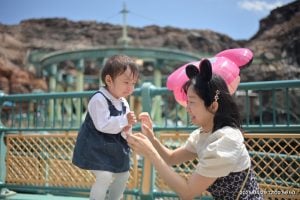
My husband and I work at the same company in Japan, and we’re both company-sponsored to attend Tepper—we’re actually the first couple in our company’s history to be sponsored together. Our daughter, Miyako (洛), is two years old and half Chinese, half Japanese. Her name means ‘a beautiful girl with deep knowledge’ in Chinese and ‘a grand city’ in Japanese, which we love because it captures exactly what we hope for her: someone who builds connections across cultures, just like her name does.
Post-MBA career interests:
I plan to return to Obayashi and lead the development of a data-driven supply chain coordination platform for the construction industry—starting with a proof of concept in concrete supply within Obayashi’s supplier network, then scaling across trades and stakeholders. Long term, I aim to build this into a construction-tech business that connects contractors, subcontractors, and suppliers industry-wide.
Advice for Current Prospective Applicants:
–What is one thing you would absolutely do again as part of your application process?
I would do it all again—including throwing myself fully into my company’s business innovation competition, even though it meant starting my test prep later than planned. That competition ended up shaping the career goal I’m now pursuing at business school: building a data-driven platform to connect construction supply chains. So while it left me with almost no buffer time—and with zero experience living or even traveling in an English-speaking country—I don’t regret prioritizing it. Then, right in the middle of exam prep, my daughter came down with a fever at daycare, and for a moment I genuinely thought I wouldn’t make it. But I adapted, reprioritized what mattered most each day, and got it done. Looking back, I’m proud that I didn’t let the chaos stop me. That said, I’d still tell future applicants: don’t cut the test-prep timeline as close as I did—start early and build in buffer time, because the application itself deserves the same full commitment I gave that competition.
–What is one thing you would change or do differently?
I decided I wanted to pursue an MBA well before I even applied for my company’s sponsored program, but the process turned out to be far harder than I had imagined. Growing up, I had always been confident in English—I consistently ranked first in my English classes throughout middle and high school. But that classroom confidence didn’t prepare me for standardized tests or real conversational fluency, especially with zero experience living or even traveling in an English-speaking country. Speaking skills, in particular, aren’t something you can build in a short sprint—they take sustained, daily practice over time. If I could do it again, I would have downloaded apps like Duolingo years earlier to build a daily habit, studied vocabulary far more rigorously, and started exposing myself to English-speaking culture much sooner, rather than assuming my classroom success would carry over.
–What is one part you would have skipped if you could—and what helped you get through it?
If I could have skipped one part, it would have been the GMAT Verbal section. No matter how many words I memorized, I would forget them again within days, and my score barely moved despite hours of studying. It was the most demoralizing part of the entire process. Two things got me through it. First, the responsibility that came with being selected as a company-sponsored candidate—I couldn’t let that opportunity go to waste. Second, I wasn’t studying alone: my husband was preparing for the same exam at the same time, and we shared the materials we each collected, compared the questions we struggled with, and talked through what wasn’t working. Having someone in exactly the same position turned a lonely grind into something we tackled together.
 What is your initial impression of the Carnegie Mellon Tepper students/culture/community?
Humble, friendly, and genuinely helpful. What struck me most was how well everyone seems to know each other—it’s a small community, and you can feel it. Every time I reached out with a question, the person I spoke with would say, ‘You should really talk to so-and-so about that,’ and then actually connect me with exactly the right person. Coming from outside the U.S. with no prior connection to the school, I expected to feel like an outsider, but instead I was passed from one thoughtful conversation to the next. The analytical rigor Tepper is known for comes without any sense of competitiveness or ego, and that combination—smart people who are also down-to-earth and willing to go out of their way for someone they’ve just met—is exactly the environment I want to spend two years in.
What student organizations have you joined/are you hoping to join and why?
On the professional side, I have joined the Asian Business Association and the Operations & General Management Club. The Operations & GM Club connects directly to my career goal of building a data-driven supply chain platform for the construction industry—I want to learn from classmates and speakers who have solved coordination problems at scale in other industries. The Asian Business Association matters to me because my plan is to bring proven U.S. technology models back to Japan, and I want to stay connected with peers who understand doing business across the U.S.–Asia divide.
On the personal side, I’m excited about the Culinary Club and the CMU Board Game Club. Cooking is how I share my culture—I’d love to introduce classmates to Japanese home cooking and learn from theirs in return. And board games are, honestly, one of the easiest ways to build real friendships as a non-native English speaker: you’re playing, laughing, and talking without the pressure of a formal conversation. Both are the kind of low-key settings where the strongest friendships tend to form.
What is one thing you have learned about Carnegie Mellon Tepper that has surprised you?
What surprised me most is how much diversity and activity fit into such a small community. I expected a small program to feel quiet, but it’s the opposite—the cohort is remarkably international, and there’s always something happening: club events, treks, speaker sessions, social gatherings. The abundance is wonderful, but it’s also created a challenge I didn’t anticipate. As a parent, I’m already finding it difficult to balance family time with everything I want to say yes to at school. I keep wishing there were 48 hours in a day so I wouldn’t have to choose.
What is one thing you are most excited about in your first year?
I’m most excited about finally building the foundation I’ve never had. Coming from an engineering and operations background in construction, I’ve always worked around finance and accounting without truly understanding them. The core curriculum—finance, accounting, and management—is exactly what I’ve been eager to master, because if I want to build a business that multiple companies will trust with their supply chain data, I need to speak that language credibly.
I’m equally excited about the Swartz Center for Entrepreneurship. Reading about successful startups is one thing, but being able to talk directly with founders who have already built something—and with people who are in the middle of building right now—is what I’m looking forward to most. That kind of unfiltered, in-person conversation is something I simply couldn’t access in my industry back in Japan.