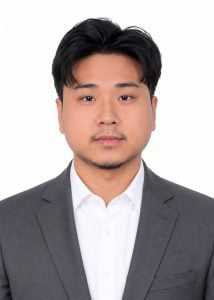
Chayanan Tantasirin, CEIBS MBA Class of 2028
Age: 27
Hometown: Bangkok, Thailand
Undergraduate Institution and Major: King Mongkut’s Institute of Technology Ladkrabang (KMITL), B.Eng. in Electronics Engineering
Pre-MBA Work Experience: Senior Software Engineer, Financial Technology, London Stock Exchange Group (LSEG), approximately 5 years
Why did you make the decision to attend business school? Why now?
After spending about five years as a software engineer, I realized that I wanted to understand more than just how to build a product, I wanted to understand why a business should build it, how it creates value, and how companies make decisions around strategy, customers, and growth.
I had also been exposed to my family’s distribution business in Thailand, where I worked on areas such as process automation and data. That experience made me increasingly interested in the intersection of technology and business.
The timing felt right because I had developed a solid technical foundation, but I was still early enough in my career to experiment and change direction. I saw the MBA as an opportunity to step outside my engineering comfort zone, broaden my perspective, and explore entrepreneurship, technology, and strategy before deciding on my next long-term path.
Why did you choose CEIBS? What factors figured most prominently into your decision of where to attend?
China was the biggest factor.
I wanted to understand an ecosystem that has become extremely strong at taking technology from an idea to commercialization at scale. Whether in AI, robotics, EVs, consumer technology, or manufacturing, China offers a very different environment from what I had experienced in Thailand or through working with global financial technology teams.
CEIBS stood out because it provides access to China while still maintaining a highly international environment. For someone from Southeast Asia, I also saw CEIBS as a bridge between China and the rest of the region.
I did not want to study China only through cases or articles. I wanted to live here, learn the language, meet entrepreneurs and companies, and understand how business actually works on the ground.
What do you think is your most valuable or differentiating contribution to the Class of 2028?
I think my contribution comes from the combination of three perspectives: technology, an emerging Southeast Asian market, and a family-business environment.
My professional background is quite technical, so I tend to approach problems by breaking them down, looking at the data, and thinking about how something can actually be built or executed. At the same time, being exposed to a family business in Thailand has shown me a very different side of business—where decisions are practical, resources are limited, and sometimes you need to solve a problem today rather than design a perfect solution for next year.
I hope I can bring both perspectives into discussions, particularly when our class talks about technology, digital transformation, entrepreneurship, or opportunities connecting China with Southeast Asia.
Tell us a fun fact about yourself that didn’t get included on your application:
I have two white Pomeranians back home in Thailand—even though I’m allergic to fur. Apparently, love beats allergies.
Post-MBA career interests:
I am particularly interested in opportunities at the intersection of technology, entrepreneurship, and China–Southeast Asia.
During the MBA, I want to explore areas such as AI, robotics, software, and other industries where China has developed strong capabilities, and understand whether some of those technologies or business models can solve problems in Southeast Asian markets.
I am also interested in product strategy, technology consulting, and corporate strategy as potential paths where I can combine my technical background with the broader business skills I am developing at CEIBS.
Advice for Current Prospective Applicants:
—What is one thing you would absolutely do again as part of your application process?
I would absolutely spend time understanding and articulating why I wanted an MBA before worrying too much about how to make the application look impressive.
Once I became clear about the experiences that had shaped me, why I wanted to come to China, and what I wanted to explore next, the different parts of the application became much easier to connect into one story.
I would also speak with current students and alumni again. Conversations with people actually experiencing the program gave me insights that I could never have gotten from rankings or websites alone.
—What is one thing you would change or do differently?
I would start the self-reflection and school research earlier.
At first, I spent quite a lot of time thinking about individual application components: scores, essays, résumé, interviews, but the harder and more valuable question was understanding what I genuinely wanted from the MBA.
If I were doing it again, I would spend more time early in the process talking with people from different career paths and thinking about what kind of environment would challenge me the most.
—What is one part you would have skipped if you could—and what helped you get through it?
I would have skipped some of the overthinking.
During an MBA application, it is very easy to compare your profile with other candidates and wonder whether every score, experience, or sentence is good enough. Eventually, I realized that there will always be someone with a higher score, a more impressive title, or a different background.
What helped me was focusing on whether my application accurately represented who I was and where I wanted to go, while getting candid feedback from people I trusted.
What is your initial impression of the CEIBS students/culture/community?
What impressed me most is how different everyone is.
Within the same class, you can meet someone from consulting, technology, manufacturing, healthcare, finance, a family business, or entrepreneurship, and from completely different countries and cultures. That makes even casual conversations surprisingly educational.
At the same time, the environment is very energetic. People are constantly organizing events, joining competitions, exploring industries, visiting companies, or starting new initiatives. I have found the community supportive as well; classmates are generally very willing to share their experience or help someone who is learning something new.
What student organizations have you joined/are you hoping to join and why?
I am especially interested in organizations and activities related to technology and AI, entrepreneurship and innovation, and management consulting.
My goal is not only to attend events but to use these communities to understand industries in China, meet people with very different professional backgrounds, and hopefully build or experiment with something during my MBA.
I am also interested in activities that connect international and Chinese students because learning how to work across cultures is one of the main reasons I came to CEIBS.
What is one thing you have learned about CEIBS that has surprised you?
I have been surprised by how much of the learning happens outside the classroom.
The academic side is important, but being based in Shanghai means that conversations with classmates, company visits, industry events, competitions, alumni, and entrepreneurs can become part of the MBA experience as well.
It makes China feel less like a subject that I am studying and more like a laboratory that I can explore during these one and a half year.
What is one thing you are most excited about in your first year?
I am most excited about exploring China beyond the classroom.
I want to visit companies, attend industry exhibitions, learn from entrepreneurs, improve my Chinese, and understand areas such as AI, robotics, and other emerging technologies firsthand.
I also want to use the first year to experiment. Before the MBA, most of my career followed a relatively structured engineering path. One reason I came here was to become more comfortable taking risks, trying ideas, and discovering opportunities that I probably would not encounter if I stayed on the same path.