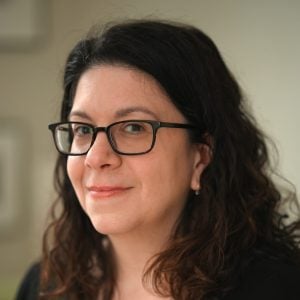



Dan Nolan, Duke Fuqua MBA ’22 and Senior Strategy Consultant at Accenture, brings a unique journey from the broadcast booth to boardroom strategy. Originally from Winchester, VA, Dan pursued his undergraduate degree in Public Policy at Duke and later returned to his alma mater for an MBA, concentrating in Marketing, Market Analysis, and Strategy. With a background in sports media, Dan made a strategic pivot into consulting, driven by a growing interest in the business side of media and a desire for long-term career flexibility. At Fuqua, he leaned into Duke’s collaborative spirit, expanded his quantitative and time management skills, and leveraged both classroom and real-world experiences—such as internships with ESPN and a Durham-based startup—to shape his post-MBA path. Read on for more about his journey to Accenture in this Real Humans: Alumni.

Dan Nolan, Duke Fuqua MBA ’22, Senior Strategy Consultant at Accenture
Age: 32
Hometown: Winchester, VA
Undergraduate Institution and Major: Duke University | Public Policy Studies
Graduate Business School, Graduation Year and Concentration: Duke’s Fuqua School of Business | 2022 | Marketing, Market Analysis and Strategy
Pre-MBA Work Experience: Producer, Host | Monumental Sports & Entertainment (MSE) | Media
Post-MBA Work Experience: Senior Strategy Consultant | Accenture | 2022-Present | Consulting
Why did you choose to attend business school?
I consider myself lucky to have pursued my dream job out of college. For over six years, I was a sports broadcaster covering a wide array of professional, collegiate, and high school-level sports, predominantly basketball. The production team at MSE empowered me to work on a wide array of creative projects and I enjoyed living in Washington, D.C. In other words, life was good!
Admittedly, graduate school was never on my radar. My perspective was simple: the only time I would seriously consider going to a graduate-level program was if it helped reach my future goals. Well, near the end of my time at MSE, I took some time to reflect on if I wanted to continue working the unique hours of a sports broadcaster long term (weeknights, weekends, holidays). Simultaneously, the business side of media started to pique my interest, so I started looking into the business school admissions process and the rest is history.
Why Duke Fuqua? What factors figured most prominently into your decision of where to attend?
While I applied to a collection of terrific programs (Northwestern’s Kellogg, NYU’s Stern, etc.), as soon as I decided to pursue an MBA, I knew I would apply to Duke’s Fuqua School of Business. My deep-rooted connection to Duke, which began in childhood and continued through my undergraduate years at Trinity College, made Fuqua feel like a natural extension of a community I had long cherished. True story: the night I found out that I was accepted into Duke undergraduate, I ran into the street and was nearly hit by a car. I had so much joy and adrenaline running through my veins that I simply apologized and continued my celebratory neighborhood 5K. Needless to say, I bleed blue through and through.
The collaborative environment, embodied in the mantra “To go fast, go alone. To go far, go together,” defined my experience. Team Fuqua’s emphasis on collective success allowed me to learn from and alongside people from diverse backgrounds. Additionally, FuquaVision stood out as both a creative outlet and a way to apply my digital content expertise while preparing for my new career path. Watching FuquaVision sketches, I saw the perfect blend of teamwork, creativity, and humor—embodying Fuqua’s collaborative spirit. In short, Fuqua provided the ideal environment to step outside my comfort zone, broaden my horizons, and prepare for a business career.
What about your MBA experience prepared you for your current career?
My business school experience greatly shaped my career by giving me access to people, skills, and insights I wouldn’t have gained otherwise. I got to build up my quantitative skills—something I hadn’t used much in my previous roles but now rely on in my day-to-day responsibilities. Interestingly, my time management skills also improved while I was at Fuqua. Juggling coursework, recruiting, and networking, not to mention making time for friends and loved ones, is a skill that I continue to use in my professional life. Lastly, the alumni network opened the door to great, candid conversations with professionals who helped me understand what it was like to work in those industries, which greatly impacted how I approached my career path.
What was your internship during business school? How did that inform your post-MBA career choice?
During my time at Fuqua, I was fortunate enough to tackle not one, but two internships.
The first was with ESPN and their brand marketing team, where I had a chance to help develop a market positioning exploration of the sports betting industry ahead of ESPN’s eventual launch of ESPN BET. The second was with a sport technology startup based out of Durham called Teamworks, where I worked with other Fuqua alums on a platform growth strategy.
I learned many lessons across each of these opportunities, but admittedly, I don’t know whether either informed my career choice as much as the media landscape at the time. By the end of the summer, I had an interesting decision to make. On the one hand, I could continue to pursue a business role at a media company at a time when the media industry was certainly going through the wringer. On the other, I could branch out to another industry and continue to develop my skills before an eventual return to my passion area.
I reached out to several of my friends who worked in the industry. The most common suggestion was to explore consulting, which could provide a unique, “best-of-both-worlds” solution: work on media-related projects across several companies. This path provided the stability I was seeking while allowing me to work on what interested me the most.
Why did you choose your current company? What factors figured most prominently into your decision of where to work?
Once I decided that I was going to go through second-year consulting recruiting, there were two core factors that drove my decision-making: media-specific work and quality people. I was fortunate enough to have a choice of where I wanted to work, and I ended up choosing Accenture for three primary reasons:
The first was the incredible Fuqua, and Duke more broadly, alumni network there. When I first arrived at Accenture, the Fuqua community shared resources, perspective, connections, everything someone could ask for when starting at a new company. As I mentioned before, I’m very familiar with how fantastic the Duke alumni community is, but this was next level compared to some of the other companies I interviewed with.
Second, one of my goals when getting to know the various firms was speaking to people that were not affiliated with Duke. Before Fuqua, I’d only worked for one company my entire professional career, so I took this choice seriously. As such, I didn’t want to just learn about the culture; I wanted to get a real feel for the work. I had wonderful conversations with leadership within Accenture’s Comms & Media practice, who shared the pros and cons of doing this specific consulting work.
Finally, Accenture’s office flexibility was appealing. My wife received an amazing opportunity to work in New York City, and the decision on where to move was never questioned because I knew that Accenture would allow me to move and work from their One Manhattan West office.
 Advice to current MBA students:
—One thing you would absolutely do again as part of the job search?
Something I pride myself on is prioritizing quality over quantity during the networking process. For me, these conversations are an opportunity to truly get to know someone, not just a stepping stone for a name drop in an interview. I challenge myself to ask thoughtful, specific questions beyond the typical “What’s it like to work there?”—digging deeper into their experiences, perspectives, and challenges. Actively listening is just as important, and my broadcasting background has helped me refine that skill, making it easier to pick up on details and engage in more meaningful discussions. I may not have spoken to as many individuals as my peers, but I thoroughly enjoyed this aspect of the job search process.
—One thing you would change or do differently as part of the job search?
In hindsight, I would have started casing practice earlier on in the process. I was comfortable with the interactive nature of case interviews—communicating my thought process clearly and adapting when given new information; however, additional practice would have given me more time to refine my mental math and analytical skills. While I’m confident in my computational abilities, this was certainly a part of my brain that I wasn’t utilizing regularly. Starting earlier would have also enabled me to move beyond rigid frameworks, applying structured thinking in a more natural way. The more cases you tackle, the more you begin to recognize common frameworks and approaches, which simplifies the process of addressing new problems.
—Were there any surprises regarding your current employer’s recruiting process?
Most people pursuing a career in consulting post-MBA do so during their first year of business school; however, as mentioned above, I went through second-year recruitment. My biggest surprise was the speed at which everything happened. Over just a couple of months, I went from not considering a consulting job to accepting my full-time job offer at Accenture. Life comes at you fast!
—What piece of advice do you wish you had been given during your MBA?
Between the Fuqua Career Development Center and communal recruitment assistance, I was fortunate to have a wide variety of people to lean on as I navigated new territory; however, something that I reminded myself of constantly while at business school was that there was only one Dan Nolan from Winchester, VA going through the Fuqua experience (at least at the time…shout out to any other Dan Nolans from Winchester, VA considering Fuqua).
For example, it’s well documented that the first several months of the business school experience can be a bit bananas. Some students will have coffee chats with over 100 professionals, complete over 50 practice cases, and place heavy emphasis on the consulting and banking industries during first-year internship recruitment. That’s great, but I can assure you that I did not do that. I met with about two dozen individuals, doing my best to have a real conversation to learn not only about the work but also the people. Over my two years at Fuqua, I completed roughly 25 practice cases across consulting, consumer packaged goods, and other areas.
My point is that no one is better at being you than you. If that means you go against the grain, that’s ok! Just remember: you earned your spot and owe it to yourself to pursue whatever you’re most interested in.