

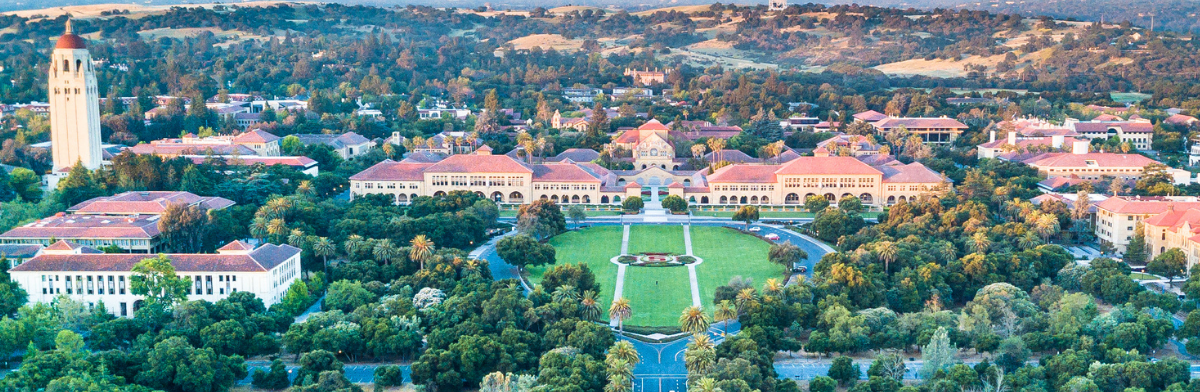
The Stanford Graduate School of Business (GSB) marks its Centennial and celebrates 100 years of innovation, leadership, and business education. At the point of its founding in 1925, GSB was the second school in the U.S. to offer a masters degree in business administration. The idea that business could be academically pursued was a new one, and the new degree “an audacious vision;” now, 100 years later, its impact is clear. Over the last century, Stanford GSB has driven innovative research, produced generations of influential leaders, and been instrumental in the development of Silicon Valley.
Speaking of the milestone, Dean Sarah A. Soule expressed gratitude for the “generations of students whose curiosity and drive have defined this place, and for the devoted faculty and staff who nurtured their growth.”
“We pursue excellence,” she added, “not only in scholarship, but in cultivating principled, impactful leaders who will shape the future. At the GSB, we don’t just teach business; we foster bold ideas, empower visionary leaders, and strengthen the community that propels them forward.”
The Stanford GSB Journey
At its inception, the Stanford GSB MBA hosted just 16 students. Today, 120 professors teach 400 courses to students that hail from over 70 countries.
To illustrate its monumental growth and development, the school has published a Centennial Timeline. The Timeline is a tapestry of the people, events, and milestones that make up the school’s history. It tracks the appointment of the first dean, Willard Hotchkiss, in 1925; the first woman to graduate with a PhD, Persis Emmett Rockwood, in 1965; the launch of the renowned View From The Top speaker series in 1978; and even shares original coverage of the 1989 earthquake.
The Influential Alumni
“As we celebrate the Centennial anniversary at the Stanford GSB,” Soule shared, “I reflect on the remarkable journey of countless leaders who have studied here. Their contributions have shaped some of the world’s most influential organizations.”
The lists of those “countless leaders” are studded with household names. The schools’ graduates aren’t just influential, they have defined how the world of business works today. The names are, of course, too numerous to list in full: but here is a selection of some of the most familiar:
- Charles R. Schwab (MBA ’61), is the founder of Charles Schwab & Co., the pioneering discount brokerage. He has generously supported the school throughout his life, establishing the Schwab Residential Center and the Initiative for Financial Decision Making.
- Phil Knight (MBA ’62). Knight developed a business plan for a sportswear brand for an entrepreneurship paper at GSB. Originally called Blue Ribbon Sports, the company would become Nike; the brand that changed the sportswear world forever. The Knight Management Center, Stanford’s newest campus, was funded by his generosity.
- Mary Barra (MBA ’90) has been named one of the most influential women in business by Fortune, Forbes and Time. Her lifelong career at General Motors, culminating in her 11-year long (and still going) stint as CEO, has been informed by her study of strategy, leadership, and organizational behavior at the GSB.
- Eric Yuan (SEP ’06), through the educational rigor of the Stanford Executive Program (SEP), developed the skills needed to found one of the world’s most well known platforms: Zoom.