


While Master’s in Management programs have grown in popularity, perceptions about the degree differ in Europe and the United States. In Europe, Master in Management programs are long-established, widely recognized and viewed as a standard pathway into the business world. In the U.S., the MiM degree is still gaining traction, navigating a graduate management education landscape long dominated by the MBA and a market still learning what the MiM program offers.
US and European MiM programs also differ in terms of cost, curriculum, employer familiarity and post-graduation work opportunities. As more U.S. business schools offer their own versions of the degree, they’re finding that international students, domestic applicants and employers all perceive the MiM differently.
A Degree Born in Europe and Adapted in the U.S.
When Duke University’s Fuqua School of Business created one of the earliest U.S. Master’s in Management programs roughly 15 years ago, the school looked directly to Europe for its model. European MiM programs had long served as a bridge between undergraduate studies and the European job market, making these programs a popular option for students wanting business training in order to launch business careers in Europe.
“I think there are a lot of common traits between the two,” says Grady Arnao, master’s in management studies (MMS) program director of admissions at Duke Fuqua. “I think the biggest difference is that (European programs) have been around for so much longer, so I think some people are more open there to not doing an MBA because they can just go to an MMS program.”
That longevity matters. European employers and students tend to be more familiar with the MiM degree while American employers and students are more familiar with the MBA degree.
“In the U.S. people are less familiar with master’s in management programs and are more likely to recommend MBA programs instead,” Arnao says. “There’s just this knowledge base that has to grow, and the market has to come to realize that these are reliable programs you’re getting a great education from and that the MBA isn’t the only option out there.”
Differences in Familiarity and Perception
Some of that unfamiliarity surfaces even among domestic applicants. At the University of Michigan’s Ross School of Business, the student body in their MiM program is primarily made up of U.S. students. Julia Hoffert, the school’s director of admissions and recruitment, estimates that 85% of their MiM students are from the U.S.
For many of those students, the MiM degree competes not only with the MBA degree but also with other specialized master’s programs. Hoffert encourages applicants to focus less on perception and more on substance.
“What I always say to students and to families is the curriculum should always drive the decision,” she says. “So if you are looking at the curriculum of a Master’s in Management versus an MBA versus an M.S. in business analytics, the curriculum itself and the core curriculum of the classes should drive the decision around whether or not that is the right space for you. Legitimacy is very subjective and we will just simply continue to build alumni from these programs, it’s just going to take time. I think the legitimacy is simply in the curriculum itself.”
Cost, ROI, and the Appeal of the U.S. Job Market
Across most European universities, MiM program tuition costs tend to be significantly lower than U.S. MiM programs, and many European institutions benefit from government funding. For example, the University of St. Gallen in Switzerland — one of the top MiM programs in Europe — charges roughly $4,000 per semester for international students and roughly $1,700 for Swiss residents.
By contrast, some top U.S. programs charge significantly more in total program costs. For example, Indiana University’s Kelley School of Business charges $30,989 for in-state students and $55,488 for out-of-state students while the total program cost at Fuqua is even higher at $67,600.
That cost difference is one of the biggest factors international applicants weigh when choosing where to study. But Arnao notes that U.S. schools still hold a major advantage: post-graduation work opportunities in the U.S. Many STEM-designated MiM programs allow international students to stay in the U.S. for up to three years through the Optional Practical Training work visa program.
“The biggest selling point for the U.S. model is the opportunity to stay in the U.S. for up to three years,” Arnao says. “So being able to earn that income, come to the U.S., study here and then see where their career takes them, it could even last longer than three years. I think that’s usually the biggest selling point.”
For some students, the potential ROI of gaining American work experience outweighs the higher tuition. “In the U.S., the ROI might be a little bit higher, depending on where you’re coming from and what your goals are long-term,” Arnao adds.
International Interest and New Barriers
Even with the U.S. offering strong job-market incentives, awareness of the MiM degree programs offered at US business schools is still catching up globally.
“I think the demand and knowledge about these types of programs is still far more prevalent in Europe and Asia,” says Wynne Strugatch, associate director of student recruitment and admissions at University of Chicago’s Booth School of Business. “Especially with our programs being new, we’re still doing a lot of knowledge sharing that these programs exist and what they are.”
International students are particularly drawn to the possibility of gaining U.S. business exposure. “I think we’re going to continue to see that market in Europe and Asia, they want exposure to the U.S. market, potentially to find job opportunities in the U.S. market,” Strugatch noted.
But visa uncertainty and shifting political conditions can make the decision more complicated. “Some political affairs are making it harder for international students to get visas and feel welcome to study in the U.S.,” Strugatch says.
Those challenges also shape the career landscape for MiM graduates. “We also want to show off our reputation with things like career outcomes, and if it’s going to be much harder for these students to get jobs in the U.S., then maybe we’re looking for individuals whose goals are to get this education and return to their home countries with it, at least for the international applicants,” Strugatch noted.
For some students, the MiM has even started to feel like a hybrid between graduate study and an international experience. “Some of them are treating it… almost more like a study abroad experience,” Strugatch says.
Program Variation and Specialization in the U.S.
European MiM programs tend to share a relatively consistent structure: broad management curriculum, limited prerequisites and an early-career focus. In contrast, U.S. business schools are still experimenting with what a MiM can or should be.
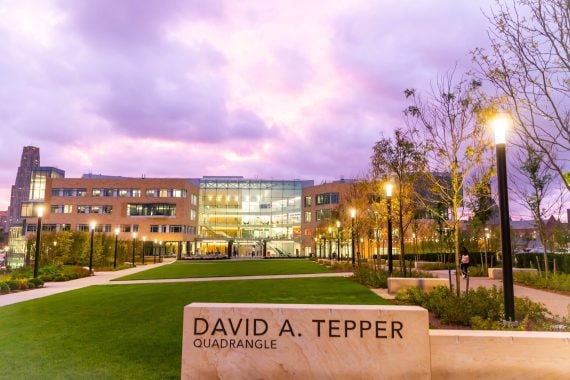
“One difference I’ve noticed here is that some have specializations and some don’t,” says Dunya Khoury Schultz, assistant director of master’s admissions at Carnegie Mellon’s Tepper School of Business. “Some require you to be a business undergrad and some require you to not. So I feel like there’s a lot of differences just within the U.S.”
This variation offers more choice, but also requires more careful comparison, admissions experts say. Applicants may encounter very different program lengths, technical demands, career support models, internship options and academic prerequisites.
But that’s also what makes the U.S. landscape unique, admissions officers say. Instead of copying the European model outright, American business schools are shaping the MiM to fit their own strengths, employer relationships and student goals. Some programs lean analytical, some lean experiential, some are highly structured and others give students room to explore.
For anyone deciding between a U.S. MiM and a European MiM, experts suggest focusing less on the label and more on what each program is actually offering you. Look closely at the curriculum, the career paths graduates are taking and the environment where you ultimately want to start your career.