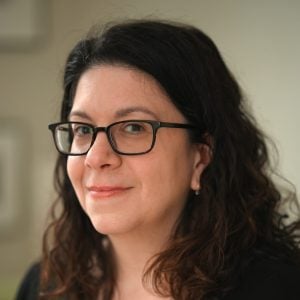




Jessica Chew, Carnegie Mellon Tepper MSBA Class of 2027
Age: 23
Hometown: San Francisco, CA
Undergraduate Institution and Major: University of California, Los Angeles; B.S. in Mathematics of Computation
Pre-MSBA Work Experience: Technical Operations and Project Lead; Academy of Art University; 1 Year
Program: PT MSBA
Expected Graduation Year: 2027
Why did you make the decision to attend business school? Why now?
I decided to attend business school because I realized I enjoyed applying my technical and analytics skills to solving business problems and understanding how data can inform decision-making in operations and strategy.
I started the program about a year after completing my undergraduate degree. As I began taking on more responsibilities at work, I wanted to continue developing my skillset. It felt like the right time because I had enough work experience to understand which skills I wanted to build, while still being close enough to my undergraduate studies that transitioning back into an academic environment felt seamless.
Why did you choose Carnegie Mellon Tepper? What factors figured most prominently into your decision of where to attend?
I chose the Tepper School because of its strong reputation at the intersection of technology, analytics, and business. Coming from a quantitative background, I was looking for programs that combined technical rigor with practical business applications, and the Tepper School’s Master of Science in Business Analytics (MSBA) checked all the boxes!
What do you think is your most valuable or differentiating contribution to the class?
As someone earlier in my career with less industry experience than some of my classmates, I believe my differentiating contribution to the class is the perspective and curiosity I bring to discussions. Being at this stage of my professional journey has made me especially motivated to learn from others, ask thoughtful questions, and engage deeply with new ideas.
Tell us a fun fact about yourself that didn’t get included on your application:
I started long-distance running after recovering from a broken leg last year. That experience gave me a newfound appreciation for being able to move freely and motivated me to challenge myself physically!
Post-MSBA career interests:
Post-MSBA, I hope to transition into a role in business or product analytics where I can apply the technical and analytical skills developed through the program to solve complex business problems. I am particularly interested in using data to understand user behavior, identify opportunities for product improvement, and support data-driven decision-making.
Advice for Current Prospective Applicants:
–What is one thing you would absolutely do again as part of your application process?
One thing I would do again as part of my application process is take advantage of the optional essay to provide additional context about my background and experiences. This gave me the opportunity to clarify my motivations and present a more complete picture of who I am and what shaped my goals.
–What is one thing you would change or do differently?
I would start the application process sooner. I started the application pretty close to the deadline, and while I am glad it all worked out, it would have been less stressful had I allotted more time to working on my essays!
–What is one part you would have skipped if you could—and what helped you get through it?
I would have skipped the video essay if I could; it’s tough speaking to a camera! I wrote down some talking points before I started recording, and that helped me structure my train of thought as I recorded it.
 How has the program’s flexibility enabled you to pursue your personal and professional goals without compromising your work-life balance?
Since I am based on the West Coast, classes are immediately after my workday. I find that I have enough time after lectures to work on assignments in the evening. The asynchronous materials our professors prepare before lectures also allow me to review concepts at my own pace and come into live lectures better prepared.
How do you manage to balance the demands of the program with your professional responsibilities, and what strategies have worked best for you?
I like to plan my week out in a planner every Sunday before the week begins! This way, I am able to have a visual guide on time dedicated to work responsibilities and schoolwork. I add any deadlines and allocate time slots to work on each task, which helps me stay organized.
How has the online format of the program allowed you to immediately apply what you’re learning to your current role and advance your career?
The online format of the program has allowed me to apply what I am learning in real time while continuing to work in my current role. Studying and working concurrently gives me the opportunity to immediately connect course concepts to the challenges and projects I encounter day to day.
For example, lessons on best practices in data visualization have directly influenced how I approach the reports and analyses I produce at work. I have been able to refine how information is presented by simplifying visuals and focusing on clearer communication of key insights.
Despite being in a remote program, how have you built meaningful connections with peers, faculty, or mentors, and how has this sense of community enriched your experience?
The MSBA program began with a weekend on campus (BaseCamp) where I had the opportunity to meet my classmates in person. That experience helped establish early relationships and made it much easier to transition into the remote collaboration required for group projects throughout the program.
Many of our classes include team-based projects, which have allowed me to regularly connect with my peers. These interactions have made the remote format feel far more collaborative and engaging. Rather than feeling like I am learning independently, I have been able to build relationships with classmates who are navigating similar challenges.
What is one thing you have learned about Carnegie Mellon Tepper that has surprised you?
I was surprised by the amount of support readily available at the Tepper School! Professors understand the challenges with balancing school and work, and they are very accommodating. The Masters Career Center has also been a valuable resource, providing guidance on navigating career development, exploring opportunities, and thinking more intentionally about my long-term professional goals. Knowing that these resources are readily accessible has made it much easier to balance the demands of the program while continuing to plan for the next steps in my career.