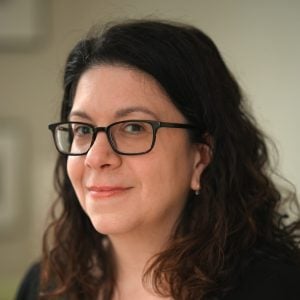
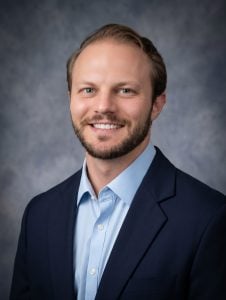
Kyle Niedermeier, Columbia Business School MBA Class of 2028
Age: 33
Hometown: Willard, Ohio
Undergraduate Institution and Major: Wright State University – HR Management
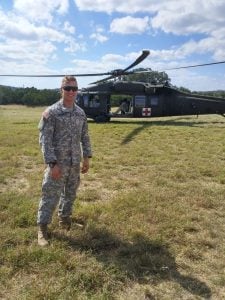
Pre-MBA Work Experience: U.S. Army Medical Service Corps Officer and Medical Laboratory Officer, 2016 – 2026
Why did you make the decision to attend business school? Why now?
The Army gave me many unique opportunities to lead, from a medical platoon in Iraq to a research department at the U.S. Army Medical Research Institute of Chemical Defense. My time in the research laboratory was a high point of my career, and it felt like the right time to transition that work to the industry side of therapeutic development. To do that well, I needed to pair the leadership experience the Army gave me with a grounding in finance, strategy, and commercial insight.
Why did you choose Columbia Business School? What factors figured most prominently into your decision of where to attend?
I weighed two significant factors in making my decision: a program with a strong healthcare ecosystem and desirable location. Columbia Business School’s Healthcare and Pharmaceutical Management Program and the ecosystem around it was a major draw for me: strong healthcare electives, industry experts like Prof. Cliff Cramer, and New York’s access to industry leaders. The location factor was focused on proximity to my spouse, who is still on active duty in the Army. She can’t easily relocate while serving, so staying within reach of her was important.
What do you think is your most valuable or differentiating contribution to the Class of 2028?
My last Army role was leading and supporting scientists with far more scientific training and experience than I had. I had to understand their work well enough to advocate for it with federal sponsors and leadership when resources were tight. I did similar translating in Iraq and Korea, between medics, doctors, epidemiologists, planners, logisticians, and allied partners. I’m most useful and comfortable on teams where people don’t yet speak the same language.
Tell us a fun fact about yourself that didn’t get included on your application:
My usual fun fact is that my wife is a forensic pathologist with three board certifications and a bone collection. But one that actually includes me is that we spent our honeymoon in Peru hiking about 50 miles unguided on the Salkantay Trek to Machu Picchu.
Post-MBA career interests:
I’m pursuing rotational leadership development programs in pharma and biotech. I want to see how a therapy reaches patients from different vantage points, gaining a broader perspective on the company and industry so I can make better decisions as a leader.
Advice for Current Prospective Applicants:
–What is one thing you would absolutely do again as part of your application process?
Starting early and spending time up front on my narrative. Coming from a non-traditional military background, I initially thought my story was too disjointed to articulate clearly. Reflecting on it, then bouncing it off people inside and outside my professional circle and current CBS students, helped me build a clear path from where I’d been to where I wanted to go, and why an MBA would bridge the gap.
–What is one thing you would change or do differently?
I would stop looking for reasons why I wouldn’t be a great candidate. Everyone says, “don’t self-select out,” but that is easier said than done when you’re fixating on your own perceived weak points. Mine was a lower-than-average undergrad GPA. If it’s in the past, you can’t change it. You can only do what’s in your control now to close the gap and move forward. Showing how you’ve recovered and grown from a misstep makes a more compelling story than pretending to have a spotless record.
–What is one part you would have skipped if you could—and what helped you get through it?
GRE prep, without a doubt. Relearning concepts from nearly 10 years earlier and fitting study blocks into a demanding schedule was a grind. An extremely supportive spouse kept me grounded, and reminding myself what a good score could make possible kept me disciplined.
 What is your initial impression of the CBS students/culture/community?
For such a large class, Columbia Business School makes it feel manageable. You see the same faces almost daily, whether they’re in your cluster of about 70 or not. Between classes, clubs, and social events, you meet people quickly in both structured and unstructured ways. Even two months in, I’m still meeting other students who share my professional interests, background, or hobbies, so there’s always a reason to talk to someone new.
What student organizations have you joined/are you hoping to join and why?
- Healthcare Industry Association (HCIA): One of the largest professional clubs and the student-led portion of CBS’s healthcare ecosystem. A great resource for recruiting prep, gaining insights from second-years, and meeting and learning from other students passionate about healthcare.
- Veterans Club: The club was a great resource as a prospective applicant when I was researching programs and shaping my “Why CBS” story. I joined for the camaraderie and the chance to pay it forward to the vets coming behind me.
- Rugby Club: A hallowed institution here both socially and athletically. I’d never played before joining, but the club welcomes everyone, and there’s nothing like getting muddy and rucking on the pitch with the team.
What is one thing you have learned about CBS that has surprised you?
How quickly things kick off professionally. Companies show up within the first few weeks, and many students are balancing classes with company events, coffee chats, and club events right away. The upside is that you get in front of the people and companies you came here to meet much sooner than expected. The downside for those doing unstructured recruiting is that it’s easy to look at your peers and feel behind. What helps me is keeping my own goals, and their timelines, in mind.
What is one thing you are most excited about in your first year?
Finishing core classes and getting into electives starting in spring 2027. Core classes are crucial for setting the MBA foundation, but Columbia Business School offers so many electives for nearly any industry or functional interest that it’s hard not to look ahead already. I’m personally looking forward to Financing Innovation in Healthcare and Strategy and Competition in Pharmaceuticals and Biotechnology. Also, having been born and raised in small-town Ohio, I’m excited to keep exploring what New York has to offer with my classmates.