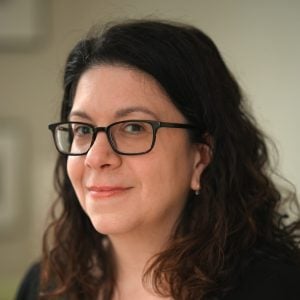




Noa Amzallag, INSEAD’s MBA Class of 2027
Age: 27
Hometown: Paris, France / New York, USA
Undergraduate Institution and Major: Columbia University & Sciences Po Paris
Pre-MBA Work Experience: Growth Equity Investor, Ardian Growth c.3 years across New York and Paris
Why did you make the decision to attend business school? Why now?
After over 3 years in growth equity, I reached a point where I had learned an enormous amount professionally but wanted to deliberately step outside the trajectory I was already on.
Investing gave me exposure to extraordinary founders, businesses, and industries, and I loved the combination of analytical rigor and human judgment that came with it. But it also made me increasingly curious about everything surrounding an investment: how companies are actually built, how leaders make decisions under uncertainty, how organizations scale, and how technology is reshaping entire industries.
I had also gone directly from my undergraduate studies into work, so I had never pursued a master’s degree or really given myself a period to step away and broaden my perspective. After several years between Paris and New York, I was ready to change geographies, challenge some of my assumptions, and expose myself to opportunities I might never have considered from within my existing professional environment.
I could absolutely see myself returning to investing after INSEAD, and in many ways the MBA is an opportunity to become a better investor. But I also wanted to arrive with enough openness to discover that there might be something else I love just as much. It felt like the right moment in my career to explore without needing to have the conclusion predetermined.
Why did you choose INSEAD? What factors figured most prominently into your decision of where to attend?
The international dimension was probably the biggest factor. I grew up, studied and worked between France and the United States, and have always felt most comfortable in environments where people approach the same problem from completely different cultural perspectives.
INSEAD takes that to another level. It is difficult to find another MBA where you can sit in a classroom with people from over 70 nationalities and graduate with a network that is genuinely global rather than concentrated in one geography.
I was also attracted to the intensity of the one-year format. I did not want to step away from the professional world for too long, and I liked the idea of an MBA that forces you to make the most of every week.
Finally, the people mattered enormously. Every interaction I had with students and alumni reinforced the sense that INSEAD attracts people who are extremely accomplished but also curious, adventurous, and unusually willing to help one another.
What do you think is your most valuable or differentiating contribution to the Class of 2027?
I have always loved creating connections between people who might not otherwise meet, whether across different nationalities, professional backgrounds, or simply different ways of thinking.
I am also relentlessly curious. Investing strengthened that instinct because it required me to enter industries I knew very little about, ask a lot of questions, learn quickly, and form a point of view. At INSEAD, that curiosity is constantly rewarded: if someone has built factories in Asia, launched a startup in Brazil, worked in quantum computing, or advised a government, I will probably have approximately 40 questions for them.
Ultimately, I hope my contribution is as much social as it is intellectual: bringing people into the conversation, connecting people and ideas across different worlds, and helping build the kind of community where we learn from one another, challenge each other, and have a lot of fun along the way.
Tell us a fun fact about yourself that didn’t get included on your application:
I am trained in hypnotherapy.
It started with a slightly obsessive curiosity about the gap between what we know rationally and how we actually behave (aka why our brains can understand perfectly well that something makes no sense and then proceed to do it anyway).
That curiosity eventually led me to formal training in hypnotherapy, where I became fascinated by how much attention, language, memory, and framing can shape the way we experience things and make decisions.
It sounds fairly far removed from growth equity, but I think both appeal to the same part of my brain: I love figuring out what is actually driving people and decisions beneath the surface.
Post-MBA career interests:
I remain very interested in investing, particularly growth equity and venture capital, and in businesses at the intersection of technology, consumer behavior, healthcare, and the creative industries.
At the same time, one of my goals for INSEAD is to resist the temptation to arrive with my entire post-MBA life already mapped out. I have been speaking with people in industries adjacent to investing, as well as founders and operators, to understand careers and business models I had previously only encountered from the investor side of the table.
Maybe I will leave INSEAD even more convinced that investing is what I want to do. Maybe I will discover an entirely new passion. I think both would be great outcomes.
Advice for Current Prospective Applicants:
–What is one thing you would absolutely do again as part of your application process?
Talk to as many current students and alumni as possible (and not only to ask questions about admissions).
Some of my most useful conversations were simply about what people’s lives at INSEAD actually looked like: what surprised them, what they struggled with, who they met and who they are still in contact with, which opportunities they had not anticipated, and what they would have done differently. Those conversations helped me understand not just how to get into INSEAD, but why I actually wanted to be there.
I also visited the Fontainebleau campus before applying, which was incredibly helpful. There is a big difference between understanding a school through a website and actually being able to picture yourself there: sitting in the classrooms, talking to students, and getting a sense of the community firsthand.
Finally, I would absolutely spend the same amount of time reflecting before writing the essays. It is tempting to focus on presenting the most impressive possible version of yourself, but I think the better exercise is figuring out which experiences actually explain who you are, what has shaped you, and why an MBA makes sense for you now. Once I approached the essays that way, the application became much easier to write.
–What is one thing you would change or do differently?
I would spend much less time trying to reverse-engineer what I thought the admissions committee wanted to hear.
What I eventually realized is that, if you approach it properly, the application process is actually a very useful exercise in self-reflection. The questions force you to articulate things you may not have fully answered for yourself yet.
Once I stopped treating the essays as a puzzle to solve for admissions and started using them to find honest answers to those questions for myself, the application became both stronger and much more personal. If I were doing it again, I would approach it that way from the beginning.
–What is one part you would have skipped if you could—and what helped you get through it?
The standardized test, without hesitation.
I don’t think anyone has ever finished a GMAT and thought, “What a wonderful use of a Tuesday.”
What helped me was treating the test as a finite project rather than an existential referendum on my intelligence. I deliberately gave myself a very strict three-week study window, which forced me to be systematic: understand where I was losing points, focus disproportionately on those areas, practice intensively, take the exam, and move on.
Having a deadline was strangely liberating. Instead of allowing test preparation to expand indefinitely and consume the entire application process, I knew there was an end date. For me, that pressure made the process much more manageable.
What is your initial impression of the INSEAD students/culture/community?
The diversity is even more striking in practice than it looks in the brochures.
You can have breakfast with someone who worked in consulting in Dubai, sit next to an entrepreneur from Brazil in class, have lunch with someone from the energy industry in South Africa, and end the evening debating something completely unrelated with people from another five countries.
What has impressed me most, though, is how quickly people help each other. There are obviously a lot of ambitious people here, but the culture feels remarkably collaborative. Someone always seems to know someone who can answer your question, make an introduction, explain a concept, or help you think through an idea.
It is an incredibly high-achieving group without feeling like everyone is constantly trying to prove that they belong in one.
I have also loved how open and welcoming everyone is. There is very little sense of closed social circles forming, at least so far. You make dinner plans with four people, everyone invites someone they met that afternoon, and somehow you arrive at the restaurant with twelve (which is great for the community, if slightly less great for whoever made the reservation).
What student organizations have you joined/are you hoping to join and why?
The Private Equity & Venture Capital Club is a natural fit given my background and my interest in remaining involved in investing.
I am also interested in entrepreneurship and technology-related clubs because one of my goals for the year is to spend more time around people building companies rather than exclusively evaluating them from an investor’s perspective.
More broadly, I am trying not to optimize my entire INSEAD experience around my CV. Part of the reason I came here was to expose myself to industries, people, and ideas that I would not naturally encounter in my professional bubble, so I fully intend to join a few things that make significantly less sense on paper.
What is one thing you have learned about INSEAD that has surprised you?
I expected the academic intensity, but I underestimated how much I would enjoy being back in a classroom after several years of working.
What has surprised me most is how applicable the teaching feels. INSEAD is extremely case-based, so you are rarely learning a concept in isolation.
It also changes the role of your classmates and yours. With such a diverse group, someone in the room has often experienced the problem being discussed firsthand.
What is one thing you are most excited about in your first year?
The unexpected parts.
I already know I will learn about finance, strategy, leadership, and entrepreneurship. What excites me more is everything I cannot predict yet: the classmate who introduces me to an industry I knew nothing about, the professor who changes how I think about a problem, the trip I had no intention of taking, or the conversation that sends my career in a direction I had not considered.
One of the luxuries of business school is having a period of your life where curiosity can be a perfectly legitimate strategy. I intend to take advantage of it.