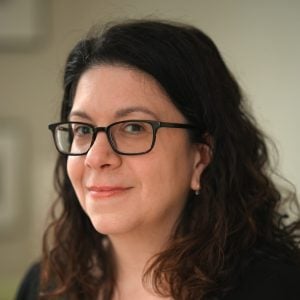
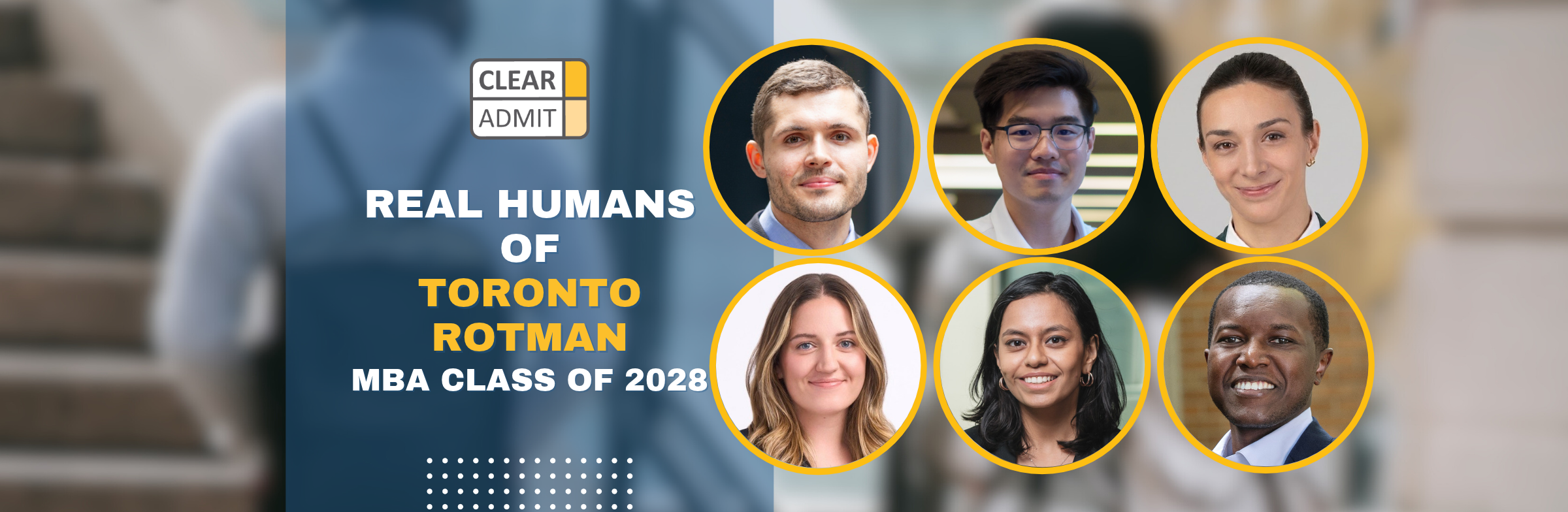

Hailee Voegelin, Toronto Rotman MBA Class of 2028
Age: 28
Hometown: Waterloo, ON
Undergraduate Institution and Major:
University of Waterloo:
- Bachelor of Arts (Honours), Political Science, 2021
- Global Governance Specialization; Minors in International Studies and Public Policy & Administration: Co-operative Program
- Master of Climate Change, 2022
Pre-MBA Work Experience: Climate Strategy at PwC Canada and Manifest Climate, and Cleantech Acceleration at MaRS Discovery District. 2022-2026.
Why did you make the decision to attend business school? Why now?
Four years into my career in sustainability and climate, I had built real depth advising financial institutions, crown corporations, and utilities on climate strategy at PwC and Manifest Climate, then leading cleantech accelerator programs at MaRS Discovery District. What I didn’t have was the finance and investing side of the toolkit. An MBA was the clear way to build that out, giving me the range to keep working in this space or take what I’ve learned into new ones.
Why did you choose Toronto Rotman? What factors figured most prominently into your decision of where to attend?
Two things stood out to me about Rotman: what happens beyond the classroom, and its deep connection to Toronto’s industry-leading organizations. Being selected as a Creative Destruction Lab Fellow gives me a hands-on opportunity to work closely with founders scaling science-backed ventures, directly aligned with my background in climate and cleantech, exactly the kind of experiential learning that happens outside a typical curriculum. At the same time, Toronto is home to Canada’s major pension funds, infrastructure investors, and financial institutions, and Rotman sits right in the middle of that ecosystem, giving me direct access to the industries I’m working to move into. That combination is what made my decision clear.
What do you think is your most valuable or differentiating contribution to the Class of 2028?
I bring a skillset in translating complex, technical material for non-expert audiences, developed through advising senior leaders on climate strategy. My professional experience spans consulting some of Canada’s largest organizations, across varied levels of technical and financial literacy. I learned a lot about how to make complicated material land, regardless of who’s in the room.
Tell us a fun fact about yourself that didn’t get included on your application:
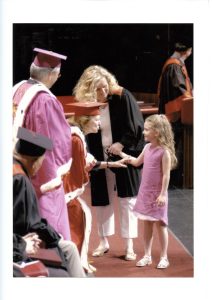
When I was young, I went to my Mom’s classes with her while she was in law school. We often joke in my house that I have an ‘honorary law degree’ because she used to read me her law textbooks as my bedtime stories. I walked across the stage with her at her law school convocation, and years later, she hooded me at my master’s convocation. My Mom is the reason I’m here.
 Post-MBA career interests:
I’m keeping an open mind, but I’m particularly drawn to infrastructure investing in renewable energy and electrification. I’m interested in both the development and operations sides of the asset lifecycle, and I want to combine the sector expertise I’ve built in climate and sustainability with the finance and investing skillset I’m developing here. I’m also keen to explore venture capital, particularly in climate technologies like carbon removal and energy infrastructure, areas I’ve gotten close to through my professional experience and mentoring work.
Advice for Current Prospective Applicants:
–What is one thing you would absolutely do again as part of your application process?
Connect early with the admissions team! I had an introductory session with an admissions team member who supported me from that first conversation all the way through to my first day on campus. Her guidance was invaluable, in deciding to pursue the MBA, positioning my application strongly, and navigating the whole process.
–What is one thing you would change or do differently?
I would have started as early as possible. I always knew Rotman was the right choice for me, so that was the easy part. However, the GMAT, application process, including the interviews, takes a long time. It’s best not to overload yourself, particularly when you are also working a full-time job.
–What is one part you would have skipped if you could—and what helped you get through it?
If I could have skipped one part, it would have been the GMAT. At the time, I experienced a severe back injury, and it was challenging to sit and study for hours at a time. Further, the GMAT is heavily quantitative, and with my policy and climate change background, my quantitative skills were rusty. Given my injury and working a full-time job, I had to master my time management skills and stay disciplined. I am grateful to have an extraordinary support system behind me that got me through the GMAT, the MBA application process, work, and my recovery!
What is your initial impression of the Toronto Rotman students/culture/community?
I’m blown away by the diversity in the Rotman community, in background and in geography. My section alone has students from 18 countries and a wide range of industries, and every table I sit at, I learn something from someone whose path looks nothing like mine.
What student organizations have you joined/are you hoping to join and why?
I’ve joined Rotman Net Impact, the Rotman Finance Association, the Rotman Asset Management Association, and the Management Consulting Association, and each one serves a different purpose for me. With Net Impact, I want to bring my experience, network, and enthusiasm to help build a strong, impact-oriented community at Rotman. I joined the Finance Association and Asset Management Association to be close to the industry and learn from the people in it, since that’s the world I’m hoping to move into. And I’m keen to be part of the Management Consulting Association to build the structured problem-solving skills that consulting demands.
What is one thing you have learned about Toronto Rotman that has surprised you?
The emphasis on building soft skills and community building. Our orientation week was nothing short of amazing. Nouman Ashraf, the Rotman MBA Academic Director, started every day by asking “what’s bringing you joy today?”. The insights that came out of those conversations built a real foundation for our cohort, we got to know each other, hear different perspectives, and start becoming friends before the program had even properly begun. During orientation, we took two courses – Leading Diverse Teams and Business Ethics. Through both courses, we learned how our unique perspectives are valuable to every team, how to leverage them, and how to ensure diversity of thought is always valued.
What is one thing you are most excited about in your first year?
I’m most excited for the University Pension Plan (UPP) Case Competition. UPP makes sustainability a comprehensive focus across the whole organization, guiding how it invests, operates, and protects value for its members, and that’s the approach I’ve built my career around. A case competition is a chance to apply that thinking to a real investing problem, working with classmates I’m still getting to know, for an organization whose priorities match my own.