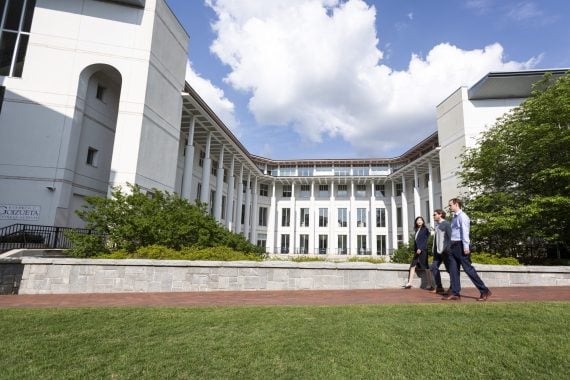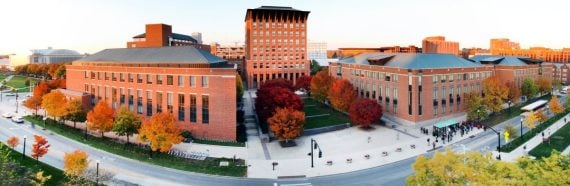



Duke University launched a brand new joint degree: Master in Business, Climate, and Sustainability (MBCS).
Lori Bennear, Stanback Dean of the Nicholas School and a professor of energy economics and policy, described the new program as addressing “a critical talent gap” in the intersection of business and climate science. Designed for early career students, with less than two years of post-undergraduate work experience, its curriculum will provide a pathway for the ambitious individuals who hope to act as leaders in the sustainability field or to help the private sector manage climate risks.
The joint degree program is the result of a collaboration between Duke’s Fuqua School of Business and its Nicholas School of the Environment.
Set Apart by Climate Science Focus
The revolutionary part of this new degree from Duke is its focus on climate science – rather than simply the business of sustainability.
By incorporating climate science into the MBCS curriculum, Duke equips students, alongside business management and analytical skills, with the knowledge needed to innovate in the face of climate change challenges.
This knowledge of climate science isn’t limited to theory. Duke collaborated with industry partners to add experiential learning projects to the program, giving students the opportunity to create real-world, climate-informed business strategies.
The Need for this Degree
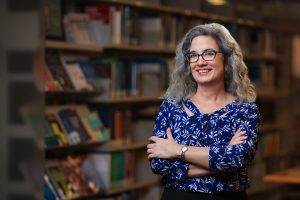
Mary Frances Luce, interim dean of Fuqua, described the current business climate as a “climate-disrupted economy.” Within this context, businesses – of every type – are working out their next steps. Sustainability efforts are likely to significantly impact business operations and structure: 47% of the 1,000 employers surveyed by the World Economic Forum as part of the Future of Jobs Report 2025 said that aims to cut emissions would be the biggest cause of this, and 41% agreed that the organizational changes needed would be “significant.” And demand for the expertise needed to manage these changes – to ensure they are effective from both a climate and a business perspective – is lacking.
It is into this gap that the MBCS will funnel its graduates: equipped with the skills needed to meet the dire demand at “the intersection of business, climate, and sustainability.”
The MBCS Curriculum
The MBCS curriculum, which spans 10 months, integrates both business and climate subjects. Topics covered fall into three primary categories:
- Business fundamentals (including finance, analytics, operations, and leadership)
- Climate literacy (including climate science, energy systems, and environmental policy)
- Applied tools and methods (including carbon accounting, life-cycle analysis, and optimization modeling)
The program is taught via small groups that encourage collaboration and mimic the teamwork that graduates will encounter in their careers to come. Experiential learning, access to industry experts, and collaboration with corporate partners are all built into the program. Applications are now open with the first deadline landing on January 14, 2026.
You can read more about the new degree on the MBCS program website.