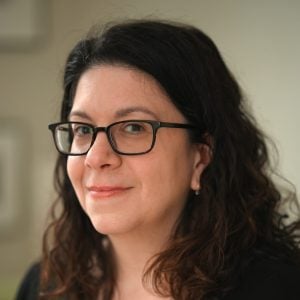



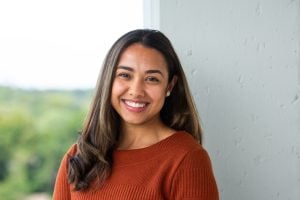
Rachelle Dietzel, ASU Carey MBA Class of 2028
Age: 31
Hometown: Manassas, Virginia
Undergraduate Institution and Major: Virginia Commonwealth University, Biology
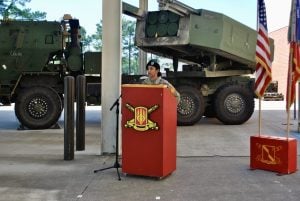
Pre-MBA Work Experience: Active Duty Military as a Field Artillery Officer in the United States Army for 9 years
Why did you make the decision to attend business school? Why now?
I was at a natural inflection point in my military career. Despite being successful and genuinely enjoying what I did, I had reached a point where I needed to decide whether I wanted to continue serving on active duty until retirement or completely pivot professionally and pursue higher education. As you can see, I chose the latter.
It was a decision that left me vulnerable professionally. I was walking away from a career I had built for almost a decade, one where I understood the culture, knew how to lead, and had established myself professionally, to enter an entirely new environment. With my family and mentors in my corner, though, I was able to make the leap into the unknown. Business school offered me the opportunity to take the leadership experience I gained in the Army, build the business knowledge I was missing, and figure out how those skills translate into the civilian sector.
Why did you choose ASU W. P. Carey? What factors figured most prominently into your decision of where to attend?
I ultimately decided that ASU’s W. P. Carey School of Business was the right fit for me after attending the in-person interview day. I was able to experience the culture of the school firsthand, sit in on a class with one of the professors, and ask questions of current students, faculty, and panel members. Every interaction exceeded my expectations and solidified the fact that I wanted to be a Sun Devil more than I initially realized.
What ultimately stood out to me was W. P. Carey’s dedication to its students. We learned during the interview day that “business is personal,” and I have found that it rings true across nearly every facet of the school. From my first interactions with the recruitment team, to working with career services, and now more intimately with professors and my cohort, there is a genuine investment in helping students succeed. I wasn’t looking for a program where I would simply earn an MBA; I wanted a community that would support me as I navigated a major professional transition, and W. P. Carey felt like that place.
What do you think is your most valuable or differentiating contribution to the Class of 2028?
After being with my cohort for about three weeks, I believe my most valuable contribution is my ability to look at our overall workload from a strategic perspective while also remembering that there are actual human beings behind the schedules and assignments.
One thing the Army instilled in me was the importance of being regimented, sticking to timelines, and planning ahead. As cliché as that may sound, it has already paid dividends in helping me balance the MBA workload, maintain a comprehensive schedule, and still carve out personal time—because, hey, we’re still people with needs.
More importantly, my time as a commander taught me that accomplishing the mission and taking care of people are not mutually exclusive. I spent years leading people with different personalities, experiences, strengths, and challenges, and that has shaped the way I approach my cohort today. If there is one thing I hope I contribute to the Class of 2028, and that people remember long after we graduate, is that it’s possible to navigate the workload through a lens of empathy.
Tell us a fun fact about yourself that didn’t get included on your application:
A fun fact that I briefly mentioned in my application, but never really had the opportunity to expand upon, is how much my multicultural upbringing shaped who I am today. I grew up spending nearly every holiday in Trinidad with my family. My mom is one of 12 children, so as you can imagine, I was never exactly short on cousins or entertainment.
Growing up American while also being immersed in another country’s culture, traditions, food, and way of life gave me an appreciation for different perspectives at a very young age. It’s something I will never take for granted. For me, Trinidad has never felt like somewhere I simply visited, it has always felt like my second home.
Post-MBA career interests:
My post-MBA career interests are rooted in many of the same things I valued during my military career which are being successful, solving meaningful problems, leading people, and making an impact. While I am still exploring where exactly that will take me, I am particularly interested in finance and general management opportunities within organizations that offer room for professional progression while maintaining an employee centric culture.
Ultimately, I want to find an organization where I can translate the leadership and problem-solving skills I developed in the Army into the civilian sector, continue challenging myself professionally, and eventually lead teams and organizations in a completely different environment.
Advice for Current Prospective Applicants:
–What is one thing you would absolutely do again as part of your application process?
Be authentically you. It’s easy to fill an application with things you think the admissions committee wants to hear, but who you are and the experiences that got you here, are ultimately what make you stand out. It’s something that took me quite a few edits to realize but, in my opinion, made the biggest difference.
There can be pressure to conform to what you imagine an MBA student is supposed to look or sound like and structure your essays around that “mold.” I would encourage applicants to do the opposite. Choose the stories that are uniquely yours, even if they don’t sound like everyone else’s. Your experiences, successes, failures, and even the occasional unconventional career decision are what differentiate you from everyone else applying.
–What is one thing you would change or do differently?
The one thing I would change is how much time I spent trying to perfect the “right” answer for my in-person interview. You should absolutely prepare, but trying to memorize verbatim what you will say if an interviewer happens to ask one very specific question is wasted energy and, at least in my case, only made me more nervous.
Instead, I would recommend creating an outline for the most common MBA interview questions and developing stories around them. Know the situation, the important points, what you did, and what you learned, but don’t memorize a script. You’re having a conversation, not delivering a monologue. Ironically, the less focused I became on saying everything perfectly, the more authentically I was able to talk about my experiences.
–What is one part you would have skipped if you could—and what helped you get through it?
Selfishly, I probably would have skipped the in-person interview simply because I was so nervous about it. Coming from the military, I was confident in my ability to assess a problem, develop a solution, and lead a team through it. What I wasn’t accustomed to was sitting across from someone and essentially saying, “Let me tell you why I’m great.” The military is a culture where your work ethic and reputation often speak for themselves, so talking explicitly about my personal strengths and accomplishments was surprisingly uncomfortable.
Of course, interviewing is a necessary part of the process, and looking back, I’m glad I had to do it. What helped most was setting aside 5–15 minutes each day to prepare rather than trying to cram beforehand. That small amount of consistent preparation helped combat my nervousness and gave me a different type of confidence, something I didn’t realize I needed until I began transitioning out of the military.
 What is your initial impression of the W. P. Carey students/culture/community?
My initial impression of the W. P. Carey community is that it doesn’t just feel welcoming, but it genuinely creates a sense of belonging. There is an understanding that everyone is meant to be here and that each person brings a different set of experiences, skills, and knowledge that contributes to the cohort.
I think that inclusivity matters, particularly for someone who may be on the fence about applying or wondering whether they “fit” the traditional idea of an MBA student. Three weeks in, one of my biggest takeaways is that there really isn’t one type of person who belongs here and that’s part of what makes the community so valuable.
What student organizations have you joined/are you hoping to join and why?
I’m looking forward to joining some of the more social organizations within the MBA community, particularly the golf club. It combines athletics, competition, learning, and socializing, which checks quite a few boxes for me (even if my golf game may suggest I should have picked a different hobby).
Developing a work/life balance is important to me, not just during business school but beyond it. Organizations like the golf club offer an opportunity to step away from academics, meet people outside of the classroom, and build meaningful relationships in a completely different environment. Plus, my competitive nature needs to go somewhere.
What is one thing you have learned about W. P. Carey that has surprised you?
One thing that surprised me was finally learning why there is a W. P. Carey School of Business at ASU and a Carey Business School at Johns Hopkins. I had noticed it before coming to ASU and even tried researching the connection, but I didn’t fully understand the history until orientation.
Quick history lesson! William Polk Carey’s connection to ASU actually goes back generations. His grandfather, John Samuel Armstrong, was an Arizona territorial legislator who introduced the legislation in 1885 that established the Tempe Normal School, which eventually became Arizona State University. Decades later, Carey continued that family legacy through his support of ASU and now, the business school bears his name.
I think that history resonated with me because so much of business school is focused on where we’re going next, but there is something meaningful about understanding what came before us too. We’re each here building our own legacy while becoming a part of W. P. Carey’s. Years from now, regardless of where our careers take us, we’ll still share that connection under one motto, “business is personal.”
What is one thing you are most excited about in your first year?
The thing I am most excited about during my first year is growing closer to my cohort and building relationships that extend beyond the classroom. We all arrived with completely different experiences, but share at least one obvious goal, earning an MBA (though, I’m quickly realizing it’s about much more than that).
Over the next two years, we’ll celebrate each other’s successes, navigate the inevitable hardships, probably complain about an assignment or two, and watch one another figure out what’s next. I’m excited about creating a network that doesn’t disappear after graduation but instead grows with us throughout our careers. I think there’s something pretty special about being able to look back years from now and remember that we all started this next chapter together.